When a deep‑sea drill bit slices through basalt at 1,200 psi, the piston rod’s material decides whether the system keeps humming or quits whining. You’ll find that stainless‑steel 304/316, alloy‑steel 4140, Ti‑6Al‑4V, duplex stainless, chrome‑plated carbon steel, Inconel 718, and carbon‑fiber‑filled PEEK each bring a unique mix of strength, corrosion resistance, and fatigue performance. Understanding how these alloys behave under pressure, temperature, and fluid chemistry will shape your next hydraulic design—especially when power and precision matter most.
| Wen ST YXD Blue PU Hydraulic Cylinder (16x10x8) |  | Budget-Friendly Pick | Working Pressure: 40 MPa | Stroke Length: 8 mm (size A) – 10 mm (B) – 14 mm (C) (short stroke) | Bore / Diameter: 16 mm (A) – 18 mm (B) – 20 mm (C) | VIEW LATEST PRICE | Read Our Analysis |
| Universal Hydraulic Cylinder 2900‑3600 PSI Chrome Rod 16″ Stroke | 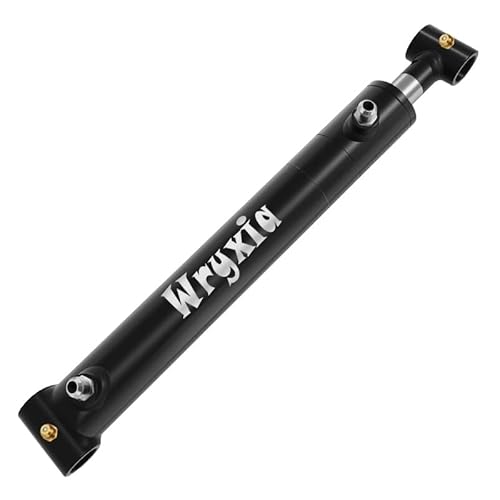 | Heavy‑Duty Choice | Working Pressure: 2 900 PSI (max 3 600 PSI) | Stroke Length: 16 in | Bore / Diameter: Not specified (overall 24 × 4 × 4 in) | VIEW LATEST PRICE | Read Our Analysis |
| 2×8 Double Acting Tie Rod Hydraulic Cylinder 2500 PSI | 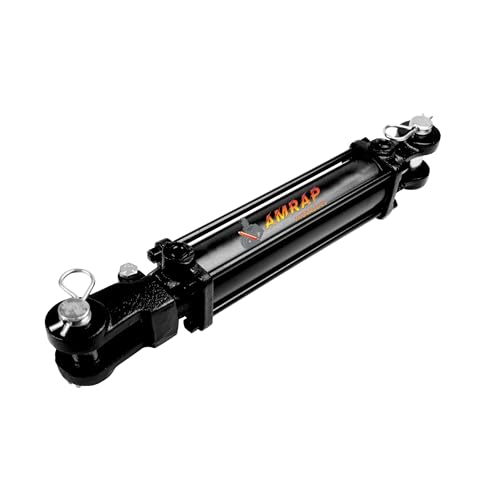 | Precision Performer | Working Pressure: 2 500 PSI | Stroke Length: 8 in | Bore / Diameter: 2 in (OD 2.38 in) | VIEW LATEST PRICE | Read Our Analysis |
| 1.5″ x 18″ Double Acting Hydraulic Cylinder 2 Ton 3/8″ JIC Connectors |  | Compact Power | Working Pressure: 2 320 PSI | Stroke Length: 18 in | Bore / Diameter: 1.5 in (40 mm) | VIEW LATEST PRICE | Read Our Analysis |
| Hydraulic Shock Absorber Buffer Damper Cylinder Adjustable Damping |  | Adjustable Damping | Working Pressure: Not specified (industrial buffer) | Stroke Length: Not applicable (buffer) | Bore / Diameter: Not applicable (small cylinder) | VIEW LATEST PRICE | Read Our Analysis |
| 2×20 Double Acting Tie Rod Hydraulic Cylinder 2500 PSI | | Long‑Stroke Specialist | Working Pressure: 2 500 PSI | Stroke Length: 20 in | Bore / Diameter: 2 in (OD 2.38 in) | VIEW LATEST PRICE | Read Our Analysis |
| TR Tie Rod Cylinder 4″ Bore x 16″ Stroke 2500 PSI |  | High‑Capacity Pro | Working Pressure: 2 500 PSI | Stroke Length: 16 in | Bore / Diameter: 4 in | VIEW LATEST PRICE | Read Our Analysis |
More Details on Our Top Picks
Wen ST YXD Blue PU Hydraulic Cylinder (16x10x8)
The Wen ST YXD Blue PU Hydraulic Cylinder (16×10×8) is perfect for anyone who needs a lightweight, corrosion‑resistant piston rod that can handle high pressures up to 40 MPa while operating in extreme temperatures from –40 °C to +130 °C. You’ll appreciate its 81 g weight and blue polyurethane construction, which gives durability without sacrificing speed—up to 0.5 m/s. The grooved gasket and standard‑spec oil seal keep leaks out, and the 16 × 10 × 8 mm dimensions fit compact assemblies. Packaged singly, it ships under ASIN B0F5B1KHWQ, ranking well in industrial sealing categories, making it a reliable, cost‑effective choice.
- Working Pressure:40 MPa
- Stroke Length:8 mm (size A) – 10 mm (B) – 14 mm (C) (short stroke)
- Bore / Diameter:16 mm (A) – 18 mm (B) – 20 mm (C)
- Rod Material / Finish:Polyurethane (PU) rubber (rod seal)
- Connector Type:Grooved gasket, standard spec (no external connector)
- Weight:81 g
- Additional Feature:Polyurethane rubber seals
- Additional Feature:Blue color identification
- Additional Feature:81 g lightweight
Universal Hydraulic Cylinder 2900‑3600 PSI Chrome Rod 16″ Stroke
Looking for a hydraulic cylinder that can handle high‑pressure jobs without sacrificing durability? This universal, double‑acting unit delivers 2900 PSI working pressure and up to 3600 PSI max, with a 16‑inch stroke and 1.0‑inch pin. Its chrome‑plated piston rod resists rust, while automatic welding secures the cylinder body. Compact at 24 × 4 × 4 in. and 17.6 lb., it fits tight spaces yet provides robust force. You can choose different outer diameters, bores, or strokes to match your machine, and the SAE #6 fitting simplifies integration. Wryxia ships it under model Ports Screws Included, ASIN B0DK441G5D.
- Working Pressure:2 900 PSI (max 3 600 PSI)
- Stroke Length:16 in
- Bore / Diameter:Not specified (overall 24 × 4 × 4 in)
- Rod Material / Finish:Chrome‑plated piston rod
- Connector Type:SAE #6 fitting
- Weight:17.6 lb
- Additional Feature:Automatic welding construction
- Additional Feature:Chrome‑plated piston rod
- Additional Feature:SAE #6 fitting
2×8 Double Acting Tie Rod Hydraulic Cylinder 2500 PSI
If you need a compact, high‑pressure cylinder that fits tight spaces yet delivers 7850 lb of thrust, the 2×8 double‑acting tie‑rod hydraulic cylinder rated at 2500 PSI is the ideal choice. Its 2‑in bore and 8‑in stroke give you a solid column load capacity while the 3/8‑NPT female port simplifies plumbing. The 1.125‑in rod slides through a sturdy end cap, and the parallel tie rods lock the barrel and caps together for rigidity. You’ll appreciate the 18.25‑in retracted length and 26.25‑in extended reach, perfect for industrial presses, machine tools, and agricultural gear. AMRAP backs it with a two‑year warranty.
- Working Pressure:2 500 PSI
- Stroke Length:8 in
- Bore / Diameter:2 in (OD 2.38 in)
- Rod Material / Finish:Steel rod (standard)
- Connector Type:3/8 NPT female pipe
- Weight:Not specified (approx. 10 lb)
- Additional Feature:Tie‑rod structural reinforcement
- Additional Feature:3/8 NPT female ports
- Additional Feature:2‑year warranty
1.5″ x 18″ Double Acting Hydraulic Cylinder 2 Ton 3/8″ JIC Connectors
A 1.5” × 18” double‑acting hydraulic cylinder with a 2‑ton rating and 3/8” JIC connectors is perfect for anyone needing compact, high‑force power in construction or agricultural equipment, because its heavy‑duty steel body and chrome‑plated, anti‑deflection rod deliver reliable thrust of 4,410 lb while staying rust‑proof and leak‑resistant. You’ll appreciate its 18‑inch stroke, 1‑inch rod, and 2,320‑psi rating, which give you 4,410 lb thrust and 2,645 lb pull. The welded steel tube, compact seals, and JIC fittings integrate easily into standard circuits. We at 15.2 lb, the unit fits tight spaces yet handles demanding loads. It ships in a red‑finished package with a 30‑day return guarantee.
- Working Pressure:2 320 PSI
- Stroke Length:18 in
- Bore / Diameter:1.5 in (40 mm)
- Rod Material / Finish:Chrome‑plated rod
- Connector Type:3/8 in JIC 37° (9/16‑18 thread)
- Weight:15.2 lb
- Additional Feature:Heavy‑duty steel body
- Additional Feature:Anti‑deflection rod
- Additional Feature:Red color finish
Hydraulic Shock Absorber Buffer Damper Cylinder Adjustable Damping
Need need a shock absorber that can handle rapid impacts while letting you fine‑tune the response for different loads? The hydraulic shock absorber buffer damper cylinder offers adjustable damping across models like AC0806, AC2020, and AC1008 (AD1425). Its carbon‑steel body and stainless‑steel piston rod survive 8‑10 kg loads at medium‑speed impacts, from –10 °C to +80 °C. A reliable oil seal prevents leakage, while the thickened design boosts durability. Installation is quick; the unit weighs 3.88 oz and measures 4.72 × 1.18 × 1.18 in. Choose the appropriate model variant to match your automation equipment’s load profile.
- Working Pressure:Not specified (industrial buffer)
- Stroke Length:Not applicable (buffer)
- Bore / Diameter:Not applicable (small cylinder)
- Rod Material / Finish:Stainless steel piston rod
- Connector Type:Not applicable (integrated buffer)
- Weight:3.88 oz
- Additional Feature:Adjustable damping settings
- Additional Feature:Carbon steel body
- Additional Feature:Stainless steel piston rod
2×20 Double Acting Tie Rod Hydraulic Cylinder 2500 PSI
Engineers seeking a durable, high‑pressure solution will appreciate the 2 × 20 double‑acting tie‑rod hydraulic cylinder’s 2500 PSI rating and 1.125‑inch piston rod, which delivers reliable force transmission in demanding industrial applications. You’ll find a 2‑inch bore, 20‑inch stroke, and 3/8 NPT female ports that fit standard hydraulic lines. Its tie‑rod design supports a 6950‑lb column load while keeping the barrel and end caps robust. The cylinder’s compact dimensions—28 × 5 × 31.68 in—make it easy to install in presses, machine tools, or construction gear. AMRAP Hydraulics backs it with a two‑year warranty, ensuring long‑term performance.
- Working Pressure:2 500 PSI
- Stroke Length:20 in
- Bore / Diameter:2 in (OD 2.38 in)
- Rod Material / Finish:Steel rod (standard)
- Connector Type:3/8 NPT female ports
- Weight:Not specified (approx. 12 lb)
- Additional Feature:3/8 NPT ports
- Additional Feature:Tie‑rod design
- Additional Feature:2‑year warranty
TR Tie Rod Cylinder 4″ Bore x 16″ Stroke 2500 PSI
Who needs a compact, high‑pressure solution for heavy‑duty tasks? You’ll find the CWA Hydraulics TR Tie‑Rod Cylinder, model 4016TR‑AORB/NPT, fits the bill. Its 4‑inch bore and 16‑inch stroke deliver 2500 PSI in a 31½‑inch retracted length, while a 2‑inch rod and 1¼‑inch pin guarantee robust load handling. The package measures 34 × 6 × 5 in and weighs 64 lb, making installation straightforward. Since April 2018 it’s been available for agriculture, construction, forestry, material handling, oil/gas, and industrial use. Full pressure testing and a performance guarantee back its reliability.
- Working Pressure:2 500 PSI
- Stroke Length:16 in
- Bore / Diameter:4 in
- Rod Material / Finish:Steel rod (standard)
- Connector Type:SAE 8 ½ NPT port
- Weight:64 lb
- Additional Feature:SAE 8 ½ NPT port
- Additional Feature:Full pressure test guarantee
- Additional Feature:64 lb weight
Factors to Consider When Choosing Piston Rod Material for Hydraulic Cylinder
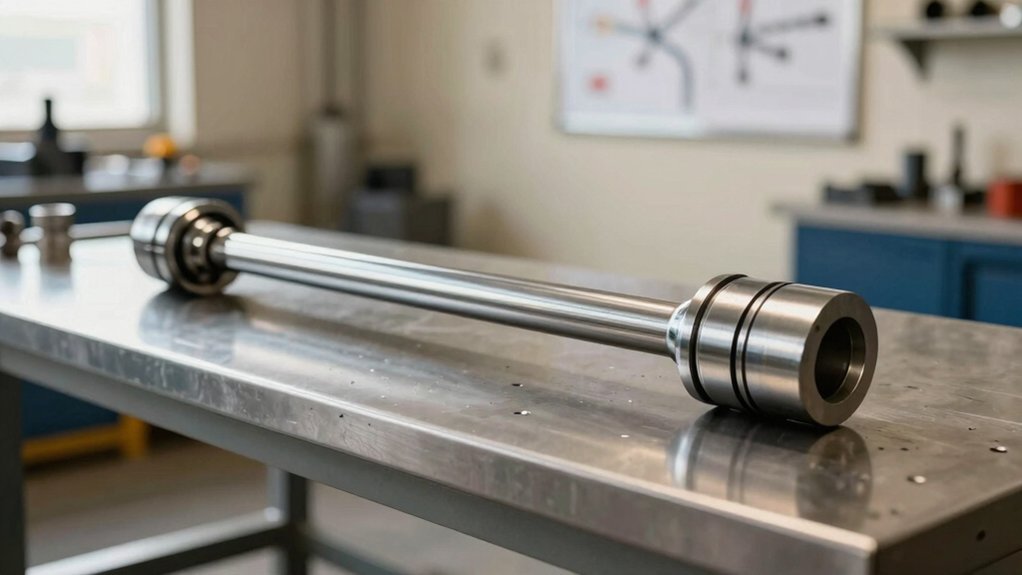
When you pick a piston rod, you’ll weigh its core strength and stiffness against the load it must bear. You also need to match its corrosion resistance, temperature limits, and wear tolerance to the job’s environment. Finally, you balance these performance factors with cost to find the most effective solution.
Cor Strength and Stiffness
Because hydraulic cylinders must resist deflection under extreme loads, the material’s core strength and stiffness become decisive factors. You’ll want a piston rod that offers a high tensile strength—ideally above 1,200 MPa—so it can carry heavy loads without yielding. Alloy steels heat‑treated to 1,000 MPa give you that capacity and a modulus around 210 GPa, keeping deflection under 0.2 mm per 100 mm even at pressures over 2,500 psi. Stainless steels, while corrosion‑resistant, sit near 190 GPa, so they bend a bit more under the same load. Chrome plating adds surface hardness and wear resistance but only a thin 0.5 mm layer, leaving bulk stiffness unchanged. Balance yield strength against fatigue life; higher strength can reduce ductility and raise crack‑initiation risk under cyclic loading.
Corrosion Resistance Requirements
If you’re operating hydraulic cylinders in humid, salty, or chemically aggressive environments, corrosion resistance becomes a decisive factor in material selection. Stainless‑steel rods, especially 304 and 316 grades, form a passive oxide layer that blocks rust, keeping surface integrity intact even up to 300 °C. For cost‑sensitive projects, chrome‑plating a carbon‑steel rod creates a hard barrier that slashes corrosion rates by as much as 90 % versus untreated steel. Polyurethane coatings seal the rod from fluid attack, extending service life when you use acidic or alkaline hydraulic fluids. In marine or offshore settings, duplex stainless steel meets ISO 9001 durability standards and tolerates relentless salt exposure. Finally, match the rod’s corrosion‑resistance rating to your operating pressure—say 40 MPa—to guarantee both strength and longevity under aggressive conditions.
Temperature Operating Limits
Corrosion‑resistant stainless‑steel rods also excel under temperature stress, but you must verify that their continuous service temperature exceeds the system’s peak. Choose a material whose rating tops the highest operating temperature—stainless steel can handle +300 °C, while carbon steel caps at +200 °C. Watch low‑temperature brittleness: aluminum alloys may crack below ‑40 °C, yet many stainless grades stay ductile down to ‑70 °C. Check the thermal‑expansion coefficient; a high value, like aluminum’s ~23 µm/m·K, can widen seal clearances during temperature swings, risking leakage. Guarantee the rod conducts heat well enough for the fluid’s range—copper alloys dissipate heat faster than polymer‑based rods. Finally, match the rod’s rating to the hydraulic fluid’s limits, typically ‑40 °C to +130 °C for PU‑rubber seals and up to +200 °C for high‑temperature synthetic oils.
Wear and Abrasion Tolerance
When abrasive particles and high‑speed sliding threaten a hydraulic cylinder, you need a piston rod that can endure wear and abrasion. Choose a material with at least 60 HRB hardness; this resists scouring by sand, metal shavings, and slurry. Apply a surface treatment—chrome plating, for example—no thinner than 10 µm to shield the substrate during rapid movement. Opt for corrosion‑resistant alloys such as stainless steel that keep tensile strength above 600 MPa even in gritty media. Verify the fatigue limit exceeds half the ultimate tensile strength, preventing micro‑cracks from repeated impacts. Finally, specify a surface roughness (Ra) of ≤ 0.8 µm; a smoother finish reduces abrasive wear and protects seals under high pressure.
Cost‑Effectiveness Balance
Even with a hard‑facing coating and high‑HRB hardness, the overall value of a piston rod hinges on its cost‑effectiveness throughout the cylinder’s life. Compare material cost per kilogram—carbon steel runs about $0.70/kg while stainless steel is near $2.00/kg—to gauge upfront expense. Next, factor wear‑rate and replacement interval; a rod that lasts twice as long can offset a 3‑5× higher purchase price. Add machining and finishing costs, as special tooling for hardened chrome‑plated rods can inflate total manufacturing by 15‑30 %. Don’t forget downstream savings: corrosion‑resistant alloys cut downtime and labor by up to 40 %. Conduct a total‑ownership analysis that aggregates material price, processing, and maintenance over service life to pinpoint the most cost‑effective choice.
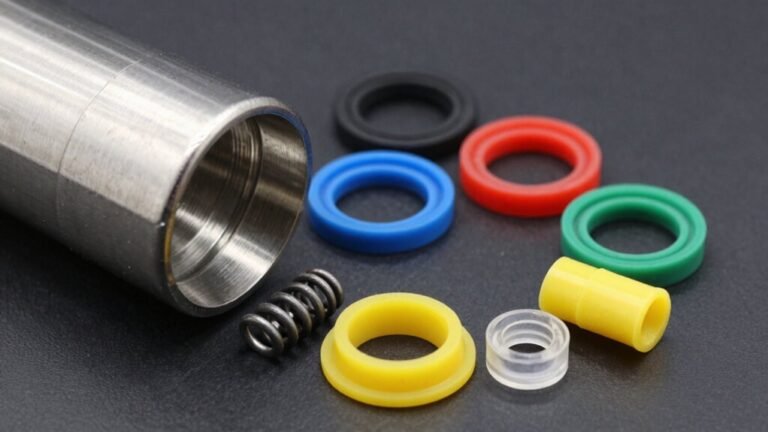
Compatibility With Seals
If the rod’s surface roughness exceeds 0.8 µm, polyurethane and nitrile O‑rings will wear prematurely, so you must keep the finish smooth and uniform. Choose a material that holds a non‑porous, polished coating—chrome or nickel plating works well—because abrasive particles embed in rough or porous surfaces and damage seals. Match the rod diameter to the seal’s inner diameter within ±0.02 in to prevent extrusion or leakage at pressures up to 40 MPa. For corrosive fluids, select a plated steel or stainless‑steel rod; uncoated steel swells seals and reduces elasticity. In high‑temperature applications above 130 °C, prefer stainless steel or other low‑expansion alloys to keep seal compression stable and avoid elastomer degradation. These steps guarantee reliable seal performance and long‑term cylinder efficiency.