Like a seasoned mechanic trusts a trusty wrench, you rely on hydraulic pumps to keep heavy work moving. These seven premium units blend 10,000 PSI power, precise flow control, and rugged builds—gear, vane, and piston styles that handle anything from steering to lifting. You’ll find chrome‑plated bodies, PTFE seals, and built‑in reservoirs for thermal stability, plus quick‑release mounts and tool‑free drain plugs. With unlimited‑mileage warranties and a 30‑day return guarantee, the next step is seeing which model fits your toughest tasks.
A-Premium Power Steering Pump for Ram 1500 2011‑2012
https://m.media-amazon.com/images/I/71vM9GnsCtL._AC_SX679_.jpg
The A‑Premium Power Steering Pump, with its 6‑groove pulley and built‑in reservoir, is the go‑to upgrade for anyone who drives a Ram 1500 2011‑2012 V8 5.7 L and needs reliable, leak‑free steering. It fits OEM numbers 20‑1035, 201035, 68069903AB/AC, and 97240M, weighing 6.58 lb and measuring 13.98 × 8.86 × 6.3 in. Brand‑new construction eliminates squealing, jerky feel, and fluid leaks, while the hose‑barb inlet and threaded outlet a tight seal. You’ll enjoy a year of unlimited‑mileage warranty and a 30‑day return guarantee. Purchase on Amazon May 27 2025, ASIN B0FB32RWVN.
Factors to Consider When Choosing a Ram Premium Hydraulic Pump
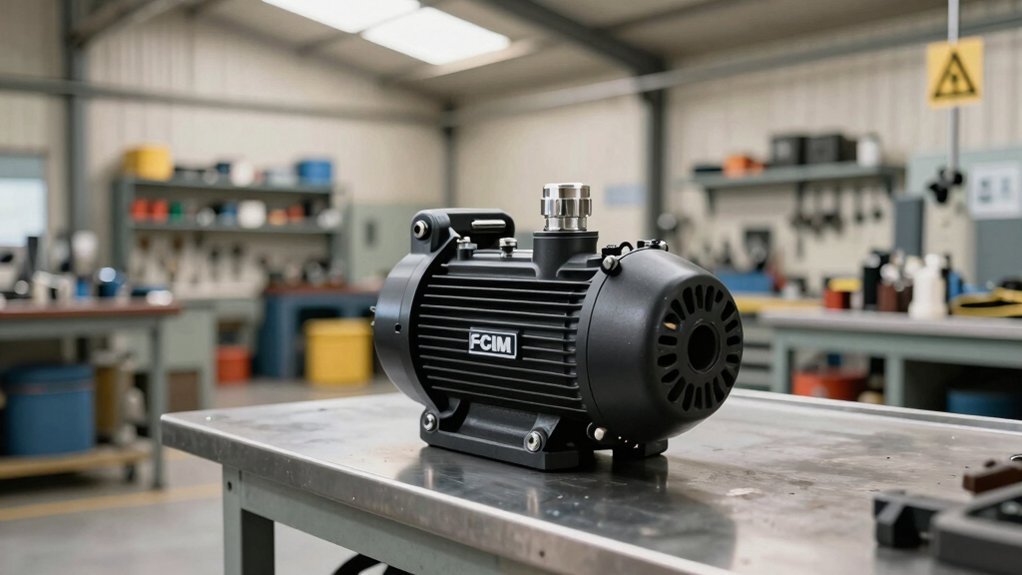
You’ll need to match the pump’s flow capacity to your system’s demand, make sure it’s compatible with your specific Ram model, and pick the right type—gear, vane, or piston—for your application. Check that the seals and materials meet durability standards, and verify the pressure rating comfortably exceeds your operating requirements. These factors together guarantee reliable performance and longevity.
Flow Capacity Requirements
When selecting a premium hydraulic pump, you must first match its maximum pressure to your system’s design—10,000 PSI for heavy‑duty tasks is common—then calculate the required flow rate in GPM based on cylinder size and desired speed. Start by measuring the bore and stroke of each cylinder; larger bores or faster strokes demand higher GPM. Use the formula GPM = (π × bore² × stroke × speed) ÷ 231 to get a baseline. Next, verify the pump’s inlet and outlet thread sizes (e.g., 1/4 NPT inlet, 3/8 NPT outlet) match your existing lines, preventing leaks and pressure loss. Check the oil reservoir—1.6 L, for example—to guarantee it can sustain the duty cycle without overheating. Finally, confirm the power source (air, electric, or manual) can continuously deliver the calculated volume at the required pressure.
Compatibility With Ram Models
If you’re fitting a premium hydraulic pump to a Ram, start by confirming that the inlet and outlet thread sizes—say, 1/4 NPT inlet and 3/8 NPT outlet—match the vehicle’s existing lines, and that the pump’s pressure rating exceeds the maximum pressure required by the specific Ram’s steering or lift system. Next, verify the mounting bolt pattern and dimensions line up with the engine bay or chassis points on that model. Check the flow rate; it must meet the Ram’s hydraulic demand without causing under‑ or over‑pressurization. Cross‑reference the pump’s OEM part numbers against the Ram’s service manual to guarantee a proper fit. These steps secure seamless integration and reliable performance for your premium pump.
Pump Type Selection
What pump best matches your Ram’s hydraulic demands? If you need relentless high‑pressure, constant‑flow power for heavy‑duty rams, pick a gear‑type pump that handles up to 10,000 PSI. For quieter operation and moderate pressures—up to 3,200 PSI—choose a vane‑type pump, ideal for automotive steering systems. When your application calls for variable flow, high torque, or overload protection, a piston‑type pump, especially a dual‑piston design, delivers the flexibility you want. If you require both extension and retraction pressures, a double‑acting pump gives you,3,200 psi for extension and 1,500 psi for retraction in lift‑and‑tilt setups. Finally, match the pump’s inlet and outlet connection sizes (e.g., 1/4 NPT inlet, 3/8 NPT outlet) to your existing lines to avoid costly adapters.
Seal and Material Quality
Choosing a pump with high‑quality seals and robust materials is essential for keeping your hydraulic system leak‑free and reliable under extreme pressures. Opt for synthetic‑rubber or PTFE seals; they resist oil degradation and stay elastic when pressures hit 10,000 PSI or more. Double‑acting or O‑ring designs add redundancy, sealing both sides of the piston and preventing seepage. Verify that the pump body and internal parts are forged from hardened steel or chrome‑plated alloys, which fend off corrosion and wear in harsh cycles. Check the specified operating temperature range—typically –20 °C to 120 °C—to guarantee seals won’t harden or crack in extreme environments. Finally, demand material certifications such as ISO 9001 or ASTM compliance; documented standards guarantee consistent quality and long‑term durability.
Pressure Rating Adequacy
High‑quality seals keep the fluid contained, but the pump’s pressure rating determines whether the system can handle the loads you’ll throw at it. First, verify the pump’s maximum pressure exceeds your system’s required operating pressure by at least 20 % to give yourself a safety margin. Match the rating to the specs of downstream components—heavy‑duty rams and steering often need 8,000–10,000 PSI. Make sure the pump can sustain that pressure continuously without overheating or excessive wear, and set the pressure relief valve below the pump’s maximum rating to avoid over‑pressurization. Finally, consider how pressure fluctuations affect flow; a higher‑rated pump keeps flow steadier under variable loads, protecting performance and extending component life.
Maintenance Accessibility
If you can’t reach the pump’s internals without a full teardown, downtime will skyrocket. Look for removable panels or access ports that let you inspect seals and bearings without disassembling the whole unit. A clear oil‑level indicator and a tool‑free drain plug simplify routine checks and changes. Positioning inlet and outlet fittings on the same side cuts hose routing complexity, saving you time during service. Choose a pump with a quick‑release mounting bracket so you can lift it out with a standard jack or hoist, rather than fighting a permanent mount. Finally, verify that the service manual offers step‑by‑step diagrams for wear‑plate and pressure‑relief valve access, ensuring you can troubleshoot efficiently and keep your operation running smoothly.
Warranty and Support Terms
Even before you install a Ram premium hydraulic pump, you should confirm the warranty length—whether it’s a 12‑month, 30‑day, or unlimited‑mileage guarantee—and who actually backs it, because a manufacturer‑direct warranty often means fewer hoops to jump through than a seller‑provided one. Verify that the warranty covers the pump and any related parts such as the reservoir or pulley, and ask which documentation you’ll need for a claim. Check the support process: note the phone number, email address, and website portal, and complete any required registration within the stipulated time frame. Review the return policy, especially any voluntary 30‑day guarantee, to it aligns with the warranty’s coverage and doesn’t create unexpected gaps. This diligence protects your investment and minimizes downtime.