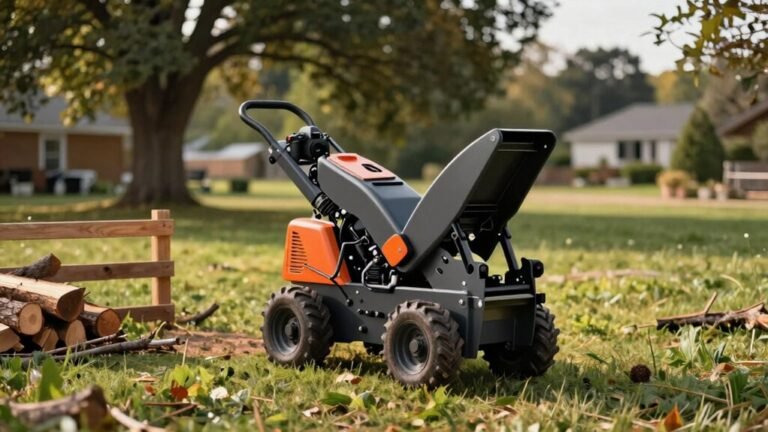
You might wonder whether a single log splitter can truly handle the toughest hardwoods without stalling. Imagine a machine that combines a high‑horsepower engine, a robust hydraulic system, and safety features like auto‑return sensors, all in a compact footprint. Those specs sound impressive, but do they translate into consistent, fast splits on a busy job site? The answer lies in the details of each model, from the BILT HARD 30‑ton hydraulic unit to the YARDMAX electric 6.5‑ton portable, and the trade‑offs they present for power, portability, and safety.
| BILT HARD 30-Ton Hydraulic Log Splitter with OHV Engine |  | Heavy‑Duty Power | Splitting Force: 30 ton | Engine Power (HP): 7.5 HP (223 cc) | Power Source: Gas (OHV) | VIEW LATEST PRICE | Read Our Analysis |
| 45T Firewood Processor with 20HP GX630 Engine |  | High‑Capacity Pro | Splitting Force: 45 ton | Engine Power (HP): 20 HP (GX630) | Power Source: Gas | VIEW LATEST PRICE | Read Our Analysis |
| Tool Tuff Log Splitter Kit – 15 hp Engine 28 GPM Pump | 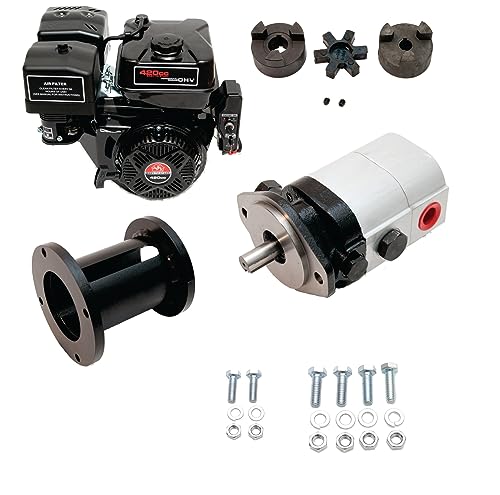 | DIY Kit | Splitting Force: (kit – engine not specified; typical 15 hp ~ 20‑ton) | Engine Power (HP): 15 HP | Power Source: Gas | VIEW LATEST PRICE | Read Our Analysis |
| BILT HARD 40‑Ton Gas Log Splitter with Auto Return |  | Max‑Force Performer | Splitting Force: 40 ton | Engine Power (HP): 13 HP (389 cc) | Power Source: Gas (OHV) | VIEW LATEST PRICE | Read Our Analysis |
| YARDMAX YS0650 6.5 Ton Electric Log Splitter |  | Compact Electric | Splitting Force: 6.5 ton | Engine Power (HP): Electric (no HP) | Power Source: Electric | VIEW LATEST PRICE | Read Our Analysis |
| SuperHandy 25‑Ton Portable Gas Log Splitter with 7HP Engine |  | Portable Pro | Splitting Force: 25 ton | Engine Power (HP): 7 HP (AlphaWorks) | Power Source: Gas | VIEW LATEST PRICE | Read Our Analysis |
| Landworks Portable 20‑Ton Log Splitter with 7HP Engine |  | Lightweight Workhorse | Splitting Force: 20 ton | Engine Power (HP): 7 HP | Power Source: Gas | VIEW LATEST PRICE | Read Our Analysis |
More Details on Our Top Picks
BILT HARD 30-Ton Hydraulic Log Splitter with OHV Engine
Looking for a log splitter that can handle heavy‑duty work without breaking a sweat? You’ll love the BILT HARD 30‑Ton Hydraulic Log Splitter, powered by a 223 cc OHV engine delivering 7.5 HP. It offers horizontal and vertical modes, an auto‑return feature, and a 30‑ton splitting force that tackles logs up to 24 in long. The 8‑in hardened steel wedge completes a full split cycle in 11 seconds, while a 6‑gal hydraulic system pumps at 14 GPM. With 16‑in DOT‑certified tires, a 2‑in ball coupler, and 24‑in safety chains, you can tow it up to 45 MPH and hitch it to any ATV/UTV. The unit weighs 533 lb, fits in a 71.65 × 27.95 × 19.6 in package, and comes with an instruction manual, assembly video, and Amazon email support. Warranty details are available via the manufacturer link.
- Splitting Force:30 ton
- Engine Power (HP):7.5 HP (223 cc)
- Power Source:Gas (OHV)
- Mobility / Towability:Towable, 16‑in DOT tires, 45 MPH max
- Dual‑Position Operation (Horizontal/Vertical):Yes (horizontal & vertical)
- Hydraulic Pump Flow Rate:14 GPM
- Additional Feature:6‑gal hydraulic reservoir
- Additional Feature:16‑inch DOT‑certified tires
- Additional Feature:2‑inch ball coupler
45T Firewood Processor with 20HP GX630 Engine
If you need a compact, high‑power solution for turning logs into firewood quickly, the 45‑ton Firewood Processor with a 20 HP GX630 gas engine is the clear choice. Its 20 HP GX630 engine delivers 45 tons of splitting force, handling up to 500 mm diameter logs and 580 mm lengths. A 25‑inch steel chain and 4/6‑way wedge split wood efficiently. A 3 m conveyor at 2.55 m high feeds logs continuously into the cutting chamber. You control it via a full hydraulic manual panel, with an emergency stop and safety net. We specs are 250 × 105.43 × 80.31 mm, weighing 2,000 lb, and it arrives with engine, bar, chain, camera body, and battery.
- Splitting Force:45 ton
- Engine Power (HP):20 HP (GX630)
- Power Source:Gas
- Mobility / Towability:Stationary (conveyor belt) – not towable
- Dual‑Position Operation (Horizontal/Vertical):No (fixed cutting chamber)
- Hydraulic Pump Flow Rate:Not specified (standard hydraulic)
- Additional Feature:3 m conveyor belt
- Additional Feature:Emergency stop button
- Additional Feature:Integrated safety net
Tool Tuff Log Splitter Kit – 15 hp Engine 28 GPM Pump
The Tool Tuff Log Splitter Kit’s 15 hp gasoline engine and 28 GPM two‑stage hydraulic pump make it the go‑to choice for professional arborists and contractors who need to split large volumes of hardwood quickly. You’ll appreciate the electric‑start, key‑start, and battery leads that guarantee reliable cold‑starts even in deep winter. The 2‑stage pump delivers 28 GPM, feeding a commercial‑duty L100 3‑jaw coupler with a rubber spider for smooth power transfer. We kit includes a mounting bracket, hardware, and clear assembly instructions, all packed in multiple boxes for easy transport. Manufacturer AgKNX backs it with a 30‑day return guarantee and standard warranty.
- Splitting Force:(kit – engine not specified; typical 15 hp ~ 20‑ton)
- Engine Power (HP):15 HP
- Power Source:Gas
- Mobility / Towability:Kit (no wheels, requires mounting)
- Dual‑Position Operation (Horizontal/Vertical):No (single‑beam kit)
- Hydraulic Pump Flow Rate:28 GPM
- Additional Feature:28 GPM 2‑stage pump
- Additional Feature:L100 3‑jaw coupler
- Additional Feature:Electric‑start engine
BILT HARD 40‑Ton Gas Log Splitter with Auto Return
With its 40‑ton hydraulic force and 389 cc, 13 HP OHV engine, the BILT HARD 40‑Ton Gas Log Splitter with Auto Return is perfect for professionals who need to split large‑diameter logs quickly and safely. You’ll appreciate the 8‑inch hardened‑steel wedge that handles logs up to 24 in, and the 16‑second full split cycle keeps the job moving. Switch between horizontal and vertical modes in seconds, letting you tackle massive logs without lifting. The 2‑stage gear pump delivers 14 GPM flow from a 7‑gallon reservoir, while 16‑inch DOT‑certified tires and an ATV/UTV hitch let you tow up to 45 mph. At 76 lb, it’s sturdy yet portable, and the included oil and warranty give peace of mind.
- Splitting Force:40 ton
- Engine Power (HP):13 HP (389 cc)
- Power Source:Gas (OHV)
- Mobility / Towability:Towable, 16‑in DOT tires, 45 MPH max
- Dual‑Position Operation (Horizontal/Vertical):Yes (horizontal & vertical)
- Hydraulic Pump Flow Rate:14 GPM
- Additional Feature:7‑gallon oil reservoir
- Additional Feature:2‑stage gear pump
- Additional Feature:16‑second split cycle
YARDMAX YS0650 6.5 Ton Electric Log Splitter
YardMax’s YS0650 delivers a solid 6.5‑ton ram force in a compact, 104‑lb frame, making it perfect for contractors who need portable power without sacrificing durability. You’ll appreciate its 20.5‑inch log capacity and 10‑inch diameter limit, which handles most firewood without a hitch. Its 43 × 21 × 13‑inch footprint fits tight job sites, and the lightweight design lets you move it with ease. The electric motor provides consistent speed and strength comparable to high‑end models, while simple controls keep operation straightforward. Ranked #41 in Power Log Splitters, it offers reliable performance for a reasonable price.
- Splitting Force:6.5 ton
- Engine Power (HP):Electric (no HP)
- Power Source:Electric
- Mobility / Towability:Portable, wheels, lightweight
- Dual‑Position Operation (Horizontal/Vertical):No (vertical only)
- Hydraulic Pump Flow Rate:Not applicable (electric)
- Additional Feature:6.5‑ton RAM force
- Additional Feature:20.5‑in log length
- Additional Feature:Portable lightweight design
SuperHandy 25‑Ton Portable Gas Log Splitter with 7HP Engine
Looking for a rugged, high‑capacity splitter that can keep up with commercial wood‑cutting demands? You’ll appreciate the SuperHandy 25‑Ton Portable Gas Log Splitter’s 7 HP AlphaWorks engine and two‑stage Bucher hydraulic pump, delivering consistent force for 20‑ft logs up to 24 in in diameter. Its half‑beam steel wedge and 10 polyurethane wheels make maneuvering easy, while the ergonomic folding handle lets you transport it at just 90 lb. Expect a rapid 12‑second cycle time, outpacing electric rivals. Remember to wear protective gear and use AW32 hydraulic fluid (not included). GCM backs it with a warranty—details on the link.
- Splitting Force:25 ton
- Engine Power (HP):7 HP (AlphaWorks)
- Power Source:Gas
- Mobility / Towability:Portable, 10‑in polyurethane wheels, foldable handle
- Dual‑Position Operation (Horizontal/Vertical):Yes (horizontal/vertical half‑beam)
- Hydraulic Pump Flow Rate:Not specified (2‑stage Bucher)
- Additional Feature:2‑stage Bucher pump
- Additional Feature:10 polyurethane wheels
- Additional Feature:Folding ergonomic handle
Landworks Portable 20‑Ton Log Splitter with 7HP Engine
If you need a rugged, portable splitter that can handle firewood in remote sites, the Landworks 20‑ton model with its 7 HP gas engine is a top pick. Its 7 HP engine drives a 2‑stage Bucher hydraulic pump, delivering consistent pressure without electricity. You can split logs up to 20 inches long and 16 inches wide, with a 7.5‑second cycle and auto‑return. We 148.7 lb machine rolls on 10‑inch wheels, fitting into a 35 × 22.5 × 17.5‑in box for easy transport. The full‑beam steel wedge is sturdy, but you’ll need eye and hand protection, a shut‑off switch, and AW32 hydraulic fluid (not included).
- Splitting Force:20 ton
- Engine Power (HP):7 HP
- Power Source:Gas
- Mobility / Towability:Portable, 10‑in transport wheels
- Dual‑Position Operation (Horizontal/Vertical):No (horizontal full‑beam)
- Hydraulic Pump Flow Rate:Not specified (2‑stage Bucher)
- Additional Feature:10‑inch transport wheels
- Additional Feature:7.5‑second cycle time
- Additional Feature:Compact package dimensions
Factors to Consider When Choosing a Commercial Log Splitter
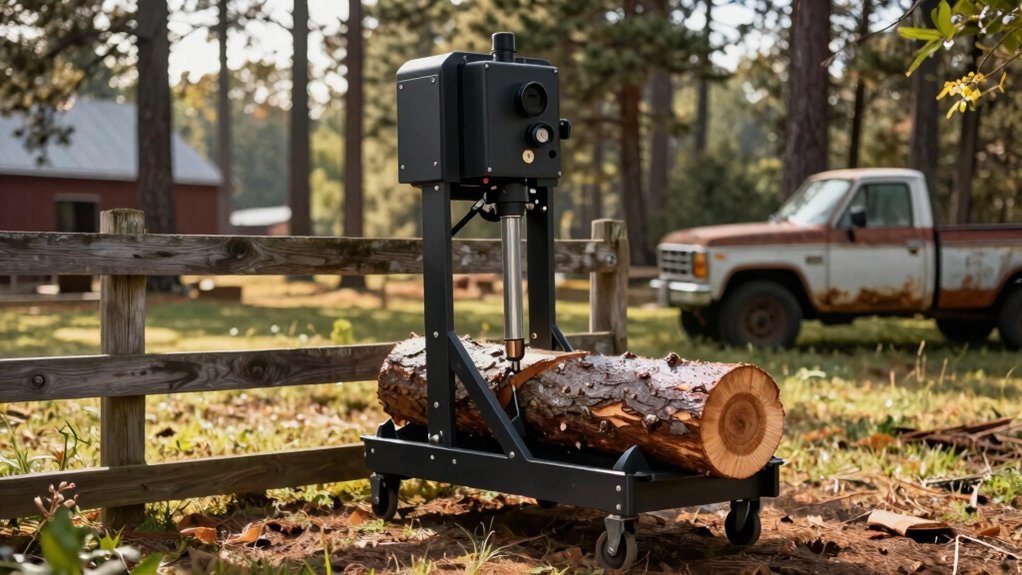
When you compare commercial splitters, start by checking hydraulic power capacity and engine type to gauge performance and reliability. Next, assess mobility and towability features to guarantee the unit fits your worksite and transport needs. Finally, verify safety mechanisms, controls, and log size compatibility so the splitter operates securely and handles the wood you’ll process.
Hydraulic Power Capacity
Even though you might think horsepower alone decides a splitter’s performance, hydraulic power capacity—measured in gallons per minute (GPM) flow and reservoir size—plays a crucial role. A 12‑28 GPM flow range sustains high‑force cycles, while a 6‑7 gal tank holds enough fluid for continuous operation and keeps the system cool during rapid splits. Splitting force ties directly to hydraulic capacity: a 30‑ton unit typically needs 14 GPM and a 6‑gal reservoir, whereas a 40‑ton model may demand a 7‑gal tank with similar flow. Two‑stage gear pumps boost efficiency, delivering higher pressure at lower engine RPM and cutting cycle times to 11–16 seconds. Choose the right hydraulic fluid, such as AW32, and stay on top of maintenance to preserve pressure, prevent contamination, and maintain peak performance.
Engine Type & Reliability
Hydraulic capacity sets the stage, but the engine that powers the splitter determines how consistently you’ll get that force. Gas‑powered OHV engines, usually 7–13 HP, give the torque needed for 30‑ton splitters and hold up in outdoor settings. Diesel engines boost fuel efficiency and stretch service intervals, though they add weight and cost—making them ideal for heavy‑duty commercial work. Electric motors cut emissions and maintenance, but their typical ≤ 10 HP output can limit force on large‑scale jobs. Choose liquid‑cooled engines if you expect continuous high‑load cycles; they stay cooler than air‑cooled units and last longer. Keep reliability high with regular oil changes, proper fuel filtration, and the manufacturer‑specified spark plugs, ensuring thousands of split cycles without trouble.
Mobility & Towability Features
If you plan to move your splitter between job sites, prioritize DOT‑certified tires, a compatible ball coupler (usually 2 in), and a safety chain about 24 in to guarantee stable traction and quick, secure hitching. Choose a model whose tow rating matches your ATV, UTV, or trailer, and confirm it safely handles speeds up to 45 mph. Lighter units around 100 lb let you lift them onto a vehicle without a forklift, while heavier frames may need a dedicated lift. Check that the wheel design and reinforced frame can endure off‑road terrain and the load you’ll carry. Finally, verify that the coupler and chain dimensions align with standard hitch systems so you can attach and detach the splitter efficiently on every job site.
Safety Mechanisms & Controls
When you operate a commercial log splitter, a reliable emergency‑stop button is essential because it instantly cuts hydraulic pressure and engine power, preventing accidental movement. You should also look for a sturdy safety net or shield over the splitting wedge; it catches stray wood fragments and shields you from flying debris. A hydraulic pressure relief valve is another must‑have, automatically venting excess pressure when the system exceeds its rated limit. Guarantee the machine offers a lock‑out/tag‑out mechanism on the engine ignition and hydraulic pump controls so you can’t start it unintentionally during maintenance. Finally, a sensor‑based auto‑return feature that retracts the wedge after each split reduces the risk of your hands being caught in moving parts. Together, these controls create a safer, more controlled splitting experience.
Log Size Compatibility
A well‑designed safety system won’t matter if the splitter can’t accommodate the wood you need to process, so you must match the machine’s dimensions to your log sizes. First, verify the maximum log length—most commercial units handle 20‑24 in, so any longer piece will jam. Next, check allowable diameter: standard models cap at 10‑12 in, while heavy‑duty splitters reach 16 in. The wedge width should align with length length; an 8‑inch hardened‑steel wedge fits 24‑inch logs comfortably. Also, guarantee the splitting force matches your target dimensions—30‑40 tons are typical for 24‑inch length and 12‑inch diameter. Finally, confirm the hydraulic flow rate, such as 14 GPM, can sustain rapid cycles for those dimensions without slowing down. Matching these specs guarantees efficient, uninterrupted operation.
Durability & Warranty Coverage
Because a commercial splitter will face relentless, heavy‑duty use, you need a warranty that actually protects that investment. Look for at least three years of coverage on the hydraulic system and engine, because those components bear the brunt of continuous operation. Verify the warranty explicitly covers high‑wear parts—pump, cylinder, and coupler—so you won’t be left footing the bill when they fail. A manufacturer that offers on‑site service or a rapid‑parts‑replacement program can slash downtime dramatically. Make sure the policy includes normal wear and tear under continuous heavy‑duty use, not just accidental damage. Finally, read the exclusions carefully; misuse or exceeding the maximum splitting force will void coverage, jeopardizing your long‑term durability plans.