Think of the first time you tried to split a log with a dull axe—frustration, wasted effort, and a sore arm. Now picture a sleek, kinetic splitter that turns that chore into a smooth, almost effortless motion, delivering consistent cuts without the grind. You’ll uncover why the right model can save you hours, protect your back, and keep your firewood ready all season. Ready to see which seven machines deliver that promise?
| MechMaxx 34 Ton Kinetic Log Splitter (KT34) |  | Heavy‑Duty Power | Splitting Force (Ton): 34 ton | Power Source: Gasoline engine (7 HP) | Cycle Time (seconds): ~3 s | VIEW LATEST PRICE | Read Our Analysis |
| 33 Ton Log Splitter-Full Boar Engine 236cc (49 State) |  | Rugged Value | Splitting Force (Ton): 33 ton | Power Source: Gas engine (236 cc Full Boar) | Cycle Time (seconds): 14.3 s | VIEW LATEST PRICE | Read Our Analysis |
| Heavy-Duty Four-Way Wedge for 22 & 25 Ton Log Splitters |  | Efficiency Upgrade | Splitting Force (Ton): 22 & 25 ton (compatible) | Power Source: Hydraulic (requires splitter) | Cycle Time (seconds): N/A (wedge only) | VIEW LATEST PRICE | Read Our Analysis |
| 12‑Ton Manual Hydraulic Log Splitter with Steel Beam and Wheels |  | Eco‑Friendly Manual | Splitting Force (Ton): 12 ton | Power Source: Manual hydraulic (no engine) | Cycle Time (seconds): N/A (manual) | VIEW LATEST PRICE | Read Our Analysis |
| FORESTWEST 10‑Ton Kinetic Log Splitter 13.6 A |  | Compact Electric | Splitting Force (Ton): 10 ton | Power Source: Electric motor (2 HP) | Cycle Time (seconds): N/A (electric, unspecified) | VIEW LATEST PRICE | Read Our Analysis |
| SuperHandy 25‑Ton Gas Log Splitter with 7HP Engine |  | Portable Pro | Splitting Force (Ton): 25 ton | Power Source: Gas engine (7 HP AlphaWorks) | Cycle Time (seconds): 12 s | VIEW LATEST PRICE | Read Our Analysis |
| Garvee 12‑Ton Hydraulic Log Splitter with Wheels | 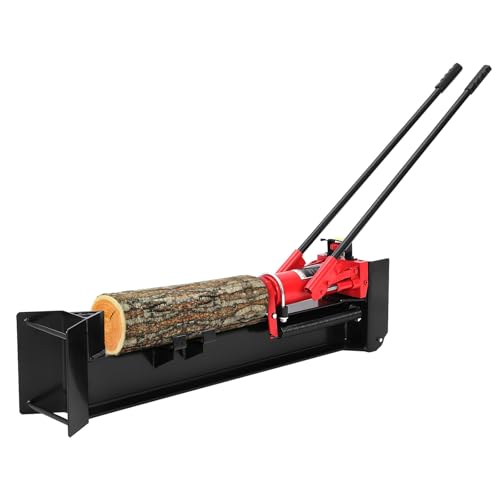 | Versatile Hydraulic | Splitting Force (Ton): 12 ton | Power Source: Manual hydraulic (no engine) | Cycle Time (seconds): N/A (manual) | VIEW LATEST PRICE | Read Our Analysis |
More Details on Our Top Picks
MechMaxx 34 Ton Kinetic Log Splitter (KT34)
If you need a splitter that can handle massive logs with minimal effort, the MechMaxx 34‑ton KT34 is the clear choice. Its 7 HP Ducar gasoline engine delivers a 34‑ton splitting force, crushing 28‑inch logs in just three seconds—up to six times faster than hydraulic rivals. The heavy‑duty steel frame and precision‑balanced flywheels keep the unit stable, allowing one‑person operation with low maintenance. At 110 × 51 × 47 in and 545 lb, it fits most garages yet packs power for homeowners, farmers, and commercial firewood producers. You’ll enjoy long‑lasting performance and high productivity without hassle.
- Splitting Force (Ton):34 ton
- Power Source:Gasoline engine (7 HP)
- Cycle Time (seconds):~3 s
- Log Diameter Capacity (inches):28 in
- Mobility (Wheels / Towing):No wheels, stationary
- Weight (lb):545 lb
- Additional Feature:Precision‑balanced flywheels
- Additional Feature:One‑person operation
- Additional Feature:Low maintenance design
33 Ton Log Splitter-Full Boar Engine 236cc (49 State)
Looking for a rugged, high‑capacity splitter that can handle massive logs without breaking a sweat? The 33‑ton Yardmax unit packs a 236 cc Full Boar OHV engine, delivering a 14.3‑second split cycle and a 22¾‑inch stroke that tackles logs up to 24 inches. Its H‑beam frame minimizes deflection, while the two‑way wedge shape maximizes bite. You’ll appreciate the pivoting hydraulic handle, which swings from vertical to horizontal, letting you position logs without heavy lifting. Sixteen‑inch DOT‑approved tires roll over rough terrain, and the 2‑inch ball hitch with safety chains makes towing a breeze. This splitter blends power, durability, and mobility for serious firewood prep.
- Splitting Force (Ton):33 ton
- Power Source:Gas engine (236 cc Full Boar)
- Cycle Time (seconds):14.3 s
- Log Diameter Capacity (inches):24 in
- Mobility (Wheels / Towing):16‑inch tires, ball hitch
- Weight (lb):473 lb
- Additional Feature:Auto‑return control valve
- Additional Feature:Internal hydraulic oil filter
- Additional Feature:Pivoting hydraulic handle
Heavy-Duty Four-Way Wedge for 22 & 25 Ton Log Splitters
The Heavy‑Duty Four‑Way Wedge is the perfect upgrade for anyone who needs to cut log‑splitting time in half on a 22‑ or 25‑ton horizontal splitter. You’ll slide it over the existing wedge, loop the safety cable around the cylinder, and lock it with the included lynch pin—no tools required. Its high‑grade steel construction and rust‑resistant powder‑coat keep it sturdy in harsh weather. At 10 × 9 × 7 in and just 7.78 lb, it’s lightweight enough to handle yet robust enough to split each log into four pieces per pass. Compatibility is limited to flat‑surface, straight‑blade splitters in the horizontal position, ensuring a seamless fit and reliable performance.
- Splitting Force (Ton):22 & 25 ton (compatible)
- Power Source:Hydraulic (requires splitter)
- Cycle Time (seconds):N/A (wedge only)
- Log Diameter Capacity (inches):N/A (wedge)
- Mobility (Wheels / Towing):No wheels (attachment)
- Weight (lb):7.78 lb (wedge)
- Additional Feature:Rust‑resistant powder‑coat
- Additional Feature:Slides over existing wedge
- Additional Feature:Exclusive horizontal split
12‑Ton Manual Hydraulic Log Splitter with Steel Beam and Wheels
Need need a lightweight, portable splitter that still delivers 12‑ton force, the 12‑ton manual hydraulic log splitter with a steel beam and wheels is the perfect match. You’ll split logs up to 18.7 in long and 8 in thick with 37‑inch handles and two‑speed operation. The spring‑loaded return knob resets the ram fast, while built‑in wheels let you roll it over uneven ground. Laser‑cut alloy steel and a full steel beam give durability at 98 lb and a compact 42 × 8.25 × 12 in footprint. No gasoline, oil, or electricity means zero emissions and safe use for all ages. ExploreHorizon backs it with a warranty; ASIN B0GR4ZG7DR.
- Splitting Force (Ton):12 ton
- Power Source:Manual hydraulic (no engine)
- Cycle Time (seconds):N/A (manual)
- Log Diameter Capacity (inches):8 in
- Mobility (Wheels / Towing):Built‑in wheels
- Weight (lb):98 lb
- Additional Feature:Zero emissions operation
- Additional Feature:Laser‑cut alloy steel
- Additional Feature:Spring‑loaded return knob
FORESTWEST 10‑Ton Kinetic Log Splitter 13.6 A
If you need a reliable, high‑capacity splitter for large firewood piles, the Forestwest 10‑Ton Kinetic Log Splitter’s 13.6 A double‑flywheel delivers 10 tons of force with a 2 HP motor, handling logs up to 16 in long and 12 in thick even in cold weather. Its electric design means no oil leaks and minimal maintenance, while large wheels and sturdy handles let you move the 143‑lb unit across the yard with ease. The compact 47 × 23 × 13‑in footprint fits in most garages, and the 10‑ton rating outperforms many hydraulic rivals. With a strong best‑seller rank, it proves both durable and popular among serious woodcutters.
- Splitting Force (Ton):10 ton
- Power Source:Electric motor (2 HP)
- Cycle Time (seconds):N/A (electric, unspecified)
- Log Diameter Capacity (inches):12 in
- Mobility (Wheels / Towing):Large wheels, handles
- Weight (lb):143 lb
- Additional Feature:Double‑flywheel design
- Additional Feature:Operates at low temperatures
- Additional Feature:No oil leaks
SuperHandy 25‑Ton Gas Log Splitter with 7HP Engine
Powerful efficiency makes the SuperHandy 25‑Ton Gas Log Splitter the go‑to choice for anyone who needs to turn large, stubborn firewood into dry, stackable pieces quickly. Its 7 HP AlphaWorks engine drives a two‑stage Bucher hydraulic pump, delivering consistent force that splits logs up to 20 ft long and 24 in in diameter in just 12 seconds. The half‑beam steel wedge and 10 polyurethane wheels keep the 90‑lb unit portable, while the ergonomic folding handle lets you maneuver it with ease. Remember to wear protective gear and use AW32 hydraulic fluid, which isn’t included. GCM backs it with a standard warranty.
- Splitting Force (Ton):25 ton
- Power Source:Gas engine (7 HP AlphaWorks)
- Cycle Time (seconds):12 s
- Log Diameter Capacity (inches):24 in
- Mobility (Wheels / Towing):10 polyurethane wheels
- Weight (lb):90 lb
- Additional Feature:Half‑beam steel wedge
- Additional Feature:Foldable ergonomic handle
- Additional Feature:Polyurethane wheels
Garvee 12‑Ton Hydraulic Log Splitter with Wheels
The Garvee 12‑ton hydraulic log splitter with wheels is perfect for anyone who wants fast, low‑effort splitting on uneven terrain. You’ll appreciate its 12‑ton hydraulic force, which cleanly splits logs up to 18.7 in long and 8 in thick. The 37‑in handles and two‑speed lever give you smooth control while reducing strain. Built‑in wheels glide across grass, dirt, or rough ground, and the spring‑loaded return knob snaps the ram back for rapid cycles. Its laser‑cut alloy steel body needs no gas, oil, or electricity, eliminating those hazards. At roughly 98 lb and compact dimensions, it’s portable for camping, home heating, or small‑scale wood processing. Manufacturer warranty backs the unit.
- Splitting Force (Ton):12 ton
- Power Source:Manual hydraulic (no engine)
- Cycle Time (seconds):N/A (manual)
- Log Diameter Capacity (inches):8 in
- Mobility (Wheels / Towing):Built‑in wheels
- Weight (lb):~98 lb
- Additional Feature:Two‑speed hydraulic lever
- Additional Feature:Built‑in transport wheels
- Additional Feature:No gas or electricity required
Factors to Consider When Choosing a Kinetic Log Splitter
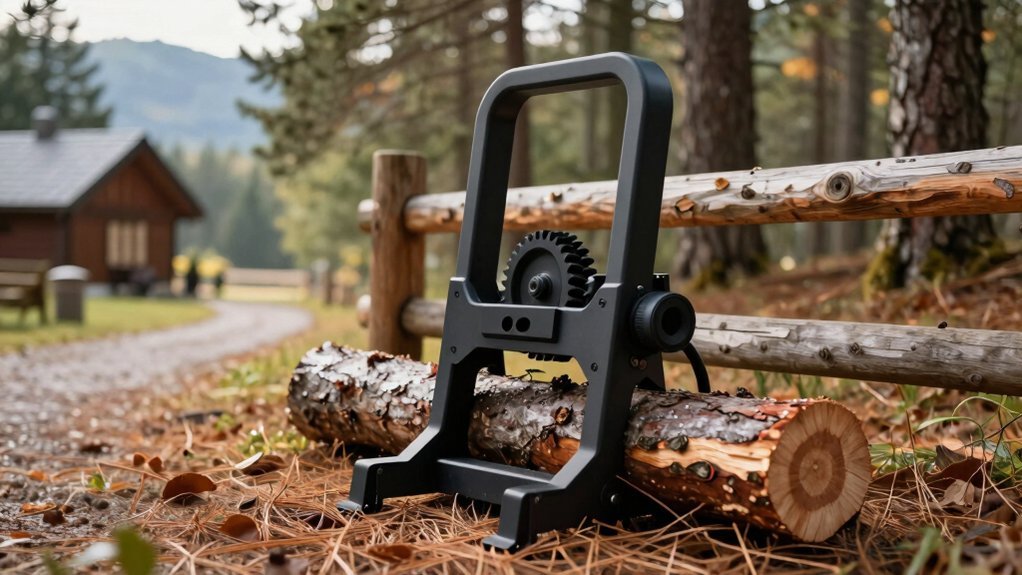
You’ll want to match the engine power rating to the size of wood you plan to split, because insufficient power can stall the machine. Check the splitting force capacity and cycle‑time efficiency to confirm the splitter handles tough logs quickly without overheating. Finally, evaluate frame durability, construction quality, and the mobility of the wheels to assure long‑term reliability and easy transport.
Engine Power Rating
When you compare kinetic log splitters, the engine’s power rating tells you the maximum splitting force it can deliver—higher horsepower means you can handle larger, heavier logs. A 7 HP gasoline engine typically yields about 34 tons of force, while a 2 HP electric motor provides roughly 10 tons. Power also dictates cycle speed; high‑HP units can finish a split in as little as three seconds, whereas lower‑power models linger at twelve to fourteen seconds per cycle. Consider fuel use, too: larger gasoline engines guzzle more gasoline per hour, raising operating costs compared with smaller electric counterparts. Most importantly, match the horsepower to the logs you’ll split—insufficient power stalls on thick or long pieces, while excess power may waste energy and money. Choose a rating that balances speed, cost, and the size of wood you regularly process.
Splitting Force Capacity
If you match the splitter’s tonnage to the diameter of your biggest logs, you’ll avoid stalls and keep productivity high. Choose a model whose splitting force meets or exceeds the largest log diameter you’ll tackle; force scales roughly with size. A 34‑ton unit handles 28‑inch logs effortlessly, while a 10‑ton machine struggles beyond 12 inches. Remember that wood species matters—harder hardwoods demand several extra tons of force compared to softwoods of the same length. Prioritize the listed tonnage over horsepower, because kinetic torque directly translates into usable splitting force. Higher force means fewer strikes per log, boosting overall throughput and cutting operator fatigue. Guarantee the rating surpasses both size and hardness requirements for reliable, effortless firewood preparation.
Cycle Time Efficiency
Because cycle time directly determines how many logs you can split per hour, choosing a splitter with a fast, consistent hydraulic return is essential for maximizing productivity. A 3‑second cycle can push roughly 1,200 logs through an 8‑hour shift, while a 14‑second cycle caps you at about 400 logs. Faster cycles also cut operator fatigue because you spend less time waiting for the ram to return. Look for higher horsepower engines and larger hydraulic pumps, as they boost flow rate and shrink cycle time. Consistency matters too—steady timing gives predictable throughput, which helps you schedule firewood production or meet commercial orders without surprise delays. Prioritize these specs to keep your workflow efficient and your workload manageable.
Frame Durability Construction
A sturdy frame built from high‑grade steel with a reinforced cross‑brace keeps flex to even under the splitter’s peak tonnage, ensuring the machine stays reliable through countless cycles. You’ll want a heavy‑duty H‑beam or half‑beam design that spreads load evenly, so even the biggest logs won’t cause deflection. Look for welded joints and bolted connections rated for at least 34 tons; they’ll hold up under rapid, high‑impact cycles. Precision‑balanced flywheels and a stable base cut vibration, extending frame life. Finally, choose a corrosion‑resistant finish—powder‑coat or galvanized steel—to protect the structure from weather and humidity, keeping your splitter ready for season after season of firewood preparation.
Mobility and Wheels
When you’re moving a kinetic log splitter across uneven terrain, larger‑diameter wheels—16 inches or more—cut rolling resistance and make the job smoother. You’ll feel the difference instantly: pneumatic or solid‑rubber tires grip soft ground better than hard‑plastic rims, so you won’t sink or slip. A wide wheelbase adds stability, keeping the splitter from tipping when you roll it up a slope or over rocks. Look for integrated brakes or lock‑away mechanisms; they stop accidental rolling while you’re splitting. If storage space is tight, choose a model with fold‑away or detachable wheels, letting you tuck the unit away compactly after use. These wheel features together give you confidence, safety, and efficiency on any site.
Fuel Type Considerations
Choosing the right fuel for your kinetic log splitter hinges on where and how you’ll use it. Gasoline gives you high torque and quick cycles, but you’ll need a fuel tank, regular oil changes, and you’ll produce exhaust—making indoor or enclosed‑area work impractical. Diesel matches gasoline’s power while sipping fuel and lasting longer, yet it adds weight, noise, and may demand higher‑grade diesel in cold weather. Electric models erase emissions and cut maintenance, but they rely on battery capacity or a power outlet, limiting portability and long‑run sessions. Hybrid or dual‑fuel units let you flip between gasoline and propane, offering flexibility if fuel supplies shift, though they still require ventilation and careful handling. Finally, compare operating costs: gasoline $2.50–$3.00 per gallon, diesel $3.00–$3.50 per gallon, electricity $0.12 per kWh, to gauge long‑term expense.
Safety Features Overview
If you want a kinetic log splitter that won’t become a safety hazard, start by checking its stability and protective features. A heavy‑duty steel base or frame keeps the unit from tipping while you’re splitting, and a safety chain or latch locks the hydraulic cylinder in the raised position when you’re not using it. Make sure an emergency stop or kill‑switch instantly cuts power to the engine or hydraulic system. A spring‑loaded or auto‑return mechanism retracts the ram quickly, limiting exposure to moving parts. Finally, verify that protective guards or covers shield the flywheel and hydraulic cylinder, keeping hands and clothing away from high‑speed components. These safeguards let you work confidently and avoid accidents.
Maintenance Requirements
Even though a kinetic log splitter can handle heavy‑duty work, its performance hinges on diligent maintenance. Follow the manufacturer’s schedule for inspecting and tightening the flywheel bolts; a balanced flywheel delivers consistent force. Clean and lubricate the engine’s air filter and spark plug at least every 100 hours to prevent power loss and overheating. Drain and replace hydraulic fluid in the pump and cylinder according to the manual, typically every 250 hours, to keep the ram moving smoothly. Check the drive belt or chain weekly for tension, fraying, or slipping, because a compromised drive reduces splitting efficiency. Finally, keep the frame and welds free of rust and debris, applying a light coat of rust‑inhibiting oil to exposed steel after each season. This routine protects components, extends lifespan, and guarantees reliable firewood preparation.