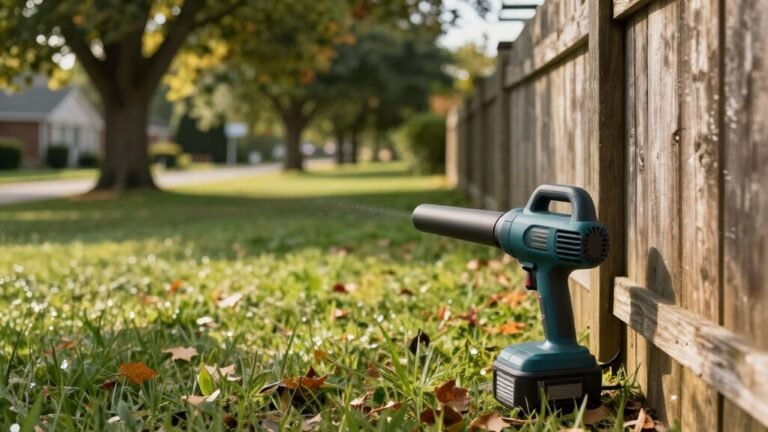
No federal ban exists, but your state or city almost certainly has rules—and they’re tightening up. California phases out gas models entirely. Washington DC banned them outright in 2022. West Hollywood and Belvedere prohibit both gas and electric. Here’s the thing: over 200 municipalities allow electric blowers without restrictions. Before you buy, check your municipal website or call your local police non-emergency line to confirm what’s legal in your zip code. The specifics of where you live matter far more than national policy.
No Federal Ban Yet: Why Leaf Blower Rules Vary by State
While you might assume there’s a federal law governing gas-powered leaf blowers across the country, here’s the thing—there isn’t one. Instead, you’re dealing with a patchwork system where the rules shift dramatically depending on where you live. The federal government has basically handed the decision-making authority to individual states and municipalities, which means your gas blower could be perfectly legal in one town and banned in the next.
What most people don’t realize is that state exemptions can actually override local rules. Florida’s farm bill, for example, prevents cities from banning gas-powered blowers entirely. Meanwhile, Virginia lets each municipality decide independently. This fragmented approach means you’ve got to check your specific local regulations before investing in equipment. Municipal authority varies wildly, so don’t assume anything—verify what applies where you live. California has recently banned new gas‑powered leaf blowers and will phase out existing equipment over the next several years. Several states have also enacted emission reduction targets that drive these bans. Electric leaf blowers often operate at a lower noise level due to fewer moving parts.

7 Amp motor provides a powerful and efficient blowing performance
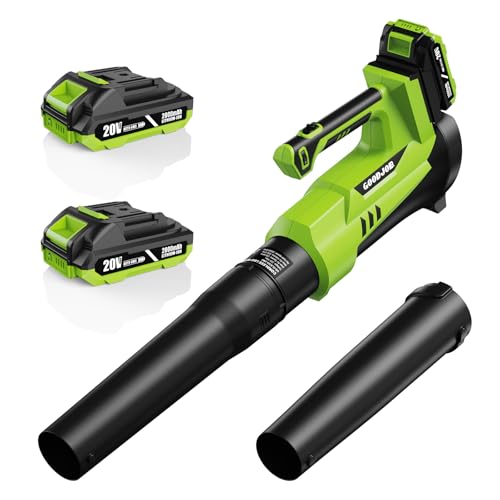
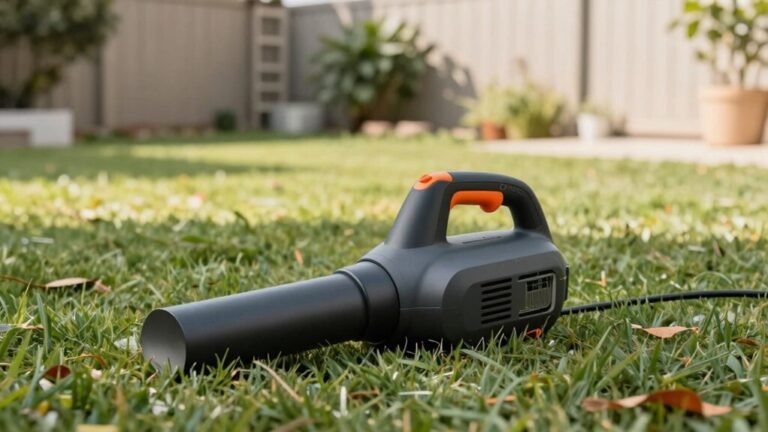
650 CFM & 200 MPH HIGH-TORQUE OUTPUT Standing out among cordless leaf blowers battery powered, this unit is driven by a 20,000 RPM high-torque motor that delivers 650 CFM of air volume and 200 MPH air speeds. The thermal-regulated design maintains stable operating temperatures during extended cleaning sessions. Operating with a low-noise profile, it efficiently clears dry and damp yard foliage, driveway debris, garage grit, and light snow.

420 CFM Powerful Airflow: Delivers up to 420 CFM of airflow for fast removal of dry leaves, grass clippings, dust, and light debris. Ideal for patios, driveways, garages, sidewalks, decks, and everyday residential yard cleanup
Where Gas Leaf Blowers Are Banned (Find Your Jurisdiction)
Now that you know the rules aren’t set in stone at the federal level, it’s time to get specific about your own backyard. California’s got you covered with several cities enforcing strict gas leaf blower bans. West Hollywood and Belvedere‘ve prohibited gas blowers for decades—we’re talking since the ’80s. Del Mar and Hermosa Beach took it further, banning both gas and electric models entirely. Then there’s Pasadena, which recently tightened its ordinance with exemptions only for commercial areas 500 feet from homes. Here’s the thing: municipal compliance varies wildly depending on your jurisdiction. Before you fire up that gas-powered machine, check your local ordinance. Your city might allow electric alternatives with decibel limits, or it might prohibit everything. Don’t get caught—verify your specific regulations now. Noise pollution is a major health concern driving many of these bans. Air quality also improves significantly when gas blowers are restricted. Parallel token output can dramatically speed up yard cleanup, reducing both time and physical effort.

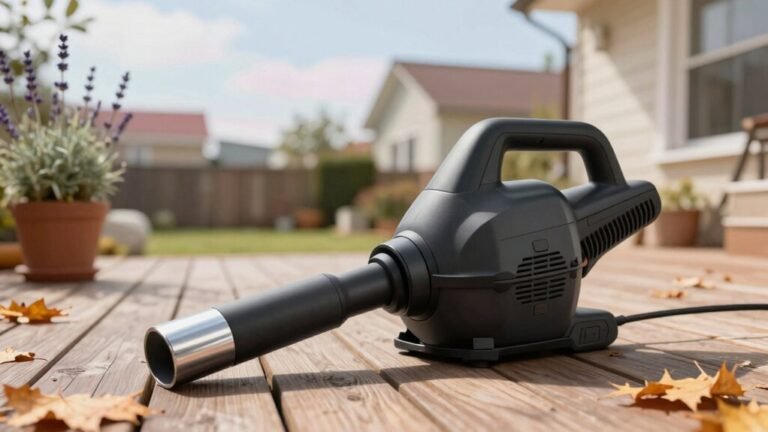
Powerful Performance – This leaf blower delivers an impressive 210 MPH airspeed and 390 CFM airflow, this corded leaf blower easily clears leaves, debris, and grass clippings from your yard, driveway, and patio.

Powerful airflow up to 450 CFM and up to 140 MPH for quick cleanup of leaves and debris

STRONG BLOWING: 12 Amp electric blower delivers up to 600 CFM and 110 MPH for clearing leaves and debris from lawns, driveways, patios, decks, and walkways.
Washington DC, California, and Massachusetts Lead the Way
If you’re thinking about picking up a gas-powered leaf blower, three major jurisdictions have already made that decision for you—and they’re not backing down. Washington DC banned gas models entirely starting January 2022, giving residents a three-year period to battery power. California’s pushing hard through local ordinances—Montclair’s 2023 rule passed federal court scrutiny and inspired statewide momentum. Massachusetts lags behind, but the policy impact from neighboring regions is creating pressure for change.
Here’s the thing: this market shift isn’t random. These bans stem from real health concerns—gas blowers hit 100+ decibels and pump out serious air pollution. The good news? Battery technology’s genuinely solid now, and you’ll find reasonable alternatives won’t break the bank. The original leaf blower was invented by Walter B. H. Smith in the 1950s, a milestone that sparked modern yard tools. Backpack blowers offer higher horsepower for larger properties. The rapid adoption of high‑power leaf blowers has spurred a global regulatory response to curb emissions.
What the Fines Are and How They’re Enforced
Here’s the thing—knowing a ban exists and knowing what it’ll cost you are two different matters. Enforcement mechanisms vary by location, but they’re serious business. In Washington DC, you’re looking at fines up to $500 per offense, applied to both homeowners and companies alike. Montgomery County Maryland matches that $500 penalty, though they’ve streamlined enforcement by dropping photo requirements as of 2024. Most jurisdictions use civil penalties rather than criminal charges, making these violations easier to pursue. What most people don’t realize is that fine structures stay consistent across regions—typically $500 per violation. Virginia leaves enforcement decisions to individual municipalities, so your penalty depends on where you live. Courts have upheld these fine structures under rational basis testing, so don’t expect legal loopholes. Landscapers in Montgomery County have reported higher costs for electric equipment to comply with the new regulations. The takeaway? Your blower choice has real financial consequences. Using the wrong fluid can cause seal failure and excessive wear in hydraulic systems. Electric blowers provide quieter operation. Leaf blowers can reach noise levels of 80‑95 dB, comparable to a lawn mower or a busy street.
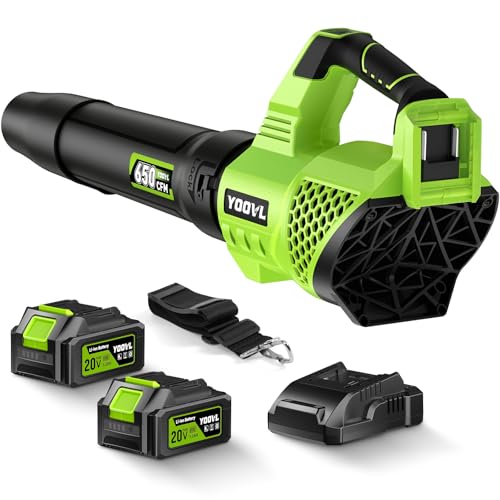
Upgraded Leaf Blower:More than just a leaf blower—YOOVL leaf blower cordless efficiently handles light snow, dust, grass clippings, and other debris from surfaces like lawns, sidewalks and garages. A must-have for year-round yard maintenance and thorough cleanups.

Efficient Cleaning: Upgraded cordless leaf blower eliminates the limitations and bulky feeling of traditional leaf blower with ropes. It can quickly blow away lightweight objects such as leaves and dust, making your cleaning work easier. Suitable for courtyards, parks, streets, and other places.

【Dual-Battery Runtime】Dual 21V batteries, 9000mAh total, By alternating between the two batteries, you get a total of 40 minutes of runtime with this cordless leaf blower to clean your yard more efficiently!
Health Risks and Pollution Stats Behind the Bans
The reason cities and counties across the country are cracking down on gas-powered leaf blowers isn’t just about noise complaints from your neighbors—it’s actually a serious public health issue. You’re looking at noise pollution levels between 90–115 decibels, which causes permanent hearing loss in just 15 minutes at the operator’s ear. But that’s only half the story. Those unburned fuel emissions release carcinogens like benzene and formaldehyde directly into the air you’re breathing. Just 30 minutes of two‑stroke use produces pollutants equivalent to driving an F‑150 nearly 4,000 miles. The health impacts? Asthma, heart disease, cancer, and premature death—especially for kids, elderly folks, and landscaping workers. That’s why the bans exist. The high‑speed impeller creates a rotary turbulence that amplifies the sound pressure, contributing significantly to the overall noise level. Additionally, parallel leaf clearing can cut yard work time by up to 50%, reducing prolonged exposure for workers. Understanding CFM helps explain why these devices can move large volumes of air quickly, intensifying both noise and pollutant dispersion.
Electric Blowers: The Legal Alternative Everywhere
Since gas-powered leaf blowers are getting banned in more places every year, you’re probably wondering what your actually legal options are—and the good news is, electric blowers have quietly become the real deal alternative that works just about everywhere. Over 200 U.S. municipalities now permit electric models without restrictions, making them your safest bet regardless of where you live. You’ll find electric incentives popping up in cities like Portland and Seattle, where governments actively encourage the switch. Here’s the thing: electric blowers already meet strict noise standards across all jurisdictions, so you’re not sacrificing compliance. Whether California’s 2024 ban kicks in or your local ordinance tightens tomorrow, electric gives you a legal, future-proof option that actually performs. You’re covered. Recent tests show that battery endurance in electric models rivals that of many gas units, delivering consistent power throughout a typical yard‑maintenance session. Additionally, electric blowers often feature adjustable airflow settings that let users tailor performance to different leaf densities and terrain types. Many electric models also run on propane‑compatible fuel alternatives, expanding flexibility for those with limited access to electricity.
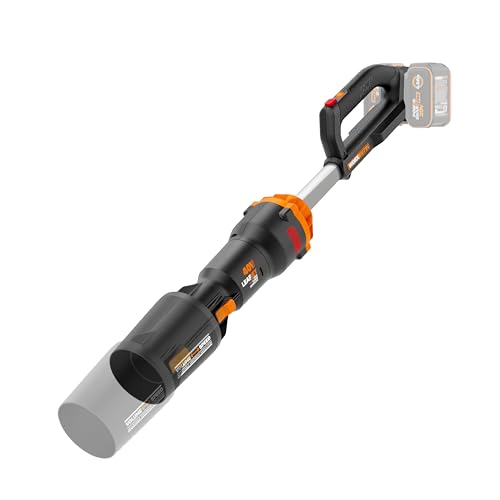
STRONG BLOWING: Features switchable high-speed and high-volume modes for flexible cleanup. Delivers up to 620 CFM and 165 MPH to clear leaves, grass clippings, and debris from lawns, patios, driveways, and walkways.

【Dual-Battery System & Fast Charger】It comes with two 20V 2.0Ah batteries that can be used interchangeably, so you can keep working while one charges. At low speed, runtime extends up to 60 minutes per full charge (actual runtime varies by speed and conditions). The included fast charger powers up each battery efficiently.

Brushless Motor Cordless Leaf Blower-More Than Just a Leaf Blower: Laapee cordless leaf blower with brushless motor handles grass clippings, dust, light snow, and other debris from lawns, sidewalks, and garages. A must-have for year-round yard maintenance and thorough cleanups.
Why Landscape Workers Are Hit Hardest
While gas-powered leaf blowers get the headlines, the workers holding them every single day face consequences that go way beyond legal trouble—and that’s where things get really serious. You’re looking at direct exposure to toxic fumes—carbon monoxide, nitrous oxides, and carcinogenic hydrocarbons—that hit worker health hard during multi-hour operations. Two-stroke engines burn oil with gas, sending pollutants straight into breathing zones. That’s 300 times more air pollution than a pickup truck, according to research. Your labor rights matter here too. Landscape professionals bear the brunt when bans phase in, forcing costly equipment shifts while facing enforcement pressure that hits commercial crews first. The real burden? Workers adapting their livelihoods while managing health risks you never hear about. Additionally, improper use of brake fluid in hydraulic equipment can cause severe corrosion and seal damage, underscoring the importance of using the correct fluid specified by manufacturers. Modern studies show that leaf vacuum efficiency can dramatically reduce the amount of airborne particulate matter compared to traditional blowers.
How to Verify Rules Before You Buy or Use One
Before you drop money on a new leaf blower or fire up that old one gathering dust in the garage, you’ve got to know what your local rules actually are—because what’s perfectly legal two towns over might get you a fine or an angry neighbor complaint in yours.
Start your rule lookup by checking your municipal website using your zip code. Search for leaf blower regulations and noise ordinances specifically. Call your local police non-emergency line to ask about seasonal restrictions, parcel size thresholds, and decibel limits in your area. Verification takes maybe thirty minutes, but it saves you headaches later. Contact local authorities directly—they’ll clarify whether gas blowers are banned outright or just restricted during certain months.