You can’t buy a new gas leaf blower in California anymore—that’s been illegal since January 2024. But here’s the thing: you can still use your existing gas blower without penalty. Over 100 cities have their own restrictions too, so check your local ordinances. The good news is battery-powered alternatives now match gas performance, and you’ve got rebates and tax credits to soften the switch. Enforcement is spotty, but violations can rack up fines fast, so compliance saves you headaches down the road.
California’s 2024 Ban on New Gas Leaf Blowers
Since California signed Assembly Bill 1346 into law, here’s what you actually need to know: starting January 1, 2024, you can’t buy a brand-new gas-powered leaf blower in the state anymore. The law targets equipment manufactured after December 31, 2023, so retailers won’t stock new gas models once that date hits.
Here’s the thing—you can still use your existing gas blower without penalty. The ban only affects new sales, not what you already own or continue operating. What most people don’t realize is the emissions impact these tools create. One hour of operation produces pollution equivalent to driving a small car 1,100 miles.
Because electric leaf blowers have fewer moving parts and lack a noisy internal combustion engine, they are generally quieter, making them a more comfortable choice for residential neighborhoods. The good news? California’s offering electric incentives to help you shift. You’ll find rebate programs providing $250 for trading gas blowers for electric ones, plus $30 million allocated statewide for equipment upgrades. This policy aligns with broader air quality initiatives aimed at reducing particulate matter and greenhouse gases. Some cities have already adopted local emission caps that further limit the use of gasoline equipment in public spaces.

7 Amp motor provides a powerful and efficient blowing performance
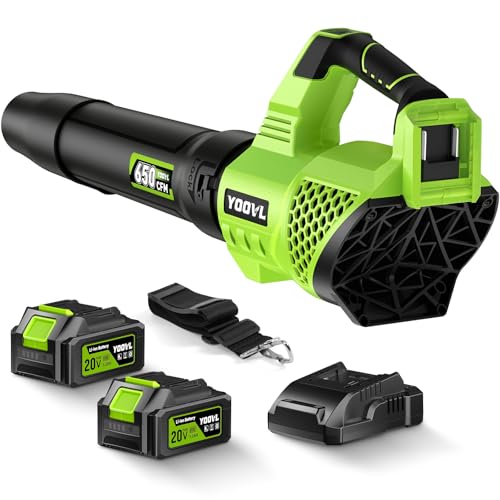
Upgraded Leaf Blower:More than just a leaf blower—YOOVL leaf blower cordless efficiently handles light snow, dust, grass clippings, and other debris from surfaces like lawns, sidewalks and garages. A must-have for year-round yard maintenance and thorough cleanups.

【Dual-Battery System & Fast Charger】It comes with two 20V 2.0Ah batteries that can be used interchangeably, so you can keep working while one charges. At low speed, runtime extends up to 60 minutes per full charge (actual runtime varies by speed and conditions). The included fast charger powers up each battery efficiently.
Gas Blower Bans by California City
While California’s statewide ban handles new sales, plenty of cities aren’t waiting around—they’ve already put their own rules in place, and some’ve been at it for decades. West Hollywood started way back in 1986, and Santa Monica followed suit with a total ban. Today, over 100 California cities have restrictions or bans on gas blowers.
Here’s the thing: if you’re in Walnut Creek, the April 2026 ban affects everyone—residents, contractors, and City staff. Los Angeles enforces its 500-foot residential buffer through LAMC section 112.04(c). What most people don’t realize is that many cities pair ordinances with community outreach programs and municipal rebates. LA offers $250 rebates for electric blowers when you trade in gas models through partnering businesses. Check your local rules before you buy. Stihl’s power advantage is often cited by professionals when evaluating durability and performance. Blade design also influences airflow efficiency, a key factor in comparing Stihl and Echo models. Battery capacity determines how long cordless electric blowers can operate before recharging.

Powerful Performance – This leaf blower delivers an impressive 210 MPH airspeed and 390 CFM airflow, this corded leaf blower easily clears leaves, debris, and grass clippings from your yard, driveway, and patio.

STRONG BLOWING: 12 Amp electric blower delivers up to 600 CFM and 110 MPH for clearing leaves and debris from lawns, driveways, patios, decks, and walkways.

Powerful airflow up to 450 CFM and up to 140 MPH for quick cleanup of leaves and debris
Why Gas Leaf Blower Bans Happened: Air Quality, Noise, and Health Risks
California didn’t ban gas leaf blowers on a whim—there’s serious science behind these regulations, and once you dig into the numbers, you’ll understand why cities and the state decided enough was enough. Here’s the thing: running a gas blower for one hour emits more air pollution than driving a Toyota Camry for 1,000 miles. That’s staggering air quality impact from a single device. Add California’s 16.5 million small engines, and you’re looking at massive emission standards violations. Beyond air quality, operators face occupational health risks from constant noise exposure and fumes. Community noise from 90-decibel machines disturbs neighbors daily. The fumes and particulates heighten respiratory illness risk for everyone nearby. These aren’t minor inconveniences—they’re legitimate health and environmental concerns that demanded action. The shift toward zero‑emission alternatives is accelerating as regulations tighten and technology improves. The high‑speed impeller creates a rotary aerodynamic noise that dominates the sound profile of these devices. A typical gas leaf blower can reach 85 dB during operation, comparable to the noise of a busy highway.
Legal Alternatives to Gas Blowers
The good news is you’ve got plenty of solid options that’ll keep your yard looking sharp without the guilt—or the fines. Battery-powered blowers are your main play here, and California’s backing you up with serious battery incentives to make the switch affordable. You’re looking at $30 million in state rebates through AB 1346, plus point‑of‑sale vouchers for professionals via CARB’s CORE project. Federal tax credits sweeten the deal even more—up to $7,500 for commercial equipment. Here’s the thing: vendor partnerships through programs like CALSTART connect you directly with discounted equipment options. Your county likely offers additional rebates too. Between the financial support and vendor partnerships available, shifting to electric equipment won’t drain your wallet. Backpack blowers provide higher horsepower and reduced fatigue for large properties. The performance comparison between Greenworks and Ego models shows that electric units can match or exceed gas-powered counterparts in airflow and speed. Using a leaf blower on a dryer vent can remove lint quickly but poses fire and injury risks.

420 CFM Powerful Airflow: Delivers up to 420 CFM of airflow for fast removal of dry leaves, grass clippings, dust, and light debris. Ideal for patios, driveways, garages, sidewalks, decks, and everyday residential yard cleanup

680 CFM HIGH POWER AIRFLOW: Experience powerful outdoor cleaning with a 680 CFM cordless leaf blower equipped with an advanced axial flow fan and high-speed motor. The strong airflow quickly moves leaves, grass clippings, dust, and debris from lawns, driveways, patios, garages, and other outdoor areas.
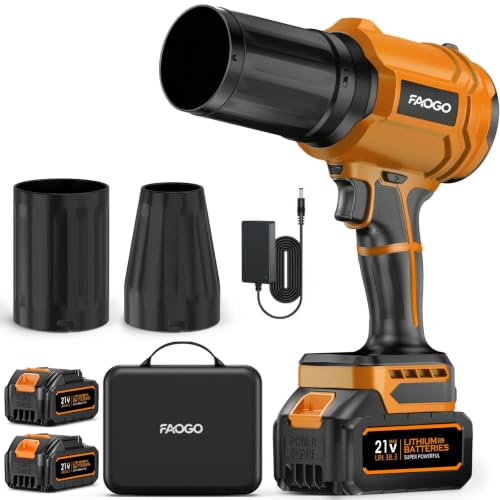
【990,000 RPM Hurricane Power】Command relentless blowing force with a 990,000 RPM turbo motor – 3X stronger than standard FAOGO leaf blowers. Effortlessly blasts wet leaves, stubborn dirt, and even light snow from patios and gardens in seconds. Say goodbye to traditional heavy leaf blowers and enjoy effortless leaf shifting.
Enforcement Challenges and Compliance Requirements
Despite decades of bans in cities like Los Angeles, you’ve probably noticed gas leaf blowers still buzzing away in neighborhoods where they’re technically illegal—and there’s a reason for that. The truth is enforcement staffing simply doesn’t exist to make these bans stick. Cities lack adequate resources and personnel to track violations consistently, so complaint tracking falls through the cracks. What most people don’t realize is that anonymous complaints—which now comprise over half of all reports—make follow‑up nearly impossible for authorities. Without routine enforcement mechanisms and dedicated staffing, even well‑intentioned ordinances become unenforceable. You’re operating in a gray zone where the law exists on paper but compliance remains optional in practice. That’s why understanding your local regulations matters—enforcement varies wildly depending on where you live. Community outreach can help bridge the gap between policy and practice. Battery inspection can also reveal if a dead or improperly installed battery is preventing the blower from starting. Parallel token generation can dramatically reduce the time needed to clean large yards.

[Extensive and Effective Work] JAGROM electric leaf blower equips with powerful motor, 130MPH and 180CFM will provide you with easy and efficient work. With the cordless design, it is easy to cross the courtyard, living room and various crevices. It is suitable for lawn care, garden, yard, depot, car and house cleaning.

【2026 Upgrade to 2 Batteries & Fast Charging】Experience industry-leading endurance with our Cordless Leaf Blower, upgraded to include two 21V-6.0Ah batteries and a rapid charger for continuous operation of 30 minutes on low-speed mode—outperforming 99% of competitors with typical 10-20 minute runtimes, plus swift 2-hour full recharges to maximize productivity.
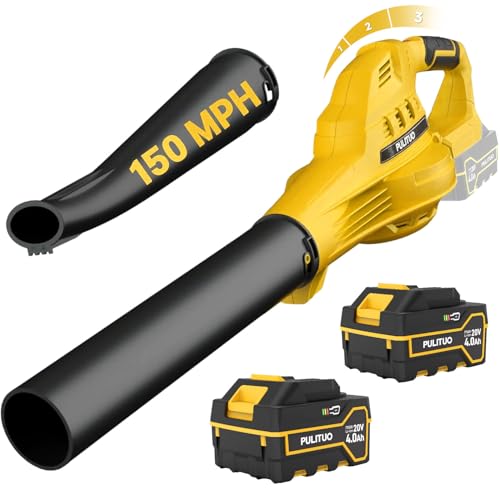
POWERFUL EFFICIENT CLEANER: Pulituo cordless leaf blower makes yard work effortless with no need for gas or cords. The battery blower's 17,000 RPM copper motor delivers stronger, faster performance. Compact and lightweight design features advanced turbo tech for max airflow, reaching 150 MPH blowing speed and 180 CFM air volume
Fines and Consequences for Non-Compliance
When you get caught using a gas leaf blower where it’s banned, the financial hit depends entirely on which California city you’re in—and honestly, that’s where things get interesting. Lafayette starts you off with a $100 administrative citation. Glendale takes a gentler approach initially, issuing warnings first, then escalating penalties: $100, $200, and finally $500 for repeat offenses. Los Gatos issues public citations to both property owners and gardeners after their soft enforcement period ended. Burlingame kicks off at $50 but jumps dramatically to $500 for subsequent violations. Los Angeles enforces within 500 feet of homes with increasing consequences. The key takeaway? Your escalation penalties compound quickly, so compliance early saves you serious cash. Monitoring hydraulic fluid temperature helps prevent system overheating and ensures optimal performance. Proper fuel‑oil mixing is essential for reliable engine start‑up. Using the correct power steering fluid can protect seals and reduce wear in vehicle systems.

[Cordless Design]: MZK leaf blower goes completely wireless, so you can move and operate freely without being tethered to a cable. With no wires to worry about, it lets you take on any cleaning task without restrictions, from your home to your yard.

Efficient Cleaning: Upgraded cordless leaf blower eliminates the limitations and bulky feeling of traditional leaf blower with ropes. It can quickly blow away lightweight objects such as leaves and dust, making your cleaning work easier. Suitable for courtyards, parks, streets, and other places.