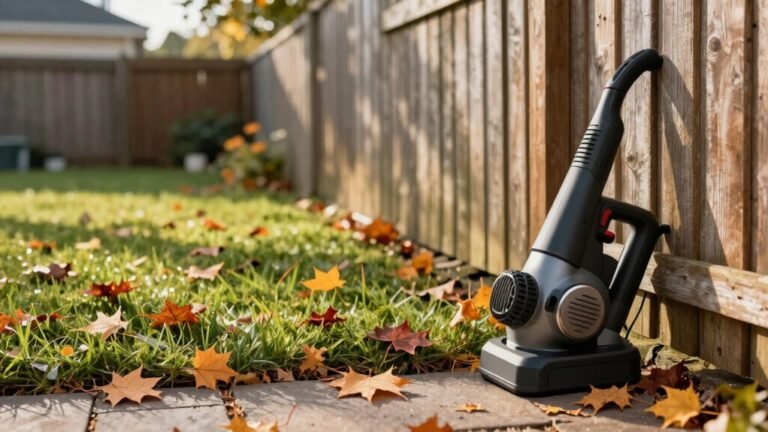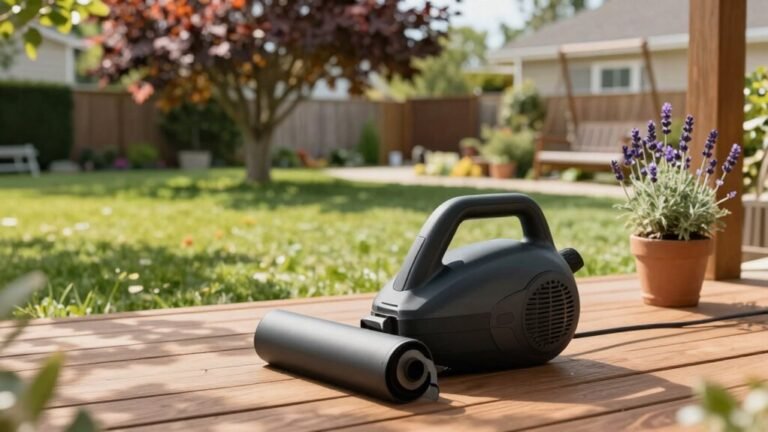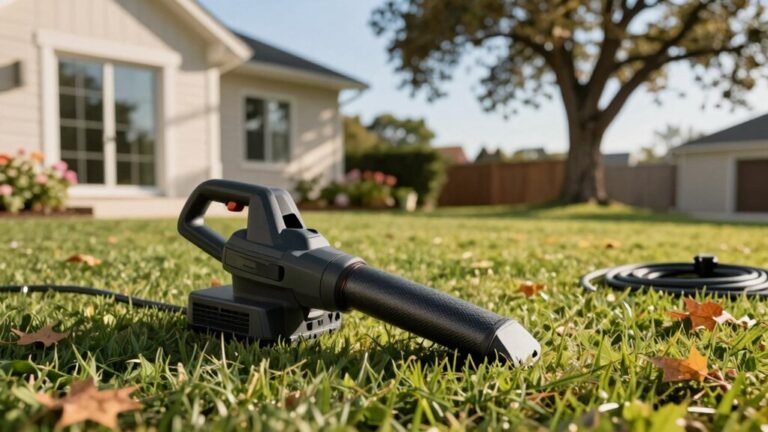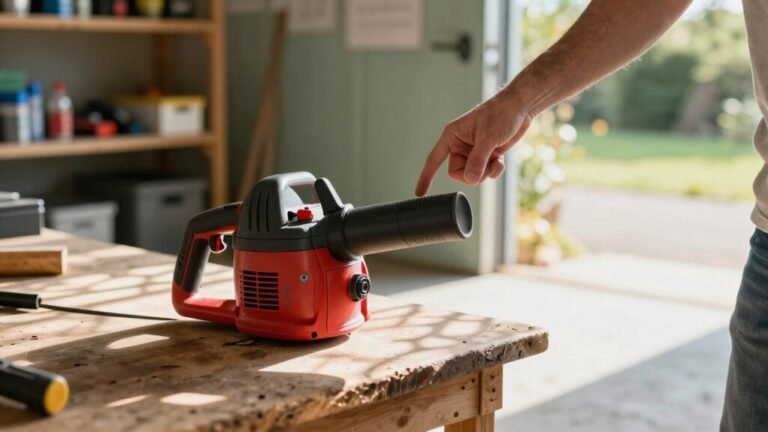
Wear safety glasses, earplugs, gloves, and sturdy boots, and make sure your blower’s fuel line, spark plug, and air filter are clean before you start. Grip both handles with a strap, aim the nozzle a few inches above the ground, and sweep each 10‑by‑10‑foot zone in overlapping strokes, moving debris toward a collection point. Adjust the throttle—low for delicate leaves, high for stubborn clumps—and pause occasionally to prevent overheating. Keep pets and neighbors at a safe distance, and you’ll finish faster while staying safe and quiet. More details await if you keep going.
Start With a Quick Leaf Blower Safety Overview
Before you fire up that leaf blower, a quick safety rundown saves you from headaches later. First, grab your protective gear: safety glasses, earplugs, gloves, long sleeves, and a dust mask or N95. Slip on sturdy boots and ditch loose jewelry—nothing should dangle near the spinning nozzle. Next, do an equipment inspection. Check the fuel line for cracks, verify the spark plug looks clean, and make sure the air filter isn’t clogged. Test the throttle lever and guarantee the safety latch clicks. If anything looks off, fix it before you start. Remember, a thorough glance at your gear and a fast check of the blower keep you safe and the job moving smoothly. Also, wear a hard hat if you’re working around low‑hanging branches or obstacles. Electric leaf blowers are significantly quieter because they lack a noisy internal combustion engine. Backpack blowers provide higher horsepower for larger properties. Using a leaf blower can dramatically cut yard‑work time by up to 50 % compared to raking alone.
Check Your Leaf Blower and Work Area for Hazards
Now that you’ve got your gear on and the blower inspected, the next step is to make sure the area around you is free of hazards. Start your hazard inspection by clearing people, pets, and bystanders at least 50 feet away; set up cones or barricades if kids are playing nearby. Scan the ground for rocks, sticks, or loose debris that could turn into projectiles, and avoid blowing near gravel or dry soil. Check for nests, spiders, or insect colonies that might get disturbed. Make sure the surface is level and stable—no ladders, rooftops, or wet spots if you’re using an electric unit. Finally, verify the blower’s fuel line, fuel spills and leaks, and keep the nozzle pointed away from buildings and windows. This area clearance keeps you and everyone else safe. Consider the noise level of your blower, as quieter models reduce disturbance for neighbors and are often preferred in residential areas. Remember that typical leaf blowers operate between 85 dB and 100 dB, which can be comparable to a motorcycle or a lawn mower, so using hearing protection is advisable. The high‑speed impeller creates aero‑acoustic turbulence that significantly contributes to the overall sound output.
Hold the Leaf Blower Correctly: Position and Angle
When you’re ready to tackle a pile of leaves, the way you hold the blower and angle the nozzle can make all the difference between a quick clean‑up and a dusty mess. Aim the nozzle ergonomics downward at a shallow angle, pointing the tip just a few inches above the ground. This concentrates the airflow, pushes leaves forward, and keeps dust from rising. Adopt a firm grip stance: wrap both hands around the handles, letting the strap transfer weight to your shoulders. Stand with the wind at your back, body slightly turned, so the airflow travels toward the bottom of the leaf mass. Keep the nozzle close to the surface, avoid steep angles, and you’ll maintain control while reducing strain on your wrist and arm. Using a strap solution further eases wrist fatigue during extended use. Higher CFM means more air volume, which helps move larger piles of debris more efficiently. Stihl’s higher airflow power often translates to faster clearing of dense leaf layers.
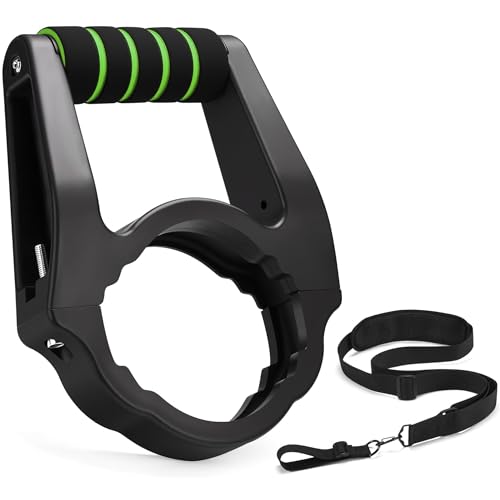
【BACK-SAVING & LIGHTWEIGHT】The ergonomic leaf blower handle is designed specifically for EGO leaf blowers, featuring an upgraded ergonomic design that fits perfectly in your hand. Weighing only 1.1 lbs, you’ll feel how feather-light it is—helping reduce wrist, arm, and back fatigue during use
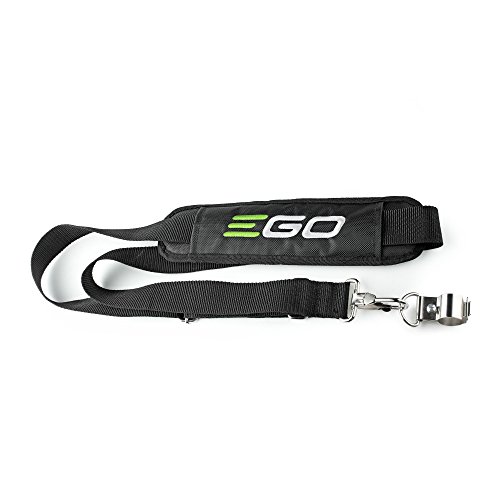
For use with EGO POWER+ string trimmers, multi-head system power heads, blowers, and pole saws

【Premium Material】This shoulder strap is crafted from sturdy nylon, resistant to tearing. The high-impact polymer connector is load tested up to 100 lbs for long service life.
Sweep in a Pattern That Covers Every Spot
You’ve got the blower angled right and your grip locked in, so the next step is to make sure every leaf gets a fair share of the airflow. Start by dividing your yard into manageable zones—think 10‑by‑10‑foot blocks. Sweep each zone from the edge inward, keeping the motion steady and overlapping each pass by about 50 %. That overlap eliminates missed spots and mimics a mower’s grid pattern. Use back‑and‑forth strokes parallel to the surface, then reverse direction on the return pass to catch any stray bits. After the first pass, do a quick visual check for debris‑spotting; if you see a speck, give that zone another quick sweep. This systematic, zone‑by‑zone approach guarantees full coverage without retracing unnecessary paths. Consider the airflow rating when choosing a blower for larger properties to ensure efficient clearing. Always verify the fuel‑oil mixture ratio before starting to prevent engine damage. For optimal performance, select a blower with a high CFM rating that matches your yard’s size and leaf density.

680 CFM HIGH POWER AIRFLOW: Experience powerful outdoor cleaning with a 680 CFM cordless leaf blower equipped with an advanced axial flow fan and high-speed motor. The strong airflow quickly moves leaves, grass clippings, dust, and debris from lawns, driveways, patios, garages, and other outdoor areas.

【COMPATIBLE WITH DEWALT 20V: SEAMLESS POWER INTEGRATION】 Instantly locks into your existing 20V Max lithium-ion batteries. Simply snap your idle 20V pack into this rugged bare tool to unleash hurricane-level clearing power. Enjoy professional-grade yard maintenance performance while maximizing the utility of your current battery collection. (Note: bare tool only, battery and charger not included)
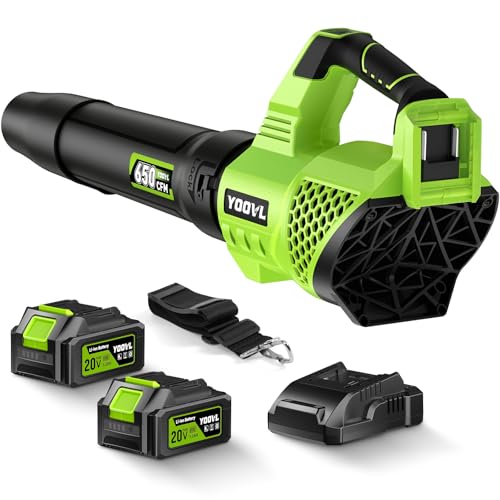
Upgraded Leaf Blower:More than just a leaf blower—YOOVL leaf blower cordless efficiently handles light snow, dust, grass clippings, and other debris from surfaces like lawns, sidewalks and garages. A must-have for year-round yard maintenance and thorough cleanups.
Set Leaf Blower Airflow for Different Surfaces and Debris
If you’re tackling a mix of dry leaves, wet clumps, or even a little loose soil, the key is matching the blower’s airflow to the surface and debris you’re facing. Start with nozzle selection: a round, wide nozzle works for general dry leaves on a lawn, while a flat, narrow nozzle gives the extra bite needed for wet clumps or gravel. Then use speed modulation. For delicate flower beds or patio furniture, drop to a low‑speed, low‑volume setting (200‑400 CFM) to avoid scattering soil or damaging plants. Switch to medium speed on open lawns, and crank up to high‑speed, high‑CFM (700 CFM+) when you hit stubborn wet leaves or a pile of loose snow. Adjust the throttle as you move, balancing MPH velocity with CFM volume for optimal leaf‑moving force. This way you conserve battery, keep dust down, and get the job done efficiently. Ego’s longer‑lasting battery provides up to 60 minutes of runtime, which can be a decisive factor for larger properties. Stihl’s reputation for high durability often makes it a preferred choice among professional landscapers. Leaf blowers can clear large areas significantly faster than manual rakes, reducing overall cleanup time.

HIGH-PERFORMANCE AIRFLOW BOOST: Designed to help concentrate and direct airflow from your Milwaukee M18 leaf blower for improved debris movement and more efficient cleanup

420 CFM Powerful Airflow: Delivers up to 420 CFM of airflow for fast removal of dry leaves, grass clippings, dust, and light debris. Ideal for patios, driveways, garages, sidewalks, decks, and everyday residential yard cleanup
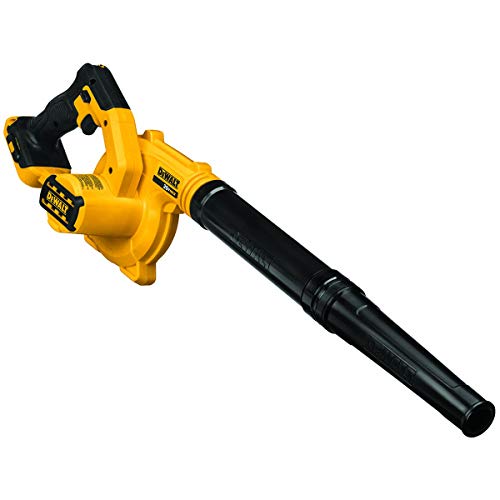
Battery operated leaf blower with max air flow 100CFM.Applications : Tuck pointing cleaning joints, Clearing debris from the ground or overhead, Clearing work areaIncludes : (3) Nozzle attachments
Be Considerate of Neighbors and the Environment
Even before you fire up the blower, remember that the neighborhood’s peace of mind is just as important as a clean yard. Start with noise scheduling: check local ordinances, pick mid‑morning weekdays, and avoid early mornings or late evenings. Let neighbors know your plan via a community app or a quick note, so they can adjust if needed. When you finish, practice compost coordination. Rake leaves into piles, then bag them for your compost bin or a municipal green‑waste pickup. Using a tarp or a vacuum‑mulch model keeps debris on your property and cuts dust. Lower the blower speed to reduce noise and dust, and keep the tube close to the ground. By syncing your timing and disposal, you stay courteous and keep the environment happy. Warm up the blower on idle for about one minute before full speed. Consider using a propane‑powered blower if you prefer a fuel source that burns cleaner than gasoline. Many municipalities have enacted leaf blower bans to curb noise and emissions. California has implemented a gas‑powered equipment ban that restricts the sale of new gasoline‑powered leaf blowers.