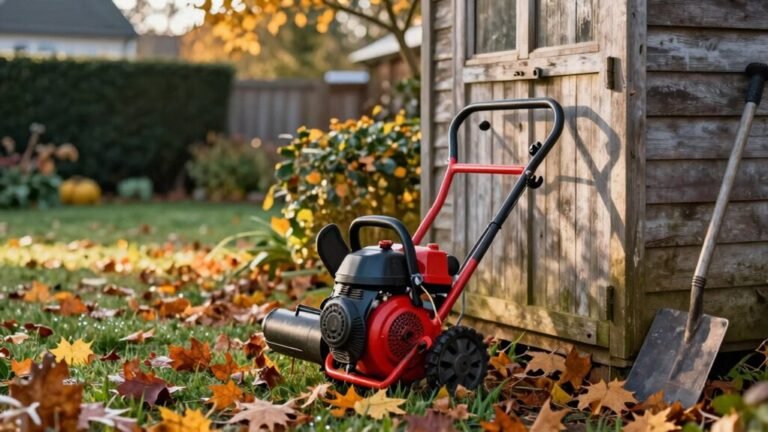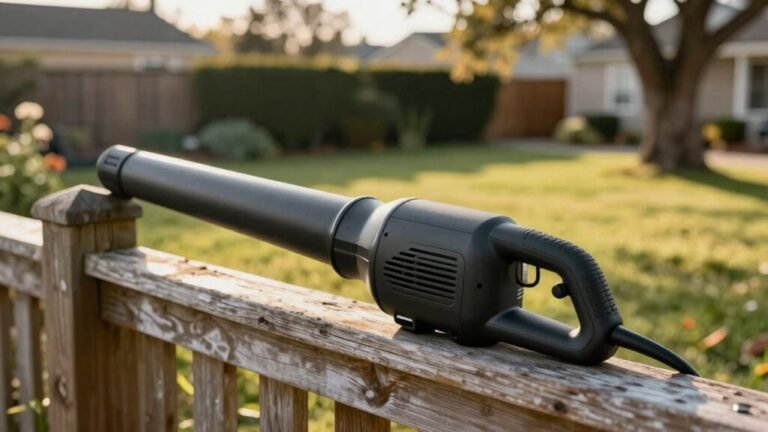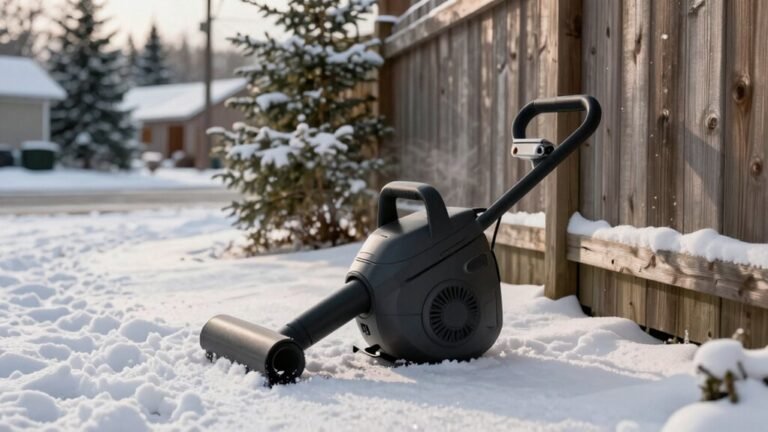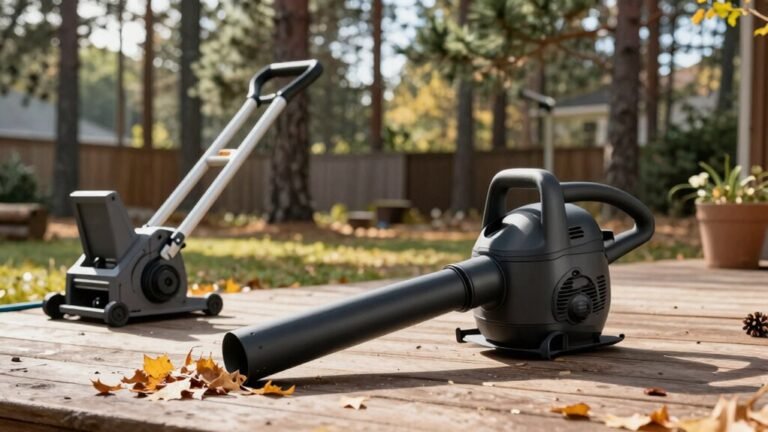
A leaf blower turns motor power into a high‑speed wind by spinning an impeller that flings air outward, creating a pressure drop that pulls fresh air in. The impeller sits inside a housing, driven by a gas engine or electric motor, and pushes the air through a shaped nozzle that narrows the flow and accelerates it to 150‑300 MPH. By adjusting speed and nozzle size you can balance volume (CFM) and thrust for leaves, twigs, or wet debris. The good news is that modern electric models can match gas torque while staying quieter and cleaner, and the next sections will show you how to pick the right specs for your yard.
How a Leaf Blower Creates Powerful Airflow
When you fire up a leaf blower, the first thing you notice is that burst of wind that seems to come out of nowhere—thanks to the way the tool creates powerful airflow. The turbine inside spins fast, and the blade geometry is tuned to push air outward like a mini‑jet. As the blades cut through the air, centrifugal force flings it from the hub to the rim, creating a pressure drop that pulls extra air in through the intake. That high‑velocity stream exits the nozzle, delivering 150‑300 MPH gusts that lift leaves, twigs, and even wet debris. You’ll hear a distinctive turbine noise, a sign the fan is working efficiently. The result is a focused blast that clears yards quickly with minimal effort. The blower’s high‑velocity air also creates a low‑pressure zone outside the downspout, causing leaves inside to be pushed outwards. Higher CFM values indicate greater airflow volume, which translates to more effective debris removal across a wider area. For extensive properties, a backpack blower can maintain consistent power without causing user fatigue.

TURBO MODE: Battery powered leaf blower lets you power though wet leaves, caked on grass, rocks, and other debris with up to 880 CFM and air speeds up to 200 MPH.

TURBINE FAN TECH: WORX engineers figured out how to get a jet engine-type motor inside of a leaf blower. Super powerful, yet not so loud that you’ll think it’s getting ready for takeoff.
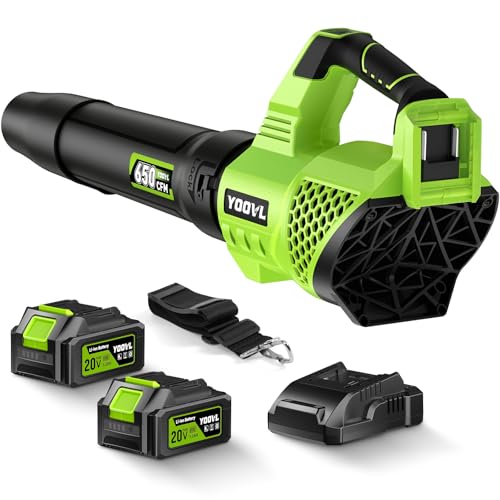
Upgraded Leaf Blower:More than just a leaf blower—YOOVL leaf blower cordless efficiently handles light snow, dust, grass clippings, and other debris from surfaces like lawns, sidewalks and garages. A must-have for year-round yard maintenance and thorough cleanups.
Turn Motor Power Into Wind With the Impeller
If you’ve ever wondered how a leaf blower turns a motor’s spin into a gust that can clear a whole yard, the secret lies in the impeller. You’ll find the impeller sitting inside the housing, a fan‑like stack of blades that the motor’s drive shaft spins at dizzying speeds. The impeller material—often reinforced plastic or lightweight aluminum—keeps the blades rigid while staying cool, which boosts torque efficiency. As the motor delivers torque, the drive shaft transfers that energy directly to the blades, causing them to fling air outward via centrifugal force. This rapid, radial push creates a pressure build‑up that the housing channels into a focused wind stream, turning raw motor power into the gust you feel in your hand. Modern leaf blowers also incorporate variable speed controls to adapt airflow to different yard conditions. Choosing the right blower power can match leaf type and improve overall performance. When comparing brands, many homeowners find that the impeller durability of Stihl models often exceeds that of Echo, leading to longer service intervals.

Performance】 Electric Leaf Blower,With the replacement part number 108-8966, our blower impeller fan guarantees a seamless fit and performance, ensuring that you can quickly find and install the exact part you need for your

Perfect Replacement: The blower fan blade is compatible with Ryobi ONE plus 18 volt lithium-ion blower P2108, P21081, P21081VN & P21081VNM. 529437003/529437004/529437001 Blower Fan Compatible with Ryobi 18 Volt Blower Fan P2108 P21081 P21081VN P21081VNM.

[Versatile Application] The electric blower vacuum impeller fan is designed for electric blowers, suitable for various outdoor cleaning tasks.
How the Leaf Blower Nozzle Shapes and Directs Air
Even though the motor and impeller do the heavy lifting, it’s the nozzle that decides whether that power turns into a tight, leaf‑blowing jet or just a weak puff of air. You’ll notice that nozzle geometry narrows the exit path, so the air speeds up right at the tip. That speed boost gives you the punch you need to fling leaves cleanly. As soon as the stream leaves the nozzle, it begins to expand and slow, so the farther you stand, the weaker the push becomes. The good news is you can shape the airflow by adjusting distance—pull back a foot or two to hit the sweet spot where the cone‑shaped stream stays dense. What most people don’t realize is a shorter, stubby nozzle keeps that concentration longer, letting you control leaf movement without scattering debris. Choosing a model with higher airflow can improve performance on larger yards. higher airflow is often a key factor for professionals who need to move more debris quickly. The battery duration of cordless leaf blowers can also affect how long you can maintain optimal nozzle performance before recharging. Follow the starter’s manual for the correct fuel‑oil mixture to ensure reliable ignition.

Universal Fit High-Efficiency Cyclone Nozzle:Transform your regular leaf blower into a high-efficiency cleaning tool. This turbo nozzle amplifies airflow speed and pressure, making it faster and easier to blow away leaves, debris, dust and snow.

INSTANT POWER BOOST: This leaf blower booster instantly and significantly increases air power and speed. It fits perfectly with all 2 to 4-inch leaf blower nozzles, making it an ideal performance upgrade for your leaf blower .
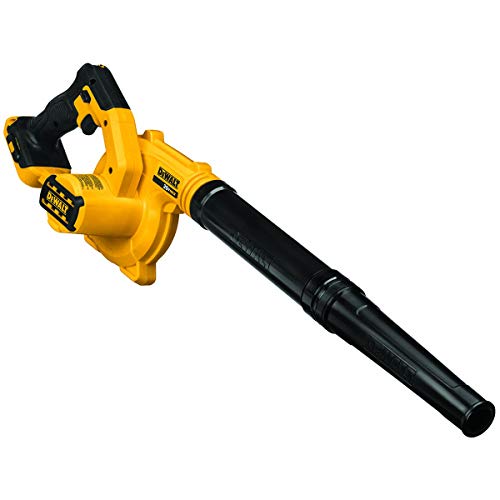
Battery operated leaf blower with max air flow 100CFM.Applications : Tuck pointing cleaning joints, Clearing debris from the ground or overhead, Clearing work areaIncludes : (3) Nozzle attachments
Gas vs. Electric: Which Powers Your Leaf Blower?
Because the choice between gas and electric determines how much power you’ll actually feel in your hands, it’s worth digging into the differences before you pull the trigger on a purchase. Gas engines give you raw torque, so you’ll clear heavy piles faster and stay out longer without refueling. But they’re heavier, louder, and often run afoul of noise regulations in residential neighborhoods. Electric units—especially cordless—are lighter, quieter, and emit zero fumes, making them perfect for suburbs with strict sound rules. The good news is that top‑tier electric models can match or beat gas performance, and a solid battery lifespan of around 90 minutes keeps you productive. What most people don’t realize is that electric blowers need almost no maintenance, while gas ones demand fuel mixing, oil changes, and periodic tune‑ups. Choose based on your yard size, local ordinances, and how much you value hassle‑free operation. Electric blowers are generally quieter due to fewer moving parts and the absence of a noisy internal combustion engine, making them ideal for residential use where noise regulations matter. Additionally, many modern electric blowers feature low‑emission motors that further reduce environmental impact. Professional‑grade power often justifies the higher price for commercial users.

Enhanced Battery Power - Say goodbye to the tedium of leaf raking and back strain! Ditch the cord limitations and bulky noise of traditional leaf blower. Upgrade to the LAZYBOI battery-operated leaf blower with not one, but two powerful batteries, ensuring uninterrupted yard work efficiency. It's not just a tool; it's a thoughtful and practical present

Efficient Cleaning: Upgraded leaf blower cordless eliminates the limitations and bulky feeling of traditional leaf blowers with ropes. It can quickly blow away lightweight objects such as leaves and dust, making your cleaning work easier. Suitable for courtyards, parks, streets, and other places.

TURBO MODE: Battery powered leaf blower lets you power though wet leaves, caked on grass, rocks, and other debris with up to 530 CFM and air speeds up to 110 MPH.
Understand CFM, MPH, and Air Pressure in Leaf Blowers
When you’ve settled on gas or electric, the next thing to figure out is how much air your blower actually moves and how fast it’s going to push it. CFM—cubic feet per minute—tells you the volume of airflow, and higher numbers mean you can clear large piles of dry leaves quickly; most homeowners aim for 150‑400 CFM in small yards and 400‑700 CFM for bigger spaces. MPH measures the speed of that air, and it’s the key to dislodging wet or heavy debris; 110‑200 MPH works for general use, while 150‑230 MPH tackles stubborn material. Air pressure, expressed in Newtons, works hand‑in‑hand with MPH to create a pressure force balance that lets you push, lift, or blast with control. Think of it as Cubic Flow Optimization: you want enough volume to cover area, but enough pressure to move the stuff you need. A balanced unit—around 400‑450 CFM, 100‑120 MPH, and 20 N—handles most yard tasks without over‑complicating your setup. Leaf vacuums often provide higher air pressure, making them better suited for wet debris.
Choose Speed & Nozzle for Specific Yard Tasks
Choosing the right speed and nozzle for each yard task is all about matching airflow to what you’re actually moving. For dry leaves on a small lawn, you’ll want speed optimization that pushes air at high MPH, so a narrow straw‑type nozzle will give you that 180 MPH burst to lift and direct the leaves precisely. If you’re tackling wet leaves or a medium‑size yard, shift to a higher CFM setting and swap to a wide basketball‑style nozzle; the extra volume pushes the heavier, soggy debris without stalling. When you’re clearing a large driveway, a balanced 500 CFM/150 MPH combo with a medium‑sized nozzle hits both coverage and control. Remember, nozzle selection drives the trade‑off: narrow for speed, wide for volume, and you’ll optimize each job without over‑working the blower. Proper timing, as the early morning period when leaves are dry, can also reduce the effort needed. Utilizing a leaf blower can significantly cut yard‑work time, especially when handling large volumes of debris across extensive areas. Standard safety gear should always be worn to protect eyes and ears during operation.

7 Amp motor provides a powerful and efficient blowing performance

Improved airflow: This Leaf Blower Flat Nozzle is designed to be compatible with kobalt leaf blower attachment making it more effective at clearing leaves and debris from yards and gardens. As the same time, you can also rotate the nozzle to control airflow direction, then it would blow to anywhere you need.
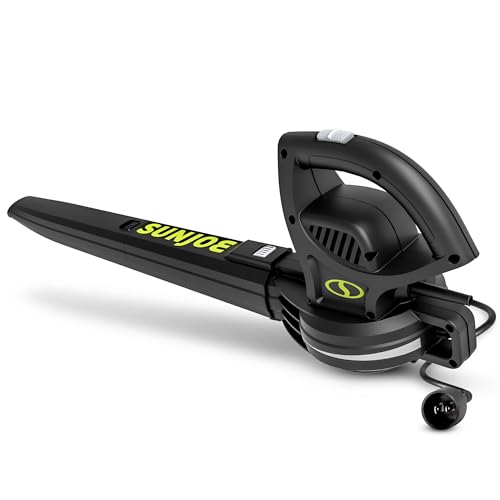
Compact Power: Clear leaves, dirt, and even light snow with a 6-amp motor that delivers 155 MPH and 260 CFM of airflow for fast, efficient, daily cleanup around the front and backyard
Maintain Your Leaf Blower for Peak Efficiency
Even if you’ve got the perfect speed and nozzle for every yard job, a leaf blower that isn’t kept clean and tuned will quickly lose its bite. Wipe the exterior with a damp cloth after each use, and use a soft brush for stubborn grass or mud. Disconnect the spark plug before you start cleaning—safety first. Keep the air filter clear; tap it out or vacuum it regularly, and replace it when it’s clogged to boost fuel efficiency and cut fuel noise. Inspect the spark plug annually, cleaning or swapping it if it’s corroded. Check vents, fins, and the cooling fan for debris so the engine stays cool. Finally, store the blower dry, empty the tank or add stabilizer, and oil moving parts to rust. This routine keeps power up and noise down. Always follow the leaf blower shutdown procedure to ensure safe and proper de‑energizing after use. Choosing the right power source can also affect maintenance frequency and environmental impact.