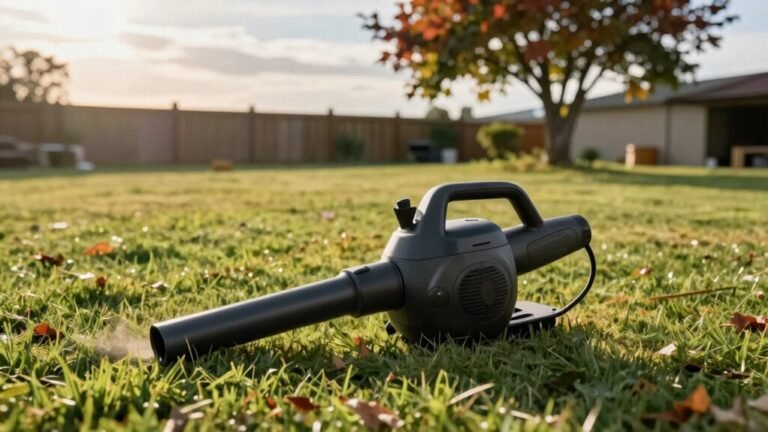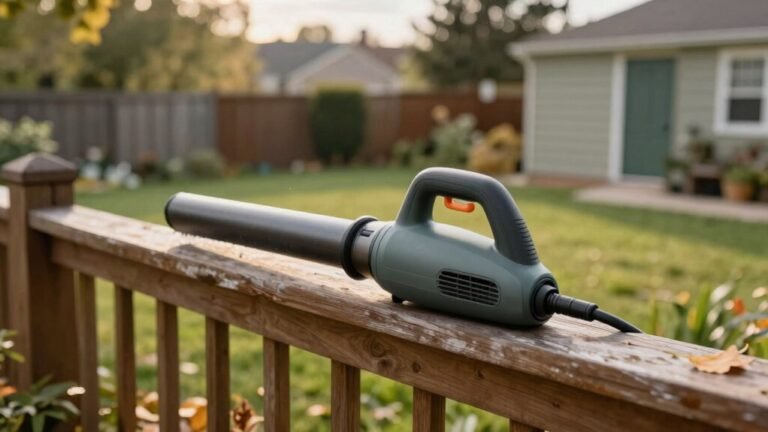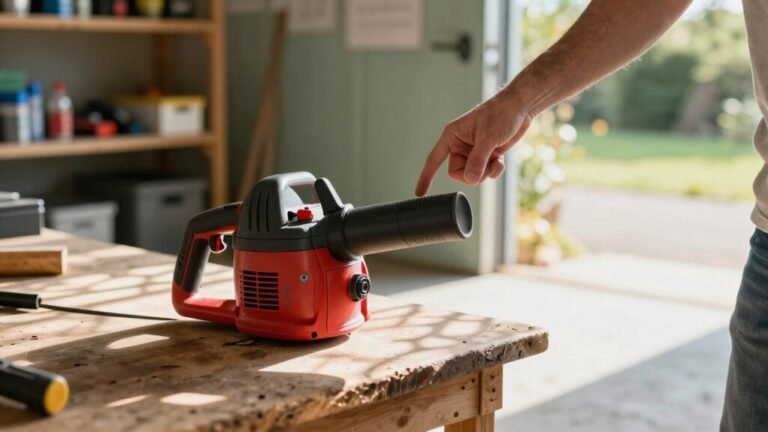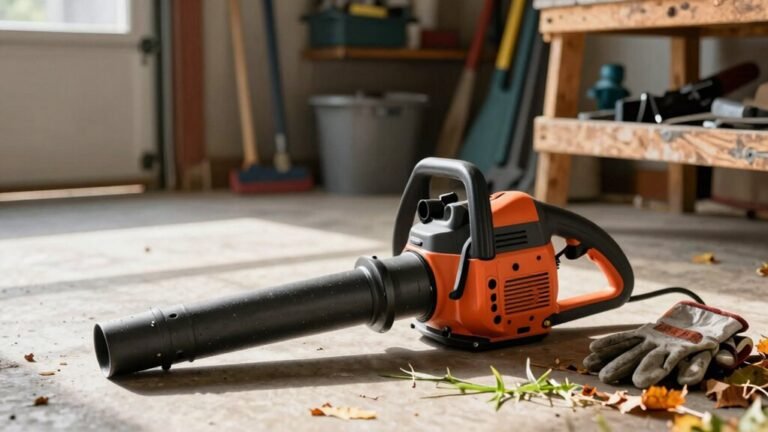
First, make sure you have fresh 2‑stroke fuel‑oil mix and a clean spark plug. Check the air filter and wipe any debris off. Secure the fuel cap, set the choke to full‑rich, and pull the starter rope with a firm 90‑degree motion, gripping the handle with your whole hand and standing sideways for balance. As soon as the engine catches, move the choke to run, release the throttle lock, and let it idle a few seconds before you add throttle—then you’ll be ready to blast those leaves, and the next sections will walk you through fine‑tuning and troubleshooting.
Pick the Right Stihl Leaf Blower for Your Job
How do you know which Stihl leaf blower fits your yard or workshop? Start with model selection by matching the job selection to the blower’s power and ergonomics. For sprawling lawns or construction sites, the BR 800 C‑E or BR 700 backpack units deliver massive force and high airspeed, ideal for heavy‑duty clearing. If you need a quieter, low‑emission option for medium tasks, the BR 600’s 4‑MIX engine strikes a balance of comfort and power. Handheld work shines with the BG 86 for demanding debris, while the entry‑level BG 56 C‑E offers easy start and solid performance. Small, quiet jobs call for the battery‑powered BGA 45 or BGA 57, which give you mobility without fuel. Always check the built‑in safety features—trigger locks, vibration dampening, and engine‑stop controls—so you stay protected while you pick the right tool for the job. The BGA60 delivers a 15 N airflow comparable to commercial gas‑powered handheld blowers, providing premium performance for demanding users. Backpack leaf blowers excel for large properties and prolonged use due to their higher horsepower and reduced fatigue. Comparing the battery life of these models can help you decide which one best meets your endurance needs. Consider the noise level when selecting a blower for residential neighborhoods.

Husqvarna 150BT Backpack Leaf Blower Gas Powered combines a high powered gas leaf blower with state-of-the-art ergonomic design

The professional leaf blower BR 700 from STIHL - an extremely powerful blower that is ideal for large areas

Low Vibration Levels
Gather Safety Gear for Stihl Leaf Blower Use
Ever wonder why you should never skip the gear before you fire up a Stihl leaf blower? The good news is that a solid gear checklist keeps you safe and lets you work faster. Start with eye protection—grab the STIHL Function Slim safety glasses or a full‑face helmet if you want total coverage. Next, ear defenders like the TIMBERSPORTS® Edition or helmet‑integrated muffs will tame that high‑decibel roar. A dust mask rounds out your respiratory defense, filtering out leaf dust and soil particles. Slip on cut‑resistant gloves for grip and vibration control, then pull on sturdy, closed‑toe boots and long pants to shield your legs. Remember, PPE essentials aren’t optional; they’re your first line of defense. Proper PPE is essential when operating a chainsaw. Before checking the hydraulic fluid, always shut off the engine to prevent accidental movement.

Genuine Stihl replacement parts guarantee durability & performance


For Stihl BG56C Air Filter, BG56C Tune Up Kit Fits stihl BG56 BG56C BG56CED BG56CEZ BG56Z BG56D BG66 BG66C BG66CED BG66CEZ BG66Z BG66D leaf blowers
Inspect Fuel, Oil, Spark Plug, and Air Filter on Your Stihl Leaf Blower
Before you fire up your Stihl leaf blower, a quick check of the fuel, oil, spark plug, and air filter can save you a lot of hassle—and keep the engine humming smoothly. First, verify fuel freshness; if it’s older than two months, drain it and mix a fresh 2‑stroke blend. Check the fuel line for cracks and make sure the cap seals tightly. Next, confirm the oil‑to‑fuel ratio matches the manual and look for oil residue on the air filter, which signals a bad mix. Pull the spark plug, inspect the porcelain, clean any carbon, and measure the Spark plug gap to the spec—usually NGK BPMR7A. Finally, brush off debris from the air filter, hold it up to light, and replace it if airflow is weak. Also, drain the gas tank before removing the fuel filter to avoid a mess. Additionally, verify that the air intake is clear of obstructions before starting. Proper pre‑flight checks help ensure reliable performance and longevity. Remember that leaf blowers can reach noise levels of up to 100 dB, which can cause hearing damage without proper protection.

Stihl Fuel Filter Replacement manufacturer part number: 0000 350 3500, 0000 350 3502, 0000 350 3504, 0000-350-350, ZF-4 ZF-5,Fits Fuel Line 3/16" ID

BG55 air filter replaces for Stihl 4229-120-1800 4229-124-1500 bg55 bg85 bg65 bg45 air filter; bg55 fuel line replace for Stihl 4229-358-7702 bg55 bg85 bg65 bg45 fuel line; fit for stihl leaf blower BG55 parts

For Stihl BG56C air filter BG56 fuel line air filter 4241 120 1800 air filter; Tune up kit for Stihl BG56 BG56C BG86 BG86C BG66 BG66C leaf blower [Please pay attention to the air filter shape; some bg86 blower need a HD2 air filter]
Position Your Stihl Leaf Blower Correctly for Handheld or Backpack Use
When you set a Stihl leaf blower down, the first thing to check is that the ground is level and free of dust or debris—think a clean patch of grass or a solid concrete slab. For handheld use, place the blower on that stable surface, then step firmly into it. Grip the right‑hand handle with an ergonomic grip, press down for terrain stability, and use your left hand on the starter grip. For backpack setups, set the unit on the same level ground, hold it with your left hand, and plant one foot against the base plate to lock it in place. Your right hand grabs the starter handle while your foot keeps the blower from sliding, ensuring both safety and control. Ensure the fuel cap is tightly secured before you begin. Always perform a brief pre‑operation inspection to verify fuel‑oil mixture and filter condition. Check the spark plug condition before priming to avoid ignition issues. Higher CFM means more airflow, allowing the blower to move larger volumes of debris more efficiently.
Set Ignition, Throttle, and Choke on the Stihl Leaf Blower
You’ll get the engine humming faster if you start with the ignition, throttle, and choke in the right order. First, flip the on/off switch to the “I” position—this ignition timing step must happen before any pulling. Next, pull the throttle lever to full throttle and squeeze the lock button; keeping the throttle wide open while you yank the starter rope prevents flooding. Then, set the choke to the cold‑start (full choke) position; this choke sequencing gives the engine a richer mixture for the first fire. After the engine catches, flick the choke lever to the run position and release the throttle lock. The engine will settle to idle, and you’re ready to work without stalling. Ensure the throttle lever is fully engaged before priming to guarantee optimal air flow. Electric blowers are known for their low noise operation, making them a quieter alternative for residential use. If the engine still won’t start, check the spark plug for fouling or damage.

Compatibility: This choke knob is compatible with STIHL BR800, BR800C, BR800X backpack blower.

Fitment: Carburetor Choke Knob for Stihl BR350 BR430 BR450 SR430 SR450 Blower 4244 182 9502 Replacement Parts.

[Package include]: 5 x Carburetor Choke Knob.
Prime the Stihl Leaf Blower Fuel System Correctly
So, why does that little rubber bulb matter when you’re trying to fire up a Stihl leaf blower? It’s your fuel bulb, the gateway that pushes fuel from the tank through the fuel line into the carburetor. Before you touch the choke or throttle, press the manual pump at least five times—yes, even if it already feels full. Each squeeze forces fuel past the outlet valve, filling the priming circuit and clearing any empty sections of the fuel line. This gives the engine the initial splash it needs for a cold start and cuts the chance of flooding. Do it on a well‑ventilated surface, wear gloves, and keep the blower steady against the ground. If the bulb doesn’t bulge, check the inlet valve, hoses, and outlet valve for clogs or damage before you move on. Use a torx bit to remove the handle screws if the bulb housing is secured with torx screws. Understanding the fuel type differences helps you select the right blower for performance, cost, and environmental impact. The leaf blower was invented in the 1950s by Walter B. H. Smith, an American engineer and entrepreneur. Selecting the proper hydraulic fluid viscosity ensures optimal performance and longevity of the equipment.
Pull the Starter Rope on a Stihl Leaf Blower Safely and Effectively
If you’ve ever tried to start a Stihl leaf blower and felt the rope snap back like a rubber band, you know why a smooth pull matters. Grip the starter rope handle firmly with your dominant hand, wrap your whole hand around it, and stand sideways for balance. Keep the rope taut and pull at a 90‑degree angle to the pulley, extending your arm in one steady motion. Avoid jerks; a smooth pull maintains proper rope tension and protects engine safety. If the engine doesn’t catch, release the handle immediately and give the recoil spring a chance to rewind. Check the rope for wear before each start, and keep your free hand clear of moving parts. This technique reduces recoil and keeps both you and the blower safe. The pull‑cord assembly should be examined for significant dirt before re‑installing the cover. Regularly inspect the engine’s air filter to prevent debris from entering the combustion chamber. The centrifugal impeller creates the high‑velocity airflow that dislodges leaves. hydraulic cylinder seals provide essential protection against abrasive dust infiltration.
Switch Choke to Run on the Stihl Leaf Blower and Let the Engine Settle
Ever wondered why your Stihl leaf blower stalls right after you yank the starter rope? The answer lies in choke timing. After the engine catches, you need to switch the choke to the run position quickly, but not before the engine has a moment to settle into a steady engine idle. Pull the starter a few times with the choke in half‑choke if you have a BG56; this lets the engine heat up for about 30 seconds without dying. As soon as you feel a smooth, steady hum, flip the lever to run and give the throttle a gentle squeeze. The engine will then find its idle, and you’ll avoid flooding or stuttering. This simple step keeps your blower ready for the next job. Half‑choke provides a temporary boost that prevents the engine from stalling during the initial warm‑up. Choosing the right power source can also affect overall performance and environmental impact. A hydraulic ram pump can supply a reliable, low‑energy water‑driven power source for off‑grid tools like a wood chipper.
Fine‑Tune Throttle and Airflow on the Stihl Leaf Blower
What’s the secret to getting your Stihl leaf blower to respond instantly when you yank the throttle? First, check the air filter—clean or replace it before any carburetor tuning. A dirty filter chokes airflow, making the engine lag. Next, warm the engine, then hold the throttle fully engaged and locate the high‑speed screw near the filter. Turn it clockwise slowly until RPMs drop, then back off a notch and turn clockwise again until the engine climbs. That’s your sweet spot. Adjust the low‑speed screw the same way while idling to eliminate bogging. Finally, double‑check idle speed with the LA screw. Proper air filter management and careful carburetor tuning give you that crisp, immediate throttle response. High‑side adjustment ensures the engine reaches optimal speed before fine‑tuning.
Troubleshoot Common Stihl Leaf Blower Start‑Up Problems and Know When to Call a Professional
After you’ve got the throttle humming, the next hurdle is actually getting the blower to fire up when you yank the starter cord. First, check the fuel filter—if it’s clogged, the engine star’t get the fresh mixture it needs, so clean or replace it. Next, pull the starter a few times and watch the spark plug; a dull or no spark means it’s time for a new plug or a quick gap tweak. If the plug looks carbon‑covered, swap it out; a clean spark is the heart of ignition. Should the engine still refuse to turn, the carburetor may be gummed up from old fuel—clean it thoroughly. When you’ve exhausted these steps and still get nothing, call a professional; persistent electrical faults or coil failures need expert tools and safety knowledge. Also, verify that the air filter is clear of debris before testing the starter.

TRUSTED OEM BRAND: NGK is a global leader in ignition components, supplying spark plugs for a wide range of domestic and import vehicles.

BG55 Air Filter for STHIL BG 55 BG45 BG46 BG65 BG46DZ BG46Z BG55Z BG65DZ BG65Z Leaf Blower

【Replacement part number】Universal Spark Plug Replace for #3365 / CMR6H;For Stihl # 0000 400 7011. CMR6H Spark Plug is widely use for Stihl trimmer blower and chainsaw.