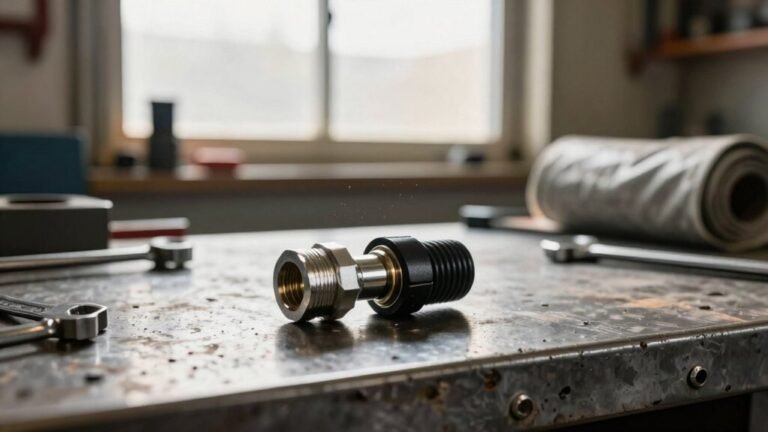
A hydraulic hose is the flexible tube that pumps pressurized fluid from your machine’s engine to the working parts—feed rollers on chippers, splitting cylinders on log splitters. It’s basically your equipment’s circulatory system. You’ve got three protective layers inside that handle extreme pressure without bursting, plus reinforced braiding that keeps everything together. Without a quality hose, you won’t get power transfer, and your machine won’t perform. Proper maintenance and inspection keep yours running strong for years.
What Is a Hydraulic Hose and How Does It Work?
If you’ve ever owned a wood chipper or log splitter, you’ve probably noticed those thick, snake-like hoses running between different parts of the machine—and you might’ve wondered what they’re actually doing. Here’s the thing: those hoses are the lifeline of your equipment. They’re flexible conduits that transport pressurized hydraulic fluid from your pump to the actuators that power the cutting or splitting mechanism. Think of them as the plumbing system delivering force throughout your machine. Your material selection matters too—whether it’s rubber or thermoplastic—because it determines how well your hose handles pressure and temperature swings. Modern hydraulic hoses are built with three distinct layers that work together to contain pressure, provide flexibility, and protect against environmental damage. Fundamentally, hydraulic fluid travels through these hoses under intense pressure, transferring the mechanical power needed to actually get work done. Properly sizing hoses ensures optimal flow and prevents premature wear. Before checking hydraulic fluid, always inspect the reservoir for any signs of damage or leaks. Selecting the right reinforcement braid is crucial for maintaining hose integrity under the high‑pressure cycles typical in forestry applications.
The Five Core Components Protecting Your Pressure
Your wood chipper or log splitter’s hydraulic system is only as strong as its weakest link—and that’s where five core components come in. Filters trap dirt and debris before they damage your pump, while hose design handles extreme pressures without bursting. Fittings keep everything sealed tight—leaks mean lost power and costly repairs. Seals prevent fluid from escaping under intense pressure, especially when you’re working in muddy or dusty conditions. Finally, auxiliaries like heat exchangers and accumulators regulate temperature and pressure monitoring, keeping your system running smoothly. Neglect any one of these, and you’ll face premature failure. The good news? Regular maintenance of all five protects your investment and keeps you splitting wood instead of fixing equipment. Selecting the right rod seal material can dramatically improve wear resistance in abrasive environments. Understanding hydraulic fluid flammability is crucial for preventing fire hazards during operation. Monitoring fluid discoloration helps detect early signs of degradation before it impacts performance.
Pressure Ratings, Temperature Limits, and Burst Protection
Understanding what your hose can actually handle is what separates a long-lived hydraulic system from one that’s constantly in the shop. Your hose’s working pressure rating tells you the safe maximum for normal operation—it’s what your valve compatibility and system requirements demand. Here’s the thing: that rating isn’t just a number. It accounts for temperature tolerance pressure, meaning your hose loses capacity as heat climbs. A hose rated for 3,000 PSI at 70°F won’t perform the same at 150°F.
The good news is manufacturers build in safety margins. Burst pressure typically runs four times your working pressure, so a 3,000 PSI hose can handle 12,000 PSI before rupturing. That cushion protects you against pressure spikes your wood chipper or log splitter throws at it during heavy use. The hydraulic ram pump creates a pulsating surge that can be harnessed to drive such equipment efficiently. Using corrosion‑resistant fluid helps maintain hose integrity over time.
Hydraulic fluid can exceed 150°F during prolonged operation, which further reduces hose strength.
Hydraulic Hoses in Wood Chippers: Powering Feed Systems
When you fire up a modern wood chipper, those feed rollers that grab and pull material into the chipping chamber aren’t powered by some mechanical linkage or belt system—they’re driven by hydraulic motors connected through a network of precisely sized hoses. You’ll typically find braided 3/8-inch hoses running from your tractor’s hydraulic remotes to the feed assembly. What matters most is hose durability and material selection because these lines handle constant pressure fluctuations. Poor feed flow or excessive pressure loss means sluggish feeding and wasted horsepower. That’s why genuine OEM hoses matter—they’re engineered to withstand the demands of chipping hardwoods and softwoods up to 7 inches without kinking or failing. Before connecting your hoses, ensure you fill the hydraulic tank with 62 gallons of high-quality oil and maintain a 1-inch airspace to allow for proper system function. Your tractor’s hydraulics do all the heavy lifting here. Regularly inspecting hose fittings for micro‑cracks can prevent sudden failures during operation. The system’s pressure rating determines how much force the hoses can safely transmit. Selecting the correct pump type ensures optimal flow and pressure for the feed system.
Hydraulic Hoses in Log Splitters: Generating Splitting Force
If you’ve ever watched a log splitter drive that wedge through a stubborn piece of wood with seemingly unstoppable force, you’ve witnessed hydraulic hoses doing exactly what they were designed to do—delivering pressurized fluid that converts into thousands of pounds of pure splitting power.
Here’s the thing: your hoses carry pressurized fluid from the pump directly to the cylinder, where that pressure transforms into linear force. The directional control valve determines whether fluid flows to the cap end for extension or the rod end for retraction. What most people don’t realize is that splitter efficiency depends on maintaining consistent pressure through quality hoses. When you’re generating that log hydraulic torque needed to split hardwood, even small leaks rob you of power and waste fuel. Properly sized hoses maximize pressure delivery with minimal energy loss—that’s what separates efficient splitting from frustrating, sluggish performance. A filter in the return line captures debris particles that could otherwise damage the pump and internal components, ensuring your system maintains reliability through extended use.
To safely remove air from the system, follow the bleeding procedure that locates the highest point, attaches a clear hose, and cycles the cylinder until no bubbles appear.
proper bleeding technique prevents air lock and maintains optimal hydraulic performance.
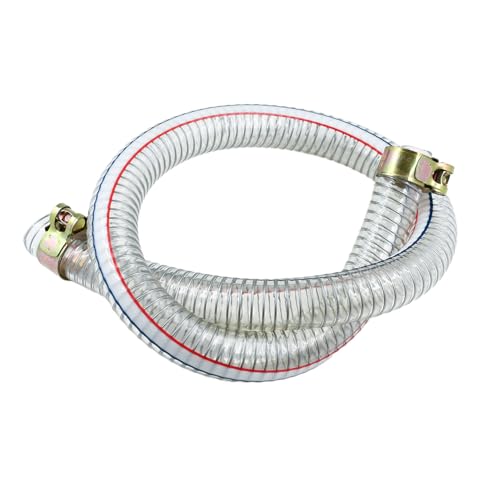
Versatile Use Cases – Universal steel wire–reinforced PVC suction hose designed for low-pressure hydraulic inlet and return line applications (max working pressure: 30 PSI; burst pressure: 60 PSI). Suitable for log splitter pump inlets and fluid tank connections.

Application Models: Universal Fits all Kinds Log Splitters and Heavy-Duty

Part Number: JR17-08; Part Number: 1032822 & 1032830
Daily Inspection Checklist: Five Signs of Hose Failure
Now that you understand how those hoses deliver all that splitting power, let’s talk about keeping them in working order—because a hose that fails mid-job isn’t just an inconvenience, it’s a safety hazard and a wallet drain.
Your daily inspection should catch five critical warning signs. First, look for visible cracks, abrasions, or exposed reinforcement wire—these signal structural failure. Second, check for fluid leakage at connection points or misting under pressure loss conditions. Third, spot any kinks or deformation that restrict flow. Fourth, feel for stiffness or brittleness indicating age. Finally, inspect fittings for rust or corrosion.
Catching these issues early through regular inspection saves you headaches and keeps your equipment running safely. Remember to use the dipstick to verify fluid level before each use. Also, avoid using heat on stained fabric, as it can set the stain permanently.
When to Replace Your Hydraulic Hose
Just because your hose doesn’t look like it’s about to explode doesn’t mean it’s safe to keep running—and that’s where a lot of folks get into trouble. Here’s the thing: your hydraulic hose has a finite maintenance hose life, typically 5–7 years depending on how hard you’re working it. Don’t wait for a failure to force your hand. Instead, practice predictive maintenance by tracking installation dates and inspecting regularly against manufacturer guidelines. If you’re running your wood chipper or log splitter hard, expect to replace hoses every 1–2 years. Any visible damage—exposed wires, bulges, cracks, or leaks—demands immediate replacement. The good news is staying proactive saves you money, prevents messy spills, and keeps you safe. Your equipment will thank you. When filling a floor jack with hydraulic fluid, always use the fluid type recommended by the manufacturer to ensure proper performance and safety. Proper viscosity stability ensures efficient power transmission and protects system components. Be aware that hydraulic fluid toxicity can cause skin irritation and respiratory issues if not handled with appropriate protective equipment.
Route Your Hoses Away From Moving Parts
One of the quickest ways to turn a functioning wood chipper or log splitter into a liability is letting your hydraulic hoses rub, twist, or get pinched by the very machine they’re powering.
You’ve got to maintain adequate moving clearance between your hoses and any rotating or reciprocating parts. Route them parallel to your machine’s contours—this keeps them safely away from driveshafts, suspension components, and belts that’ll shred them in seconds.
Use clamps to guide hoses along protected paths, and don’t skip hose shielding in vulnerable areas. Install protective sleeves where hoses pass near sharp edges or hot surfaces. When space is tight, swap out sharp bends for elbows or adapters instead. Your hoses deserve respect—treat routing like it matters, because it absolutely does.
Directional control valves help manage the flow direction, ensuring safe and efficient operation of the hydraulic system.
Safe Depressurizing Before Any Disconnect
Before you even think about touching a hydraulic coupling, you’ve got to bleed the pressure out of those lines—and I mean completely. Here’s the thing: pressurized safety isn’t just a catchy phrase—it’s your lifeline when working with wood chippers and log splitters.
Start by turning your key to ignition only, then lower any attachments to ground level. Toggle those auxiliary controls back and forth multiple times while cycling each coupler pair to release residual pressure. Use an Enerpac CT604 tool on high-flow couplers, threading the bleed adapter and turning the bolt clockwise to open the pocket controlledly.
Don your safety goggles and oil-resistant gloves before proceeding. Pressure monitoring throughout this process keeps you safe. The bleed tool includes essential components like adapters, release caps, and a bolt assembly designed to mitigate pressure lock safely. Gently press the couplers together to bleed remaining pressure completely—never disconnect pressurized hoses. This careful depressurizing prevents dangerous fluid injection injuries and keeps you working smart.