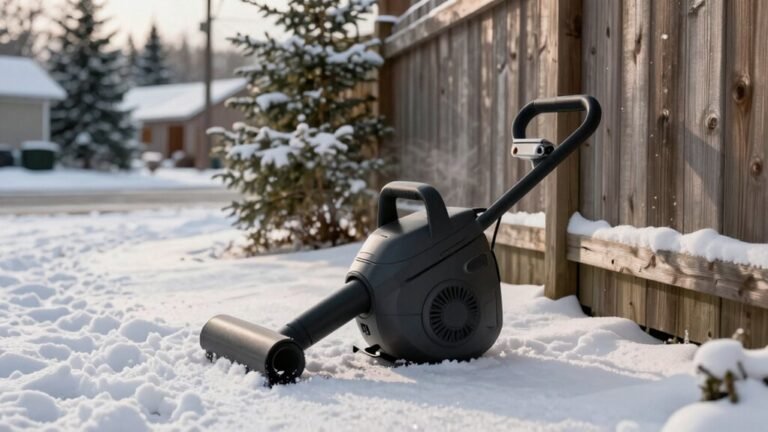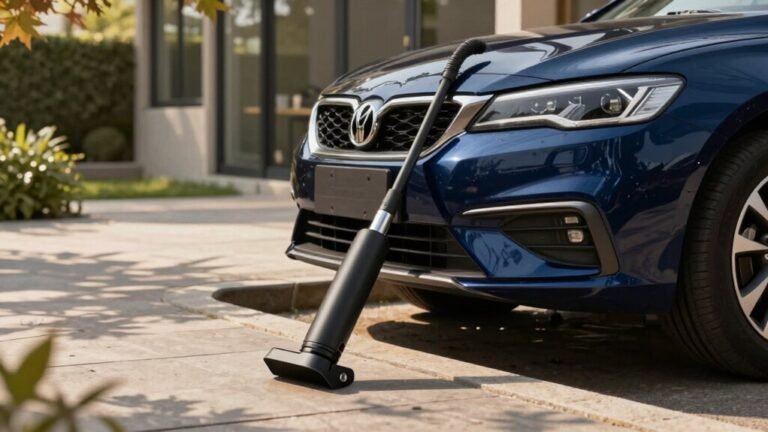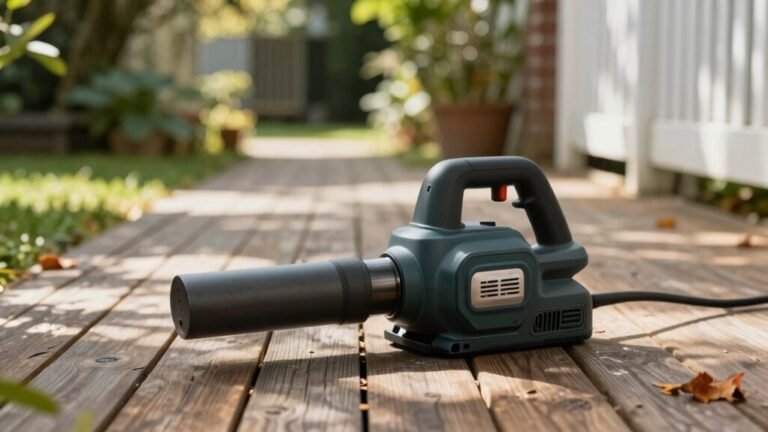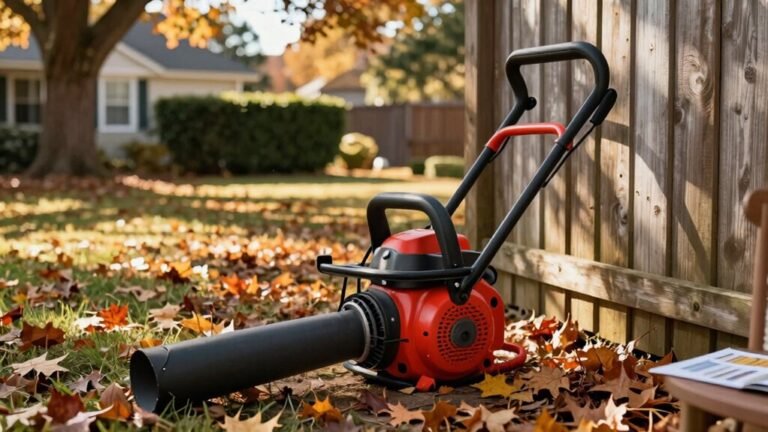
Yes, you can dry your car with a leaf blower—high CFM models deliver forceful airflow that removes roughly 90% of water without paint contact. Here’s the thing: unfiltered air carries dust that micro-scratches your finish, so you’ll need paint protection or pre-rinsing first. Professional-grade blowers exceed 500 CFM and finish the job in under ten minutes, eliminating water spots. Battery models run quieter and cheaper than dedicated car dryers, though they lack filtration and heat. Technique matters—angle the nozzle downward and work panel by panel for best results.
What Makes a Car Drying Tool Effective?
Ever wonder why some folks skip the towel-and-chamois routine after washing their car and just grab their leaf blower instead? Here’s the thing—an effective car drying tool needs to combine power with precision. You’re looking for high horsepower that expels air forcefully enough to scatter water droplets without making contact with your paint. That contactless approach prevents scratching and swirls that towels inevitably cause.
The good news is that energy consumption matters less than CFM output. You want consistent airflow that reaches tight spaces—wheel wells, door jambs, mirror surrounds—where towels simply can’t go. An ergonomic grip matters too, since you’ll be working methodically from top to bottom. Speed and efficiency mean drying most vehicles in under ten minutes while eliminating water spot risk completely. However, even the most powerful blower leaves behind residual water beads on the paint surface, which is why pairing it with a dedicated microfiber towel for final moisture removal prevents mineral deposits on your clear coat. A higher CFM rating translates to greater volume of air moved per minute, helping to clear water from crevices more effectively. Modern leaf blowers also incorporate variable speed controls that let you fine‑tune airflow for delicate surfaces. Husqvarna’s higher airflow can be especially beneficial for professional‑grade drying tasks.

[Turbo Mode — Up to 260 MPH & 740 CFM] – Enjoy 7.5 minutes of continuous high-power turbo airflow that dries a waxed hood in 20 seconds flat and shoots standing water out of door handle seams without breaking a sweat. Speed 1 gives you up to 120 minutes of gentle airflow for patio furniture and light yard work. Built for SUVs, trucks, and RVs — no compromises.

【Ultra-Lightweight One-Hand Design — Only 2.7 lb / 1225 g】Traditional leaf blowers weigh 6-10 lb and cause arm fatigue in minutes. At just 2.7 lb with an ergonomic anti-slip grip, the SEESE turbo blower allows effortless one-handed operation for extended sessions — ideal for seniors, women, and anyone with wrist or shoulder concerns.

【High-Capacity Battery & Extended Runtime】KOLENDA cordless car dryer air blower features a 21V-10.0Ah battery with 4 adjustable speed modes (21-230min runtime) and a smart power display. Perfect for prolonged patio cleaning, car drying, and lawn care. Built-in safety system ensures reliable operation.
Why CFM Matters More Than MPH for Car Drying
When you’re standing there with your leaf blower deciding whether it’ll actually dry your car, you’ve probably noticed the spec sheet throws two numbers at you: CFM and MPH.
Here’s the thing: CFM efficiency is what actually matters for car drying. CFM measures the total volume of air your blower pushes out each minute—that’s what removes water quickly and effectively. Higher CFM means you’re moving more air overall, which translates directly to faster drying speed on those wet surfaces.
MPH focuses on air velocity, which sounds impressive but doesn’t help you much here. You need volume, not just force. A blower with solid CFM output tackles broad, wet areas efficiently—exactly what your car needs. Most pros choose models with 500+ CFM for dependable results. The Works WG-520, for example, delivers approximately 600 CFM and proved superior at clearing water patches compared to lower-volume alternatives in real-world testing. Battery life also plays a crucial role, as longer runtimes let you finish the job without frequent recharges. Using propane fuel can provide a cleaner burn and reduce emissions compared to gasoline. Blade design can further improve airflow distribution across the vehicle’s surface.

【Powerful & Efficient Turbine Motor】Powered by a high-speed brushless motor reaching up to 800,000 RPM, the SEEVOLX cordless leaf blower delivers up to 700 CFM airflow and over 50 m/s air speed for powerful, efficient cleaning. The brushless motor provides strong and stable airflow while helping improve efficiency and durability, making it easy to clear fallen leaves, grass clippings, dust and debris from lawns, patios and driveways.

700 CFM AIRFLOW & 200 MPH PEAK WIND SPEED — The EWORK cordless leaf blower delivers a powerful 700 CFM air volume with up to 200 MPH wind speed, so you can blow away wet leaves, heavy debris, dust and light snow fast. This electric leaf blower handles the toughest fall cleanups and year-round yard work without losing momentum

【Powerful & Efficient Turbine Motor】The leaf blower cordless is equipped with high-efficiency turbo motor deliver up to a wind speeds of up to 65 m/s.Forcefully blasting away leaves, snow, and other debris efficiently, keeping yards, lawns, driveways clean and tidy.
How Dust and Unfiltered Air Scratch Your Paint
Now here’s where things get tricky—that high CFM you’re counting on to dry your car fast? It’s also blasting unfiltered air packed with ambient dust straight onto your paint. You’re fundamentally weaponizing dust abrasion without realizing it.
Here’s the thing: those fine particles suspended in your blower’s output don’t just sit there. They get propelled at high velocity across your clear coat, grinding into the surface like microscopic sandpaper. Even worse, if dust has already settled on your car, that air blower embeds it deeper into the paint texture.
Without proper air filtration on your equipment, you’re trading water spots for something potentially worse—swirl marks and micro-scratches that’ll dull your finish. The good news? A quick rinse before you blow dries everything safely. Backpack blowers provide higher horsepower for larger areas, reducing fatigue during prolonged use. Regular fluid testing can reveal early signs of contamination before they cause damage. Recognizing a sweet petroleum odor can indicate healthy hydraulic fluid, while a metallic scent may signal contamination.
Paint Protection: A Requirement, Not an Option
Since you’re already risking micro-scratches just by drying your car with a leaf blower, here’s the thing—you’ve got to protect that paint before anything else matters. Paint shielding isn’t optional anymore; it’s essential maintenance. Consider paint protection film (PPF) for your front bumper, hood, and fenders—the areas taking the most abuse from road debris. PPF lasts 5-10 years and acts as a sacrificial layer absorbing impacts you’d otherwise see as permanent damage. If PPF feels like overkill, ceramic coatings offer solid UV resistance for up to six months and make cleaning easier thanks to hydrophobic properties. Either way, you’re investing in durability. Without protection, you’re just watching your car’s value fade alongside the paint. Modern leaf blowers can deliver high airflow that quickly removes moisture but may increase the risk of surface abrasion. Using a flammable hydraulic fluid in nearby equipment can exacerbate fire hazards if sparks are generated. Leaf blower also reduces physical strain compared to manual raking, making it a faster option for large yards.
How to Use a Leaf Blower Without Swirls
The trick to drying your car with a leaf blower without ending up with swirl marks comes down to preparation, technique, and knowing when to stop blowing and start toweling. Your nozzle pressure matters—keep it moderate to avoid forcing water into crevices or blasting paint. Control your airflow direction by angling the nozzle slightly downward, sweeping methodically from roof to bottom. Work panel by panel without jumping around. Once you’ve pushed most water off, here’s the thing: switch to a thicker microfiber towel for final droplets. A Twist-Loop microfiber towel with its raised fibers provides superior absorption capacity compared to standard towels. Light patting beats aggressive wiping every time. This combination minimizes contact with paint while preventing water spots before they set in permanently. For optimal performance, follow the carburetor cleaning steps to ensure the blower’s engine runs smoothly. Safety latch should be engaged before beginning any operation. Electric leaf blowers generate less noise than gas models, making the drying process quieter and more comfortable.

The One-Towel Solution: Boasting a 48x24-inch size—larger than the standard 36x24-inch towels on the market—our microfiber towels offers superior coverage and drying efficiency. Easily dry a full-size cars, trucks, and SUVs without the need for wringing, cutting your dry time in half, ditch the small towels!

One-Pass, Spot-Free Drying: AetherAuto's 1300 GSM dual-layer twisted loop microfiber pulls water off paint and glass in under 3 seconds, making this car drying towel the fastest way to finish without streaks or water spots. One smooth pass across the hood, roof, or doors leaves a spotless, mirror-like finish that looks professionally detailed

Professional-Grade Drying: Experience professional-grade drying with our AIDEA microfiber dryer towel; features over 300,000 fibers per square inch; absorbs up to twenty times its weight in liquid; effortlessly and safely dries your car, leaving no stains or streaks behind
Where Leaf Blowers Excel (Wing Mirrors and Door Seals)
While toweling off the bulk of your car’s water is important, you’ll quickly reveal that a leaf blower’s real superpower shows up in those tricky spots where water loves to hide—your wing mirrors and door seals.
Here’s the thing: towels simply can’t reach the crevices where moisture accumulates. Your leaf blower’s high air pressure pushes water straight out of door jambs and mirror cracks that would otherwise trap moisture for days. The high-velocity airflow accesses tight spaces around your mirror sealing areas, eliminating trapped water that causes stubborn spotting.
You’ll remove roughly 90% of mirror water in one quick pass. Better yet, you’re not physically touching delicate surfaces—zero scratch risk. This targeted approach dries those problematic zones in minutes, preventing mineral deposits before they even form. For maximum effectiveness, attach a stubby car-drying nozzle with a soft silicone tip to your leaf blower for improved maneuverability when accessing confined areas. Using a leaf blower also reduces the need for repetitive wiping, which can minimize surface scratches. The average leaf blower operates at around 70 dB, which is comparable to the noise level of a busy street. Battery-powered models often provide a quieter, more environmentally friendly option for home use.
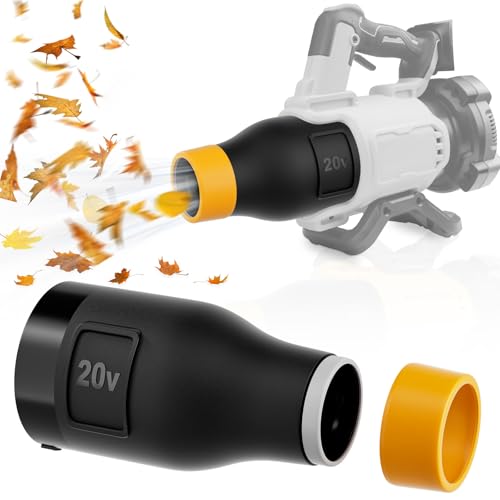
Compatibility: The Uniqwamo car drying nozzle compatible for DeWalt 20V max blower, perfectly fits the leaf blower, easy to install, and can be firmly locked on the tool

Car Drying Nozzle for18V Fuel Single Battery Leaf Blowers 2724-20 & 2728-20

Fast Vehicle Drying – Helps remove water quickly after washing using concentrated high air flow for faster car drying
Leaf Blowers vs. Dedicated Car Dryers: Complete Comparison
Now that you know where leaf blowers truly shine, you’re probably wondering how they stack up against purpose-built car dryers—and honestly, the answer isn’t as straightforward as “one’s better than the other.” Both tools can get your vehicle dry, but they approach the job in fundamentally different ways, and the differences matter more than you might think.
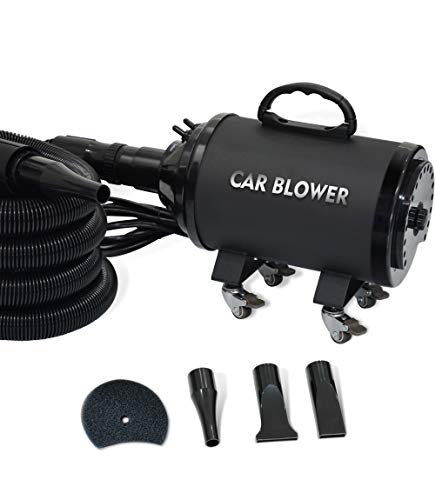
Car dryers deliver filtered, controlled airflow with adjustable heat settings that evaporate water efficiently while minimizing water spots. Leaf blowers lack filtration and heat, risking paint damage from contaminants. However, leaf blowers cost less and offer better noise reduction for residential areas. The trade-off? Leaf blowers consume less power but demand more time and protective coating layers. Car dryers feature specialized attachments for mirrors, grills, and wheels to ensure comprehensive drying across all vehicle areas. For consistent, risk‑free results, car dryers win. For quick drying on well‑protected vehicles, leaf blowers handle the job adequately. Properly mixing fuel and oil is essential to keep the blower running smoothly during extended use. Always follow the safe shutdown procedure to prevent accidental start‑ups and protect the equipment.
①DRY YOUR MOTORBIKE QUICKLY AND EASILY: Dries your bike effortlessly, with no scratching or smearing.
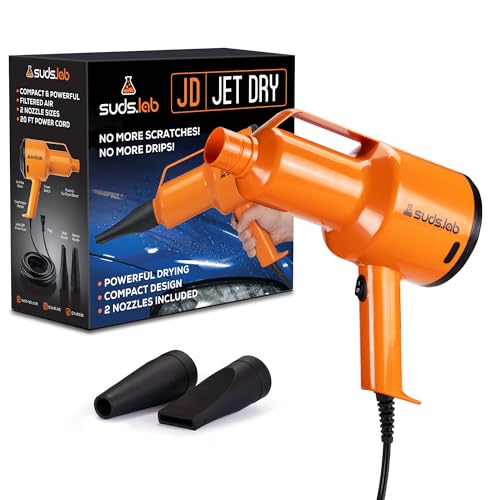
Powerful Heated Airflow: The JD car wash dryer features a 1.5 HP motor that delivers heated airflow to speed up drying. This car blower for drying raises air temp by up to 25°F above ambient, helping remove water faster while protecting paint & trim.

Portable Boot Dryer: Weighing just 13.5 ounces, this compact dryer is perfect for travel or on-the-go use, so your footwear stays fresh wherever you are; Not intended for gloves or mittens
Choose Your Tool: A Decision Guide
Here’s the thing—picking between a leaf blower and a dedicated car dryer really comes down to understanding what you’re willing to compromise on. If you’re budget friendly and already own a leaf blower with 400+ CFM, you’ve got a solid option for touchless drying. You’ll save money upfront, though you’re trading some convenience and precision.
Dedicated car dryers offer heated air and filtered nozzles, eliminating swirl mark risks. They’re safer for your paint and faster overall. But they’ll cost you more.
Your real decision hinges on budget safety—meaning protecting your investment without breaking the bank. Use what you have responsibly with proper pre-wash prep, or invest in purpose-built equipment if you’re serious about flawless results.