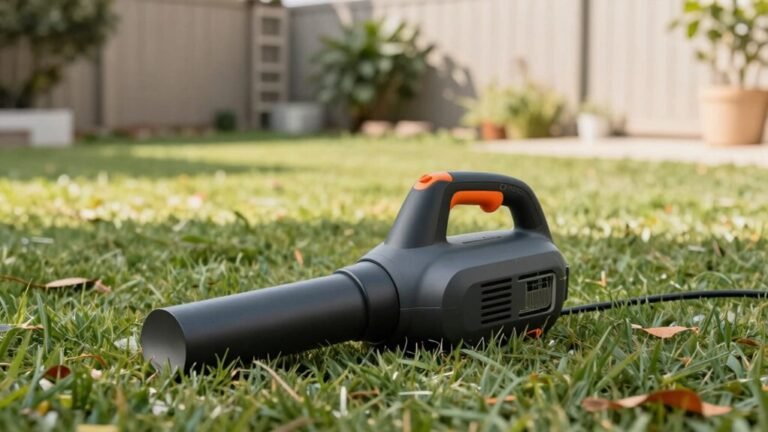
You can definitely use a leaf blower on snow, but only when it’s light, dry powder—think fresh flakes under an inch deep and a cold, dry day. The good news is a high‑CFM, battery‑powered blower (600 CFM or more) will push that fluffy snow away fast without damaging your driveway. Just charge the battery, set the throttle to medium, hold the nozzle 6‑12 inches above the surface at a 45‑degree angle, and sweep in steady, overlapping passes. Avoid wet, heavy snow or depths over three inches, because the airflow will choke and you’ll waste fuel or battery. If you keep those limits in mind, you’ll clear a path in minutes, and the next sections will show you exactly which models to pick and how to get the most out of them.
Can You Use a Leaf Blower on Snow? Here’s the Quick Answer
So, can you really use a leaf blower on snow? The quick answer is yes—if it’s light, dry, powdery snow up to about two inches deep. You’ll love the speed on walkways, decks, or a car roof, especially when you compare it side‑by‑side in a snow blower comparison chart. Just remember, a leaf blower isn’t a snow heater, so it won’t melt anything. Dress in proper safety gear—gloves, goggles, and sturdy boots—because the gusts can kick up debris. Check local noise regulations; many neighborhoods cap blower decibels, and a high‑power model can exceed limits. Use the highest power setting, blow with the wind, and clear immediately after snowfall for best results. Powdery snow can be cleared efficiently with the Husqvarna 150BT, even in tight spots like under parked cars. Backpack blowers provide higher horsepower for larger areas, reducing fatigue during prolonged use. Echo’s lighter design makes maneuvering easier on residential properties. Consider the airflow capacity when selecting a blower for snow to ensure sufficient force for effective clearing.
Snow Characteristics That Make a Leaf Blower Effective
You’ve already seen that a leaf blower can actually clear a light dusting of snow, but it only works when the snow itself plays nice with the high‑velocity air. The good news is that dry, powdery snow lets your blower’s airflow dynamics do most of the work. Freshly fallen, fluffy snow—usually under an inch thick—has low moisture and no packing density, so the jet of air pushes it aside like leaves. Temperature impact matters: colder air keeps snow dry, while a slight melt adds moisture and makes the snow cling. Aim for that 1‑2‑inch sweet spot; beyond three inches the weight overwhelms the blower, and packed or wet snow resists displacement. What most people don’t realize is that timing—blowing right after a snowfall—gives you the best results. Fuel level should be checked before starting, as an empty tank will halt the blower mid‑task. Proper leverage technique can further reduce effort and improve safety when clearing snow with a leaf blower. Adjusting the blower’s airflow speed to a higher setting can enhance its ability to move dry snow efficiently. Safety precautions are essential to prevent slips on wet or icy surfaces.

【Ultra-Lightweight One-Hand Design — Only 2.7 lb / 1225 g】Traditional leaf blowers weigh 6-10 lb and cause arm fatigue in minutes. At just 2.7 lb with an ergonomic anti-slip grip, the SEESE turbo blower allows effortless one-handed operation for extended sessions — ideal for seniors, women, and anyone with wrist or shoulder concerns.
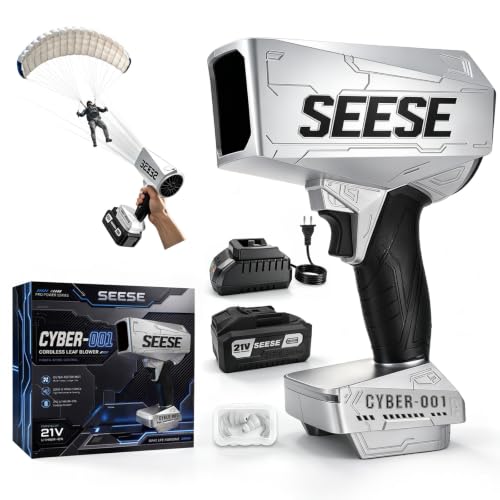
【52000RPM|2000G Air Thrust】Tired of weak blowers for lawn care that struggle with wet leaves, heavy debris and stubborn dust? Featuring an advanced brushless motor delivering up to 52000 RPM, this upgraded seese turbo jet blower provides 2000G air thrust, longer service life and stable output. It easily cuts through wet leaves and tough debris, helping you finish yard work faster with less effort.

Compatible With Dewalt 20V MAX Batteries:This ultra-portable leaf blower is compatible with Dewalt 20V MAX batteries such as DCB200 DCB201 DCB203 DCB204 DCB205 DCB206 DCB230 DCB240 DCB260 DCB246 DCB248 DCB606 etc. Plug and Play, perfectly compatible with DEWALT 20V Battery—saves money and worry. (TOOL ONLY - BATTERY NOT INCLUDED).
Best Leaf Blower Types for Light Snow
If you’re looking to tackle a fresh dusting of snow without breaking a sweat, the right leaf blower can be a game‑changer. For light snow, portable powered models like the DEWALT 20V MAX XR and Greenworks 40V give you the mobility you need while keeping weight under 30 lb, so you can maneuver around steps and patios with ease. Look for strong airflow—600 CFM or more—found in the EGO Power+ LB6504 and Husqvarna 350iB, which push fluffy snow far with minimal passes. Durability matters; battery‑powered units with robust housings survive cold temps, and gas‑handhelds like the Poulan Pro PPBV25 offer relentless power when you need it. Finally, ergonomics—balanced handles, vibration dampening, and easy‑to‑reach controls—keep you comfortable during those quick, repeatable blows. When comparing performance, consider battery runtime to ensure the blower lasts through your entire snow‑clearing session. Modern leaf blowers also incorporate adjustable speed controls that let you fine‑tune airflow for different snow densities.

Efficient Cleaning: Upgraded cordless leaf blower eliminates the limitations and bulky feeling of traditional leaf blower with ropes. It can quickly blow away lightweight objects such as leaves and dust, making your cleaning work easier. Suitable for courtyards, parks, streets, and other places.
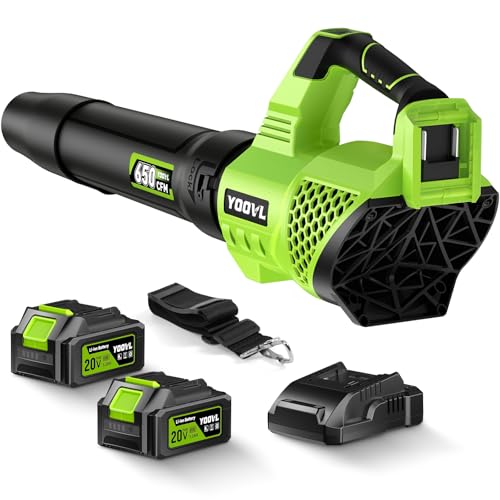
Upgraded Leaf Blower:More than just a leaf blower—YOOVL leaf blower cordless efficiently handles light snow, dust, grass clippings, and other debris from surfaces like lawns, sidewalks and garages. A must-have for year-round yard maintenance and thorough cleanups.

[Upgraded Brushless Motor for Superior Performance] MTkoala Leaf Blower features a 1200W upgraded brushless motor for stronger airflow, lower energy loss, less heat and 3x longer service life than regular brushed motors. With a maximum air volume of 700CFM and wind speed of 200MPH, it effectively clears dense, wet leaves, compacted debris, fine dust, packed snow, and other hard-to-access yard waste—enabling rapid, professional-grade cleaning performance.
Step‑by‑Step Procedure for Blowing Powder Snow
After you’ve picked a lightweight blower that can handle a light dusting, the next step is to actually move that powder snow off your walkways without turning the job into a snow‑storm of its own. First, charge the battery or fill the fuel tank, then strap on goggles and gloves. Attach the wide‑nozzle, stand at waist height, and give the blower a quick test on a small patch to check airflow control. Pull the starter cord, ease the throttle to medium, and hold the unit with both hands. Aim the nozzle 6‑12 inches above the surface at a 45‑degree angle, sweeping steadily while you walk 3‑5 feet per second. Overlap each pass by about 50 % to catch thin spots, then turn the machine off and clear any clogs. The snow on Vancouver Island was described as “nice dry snow,” which is ideal for leaf blower use. Remember to always perform a safety check before starting any equipment. Understanding the vacuum efficiency of leaf vacuums helps you gauge how well they can handle light snow. Choose the appropriate speed to balance power and control.

420 CFM Powerful Airflow: Delivers up to 420 CFM of airflow for fast removal of dry leaves, grass clippings, dust, and light debris. Ideal for patios, driveways, garages, sidewalks, decks, and everyday residential yard cleanup
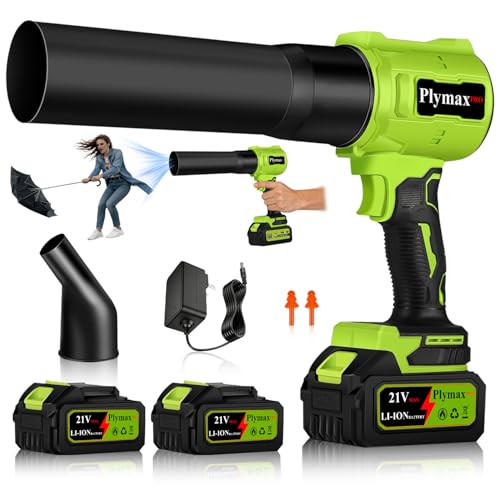
✅ TURBO POWER CLEANING PERFORMANCE - Experience powerful airflow with this cordless leaf blower featuring an 800,000 RPM high-speed motor. Quickly clears wet leaves, dust, and debris. Stronger than standard air blower tools, perfect for yard, driveway, and garage cleaning.

Compressed Air Duster: JVSCAM X3 electric air duster equipped with 130000 RPM brushless motor, delivering 180 G of blowing force with a maximum wind speed of 45+m/s (super typhoon is 51.0m/s). The air duster also has 3 adjustable speed Settings to meet different cleaning needs, easily removing dirt and debris hidden in various crevices.
Common Mistakes That Reduce Efficiency or Damage Surfaces
When you start using a leaf blower on snow, it’s easy to slip into habits that actually slow you down or even ruin the surface you’re trying to clear. One common mistake is tackling wet, heavy snow or slush; the dense mass clogs the air stream and forces you to work harder, wasting fuel and time. Another is ignoring depth limits—once snow exceeds three inches, the blower sputters, and you end up shoveling anyway. Blowing on gravel or dirt can displace material, causing surface erosion and costly maintenance. Also, blowing against the wind blows snow right back onto your path, reducing efficiency and forcing extra passes. Finally, neglecting safety gear or proper GFCI connections can damage your equipment and create hazards, leading to premature maintenance needs. Using a blower when the snow is not light and powdery can cause the machine to blow snow back onto the operator, increasing risk and reducing effectiveness. The high‑velocity airflow can also disl water from surfaces, similar to how it removes water from a car’s paint. Maintaining the correct hydraulic fluid viscosity ensures the blower’s motor runs smoothly under varying loads. Understanding how CFM rating impacts airflow power helps you choose a blower that can handle the snow density you encounter.
Battery‑Saving Tips for Cold‑Weather Use
Dry weather can chew up a leaf‑blower battery faster than you’d like, so you’ve got to treat it like a delicate piece of equipment instead of a disposable power pack. First, keep your battery in a cool, dry storage spot with good thermal insulation; a garage shelf away from drafts works well. Use thermal optimization tricks like a snug insulated case that traps a little heat but still lets air circulate, preventing the BMS from over‑working. Charge it periodically in a mild room, never in a freezer or a hot car. Moisture protection is essential—dry the terminals, wrap the pack in a breathable cloth, and never leave it out in snow. By managing temperature and keeping the battery dry, you’ll preserve capacity and avoid costly failures. Regular fluid testing can detect moisture ingress before it damages components. Understanding fluid compatibility helps prevent cross‑contamination that could degrade performance.

[Custom Design]: This hard shell case is specifically designed to store the Saker Cordless Leaf Blower, Portable Dust Cleaner, Handheld Blower, and its batteries. The Worfty hard shell delivers premium protection against scratches and damage to your device-Case only (device not included)

[Check Size Before Buying] Designed for many compact small cordless blower models, including similar tool-only styles for Bullseye Blower 20V, for Turbo cordless leaf blower, battery and charger. Please measure your tool before purchase and compare with the 11 x 9.25 x 7.87 in listed size to avoid fit issues
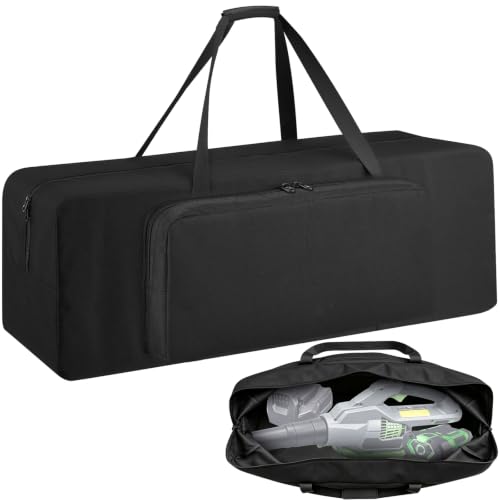
Cordless Electric Leaf Blower Storage Bag: This storage bag is designed to accommodate an electric handheld leaf blowing. It also comes with a front storage pocket for storing batteries and charger accessories. Practical and convenient, very suitable for your storage needs (please check if the size is suitable for your blower before ordering)
Leaf Blower Snow Alternatives for Heavy or Wet Snow
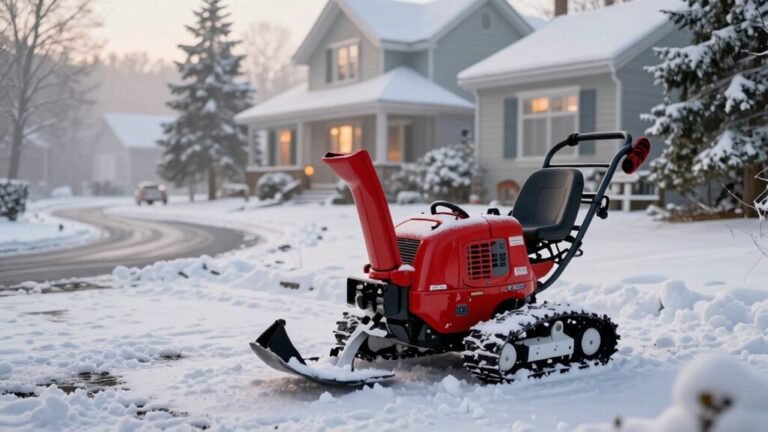
If you’ve ever tried to blast heavy, wet snow with a leaf blower, you know it’s like trying to blow a brick with a hair dryer—just not happening. The good news is you have plenty of alternatives that respect snow safety and handle high snow density. A sturdy snow shovel gives you hands‑on control, no fuel, no maintenance, and works great on packed drifts. For larger sidewalks, an electric snow blower offers quiet, corded power without fumes. If you need mobility, a cordless model lets you roam freely while staying neighbor‑friendly. When the snow gets really deep, a three‑stage or gas‑powered snow blower tackles **18‑inch drifts and vehicle‑packed snow with ease. Choose the tool that matches your driveway size and budget, and you’ll stay safe while clearing the mess. Light fluffy snow is best handled by a backpack blower, which works effectively up to two inches of depth. Leaf blowers can also be used for light dust removal on driveways, providing a quick, low‑effort option for minimal snow accumulation. Electric leaf blowers are generally quieter due to fewer moving parts and the absence of a noisy internal combustion engine, making them a low‑noise choice for residential snow clearing. Battery technology** continues to improve, extending runtime for cordless snow‑blowing tools.

[Effortless Snow Clearing]:The MZK Cordless Snow Shovel delivers a 13-inch clearing width and a 6-inch clearing depth, allowing you to move more snow in fewer passes. Ideal for driveways, patios and walkways, this battery powered snow thrower makes snow removal quick and efficient.

【 Powerful Performance 】This 24V cordless snow shovel is easy to maneuver yet tough enough for winter cleanup. It clears paths up to 13 inches wide and 7 inches deep, throwing snow up to 23 feet away. Ideal for driveways, sidewalks, patios, decks, and steps, weighing just 12 lbs, it handles everyday snow removal without the bulk of a gas blower.

POWERFUL SNOW REMOVAL: This 40V cordless snow shovel features a robust brushless motor running at 2600+ RPM for 40% higher efficiency. Clear snow up to 8 inches deep and 16 inches wide in one pass, throwing it up to 30 ft. The adjustable chute (±30°) lets you direct snow exactly where you want—ideal for driveways, sidewalks, patios, and decks.
Troubleshooting: When the Blower Won’t Move Snow
Even a perfectly tuned leaf blower can sit on the driveway and refuse to push snow, and the culprit is usually something simple you can fix yourself. First, check snow engine maintenance basics: make sure the fuel tank isn’t empty and that the fuel isn’t stale—ethanol can gum up the system after about 60 days. Look at the filter cleaning schedule; a clogged air filter chokes airflow, so remove the foam or paper filter, tap out debris, and wash it with mild soap. If the fuel filter looks dark or gritty, clean or replace it; a blocked filter starves the carburetor and stalls the engine. Finally, inspect the spark plug—if it’s wet or fouled, pull it out, clean it, or swap it for a fresh one. These quick steps usually get the blower moving snow again. Fuel accumulation can also cause the engine to flood and stall. If the ignition switch feels loose or doesn’t click, verify the safety switch is engaged correctly.