You’ll find a drum chipper shines when you need high‑throughput, heavy‑duty mulching of thick limbs—its big drum, constant torque and even blade wear let you chew through 12‑inch logs quickly with minimal downtime. The good news is a disc chipper is compact, low‑maintenance, and gives finer, more consistent chips for small‑engine projects or tight spaces, though its blades wear unevenly and need frequent sharpening. What most people don’t realize is that matching the right design to your job can slash fuel and labor costs, and the next section shows exactly how to pick the perfect fit.
Disc vs Drum Chipper: How Each Design Works
A disc chipper works like a giant pizza cutter, with a hefty steel disc set at a 45‑degree angle to the feed wheels. You’ll see the disc mounted at that angle, a dead space between disc and wheels, and thick steel knives on the face that slice wood cleanly. The design meets safety standards because the solid steel piece stays rigid, reducing stray blades and accidental kick‑backs. Its high‑speed spin creates a centrifugal push that throws chips out, and the angled cut less vibration, which helps with noise reduction. You’ll notice the infeed opening is smaller, so you feed material at a slight angle, but the result is uniform chips and a quieter, smoother operation compared to a drum‑type chipper. Always wear personal protective equipment before starting the machine. Proper hydraulic pressure ensures the disc maintains consistent torque during operation. Selecting hydraulic fluid with the right viscosity rating helps maintain optimal performance and protects the system from wear.
Side‑by‑Side Comparison: Power, Chip Size, and Throw Distance
When you line up a drum‑type chipper next to a disc‑type, the first thing you’ll notice is how differently they gobble power. Drum units demand higher average power and constant torque requirements, so your engine works harder and burns about 18 % more fuel per tonne. Disc chippers, on the other hand, lean on the rotational inertia of a heavy disk, cutting engine load and boosting environmental efficiency by using roughly 19 % less fuel.
Chip size follows the same pattern. Drum chippers give you uniform chips but with more variation, ideal for smaller logs under 45 cm. Disc chippers let you dial in precise lengths and slice a range of diameters, delivering the clean, decorative mulch you might want for biofuel.
Throw distance is where disc designs shine. Their larger fan paddles create a stronger discharge draft, hurling chips 6–10 inches farther than most drum models, which can struggle with weaker throw and occasional blockages. This extra reach keeps your work area clearer and reduces the need to chase stray chips. The hydraulic ram pump’s pulsating surge can also be adapted to drive a wood chipper in off‑grid settings. Choosing the right hydraulic fluid is essential to maintain performance and protect seals. Proper pressure relief ensures the system stays within safe limits during high‑load operations.

Part Number: WTD-11-190 904-0000-10 24541-259 27000500

The WC68H PTO Hydraulic Wood Chipper is engineered for landowners, farmers, and property managers who need reliable, high-capacity wood processing. Designed to pair with tractors from 20–50 HP, this 6-inch chipper delivers powerful performance through its PTO drive system and hydraulic infeed, ensuring smooth, consistent feeding of branches, brush, and timber.

【Powerful】❶Adopts ZONSEN 750cc 25hp 45° V-twin design, horizontal shaft, air cooled, 4-stroke, OHV gasoline engine, and equipped with a 12V36Ah lead-acid battery. ❷Upgraded electric start, simple and fast startup. ❸Strong power, stable working, long time chipping. Suitable for enterprises, project managers, farmers, homeowners, contractors, and horticulturists.
Disc vs Drum Chipper: Blade Sharpening, Wear, and Dead‑Space Maintenance
If you’ve ever spent a Saturday sharpening the knives on a wood chipper, you know the difference between a drum‑type and a disc‑type can feel like night and day. Drum geometry gives you even blade wear, so you can flip a knife and sharpen it in the field with minimal fuss. Maintenance frequency drops because the forgiving durability keeps chip size consistent and jams rare. Disc geometry, by contrast, wears unevenly; you’ll need a professional to balance the blades, and the extra time between sharpenings can kill your workflow. Dead‑space maintenance also diverges: drums clear material quickly and leave little room for lodging, while discs demand gap tweaks and more careful cleaning. The good news is you can match your upkeep style to the blade geometry you prefer. Using a bench grinder ensures a consistent sharpening angle and reduces blade fatigue. Properly sizing the splitter’s cylinder capacity helps prevent overload and extends the life of both drum and disc systems. Before starting, always perform a thorough air purge to remove trapped air and avoid uneven pressure.
When to Choose a Disc Chipper for Small‑Engine Projects?
After you’ve wrestled with drum‑type blade wear and dead‑space quirks, the next question is whether a disc‑style chipper makes sense for your small‑engine projects. If you’re tackling shrubs, 5‑inch branches, or light‑duty cleanup, a disc chipper gives you faster feed and consistent chips. Look for compact designs like the 65XP or 200UC; they fit tight garden aisles and fold down for storage. Because electric models need only an extension cord, maintenance stays low and safety is higher—no hot engine parts to touch. A heavier disc blade handles up to 3‑inch limbs, and the transport wheels let you move the unit without strain. Check the product warranty; a solid guarantee means you’re covered if the blade dulls or the motor hiccups. The disc‑style produces finer, higher‑quality, more consistent chips than drum‑style. Consider the branch volume you’ll process regularly to ensure the chipper’s capacity matches your landscaping workload. Understanding hydraulic pressure helps you diagnose performance drops in wood‑chipping equipment. In extreme cold, hydraulic fluid can freeze, so using a low‑temperature rated fluid is essential.

POWERFUL PERFORMANCE: 15-AMP motor shreds branches up to 1.8-inches in thickness into garden mulch

High-Torque Motor & Reversible Blade: Powered by a steady 15 Amp,4500 RPM motor,this electric wood chipper shredder processes branches up to 1.8 in thick.Functioning as a practical mini wood chipper,its reversible double-sided blade extends service life and reduces downtime.As a consistent branch shredder for daily backyard pruning,it delivers steady output for homeowner gardeners processing dense vegetation without frequent halts or power loss
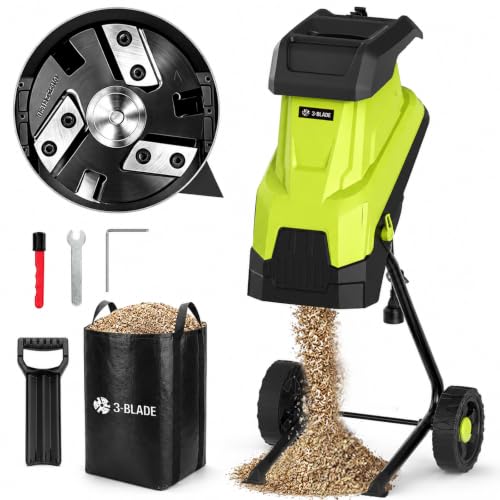
【15-AMP 3-BLADE CUTTING SYSTEM - Up to 50% Faster Shredding】 Three SK5 steel blades are spaced 120° apart, delivering 3 cuts per rotation vs. 2 on a conventional 2-blade design. Combined with the 15-amp motor, the higher cutting frequency helps shred branches faster and more continuously, with less buildup, less re-feeding, and fewer interruptions. Corded power delivers consistent output without battery charging delays.
When to Choose a Drum Chipper for Large‑Scale Mulching?
Because you’re tackling a big‑yard project—think whole‑acre clear‑outs, storm‑damage cleanup, or a commercial‑grade mulching job—a drum chipper is usually the smarter choice. Its open drum and aggressive pull‑in let you feed massive, knotty branches without choking, so you keep uptime high and the job moving. The good news is the high‑throughput design means you finish faster, which translates into lower labor costs and less wear on your equipment. What most people don’t realize is that the fine, uniform chips improve soil sustainability by returning organic matter that decomposes evenly. Plus, the reliable performance reduces the chance of breakdowns, making insurance claims less likely and keeping your project on schedule. Chipping efficiency is enhanced by the chipper’s ability to process larger volumes of material in a single pass. Using the correct fluid ensures optimal hydraulic pressure and protects seals, preventing premature wear of the system. A 6‑inch chipper can safely handle branches up to 12 inch diameter without sacrificing performance.
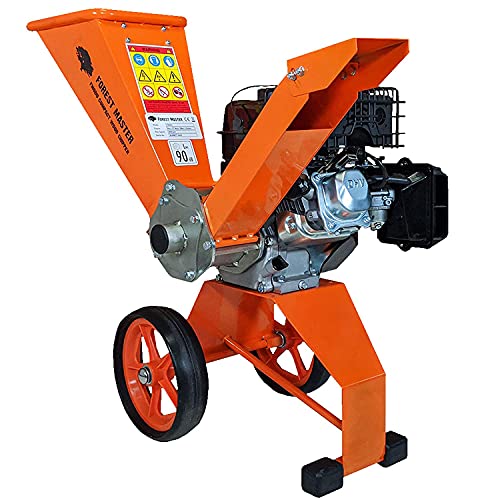
Robust 6.5HP Engine: Equipped with a 6.5-horsepower, 208cc 4-Stroke LCT Maxx Series engine, this wood chipper delivers powerful performance directly to the drive shaft, eliminating the need for belts and enhancing efficiency.

Smooth Feeding: Driven by a 15A motor running at 4000RPM with high-temperature-resistant copper windings, this wood chipper delivers strong, steady pulling power that draws branches into the blades with minimal effort on your part. The dual-chute hopper lets you feed branches through separate openings based on their size, minimizing jams and kickback.
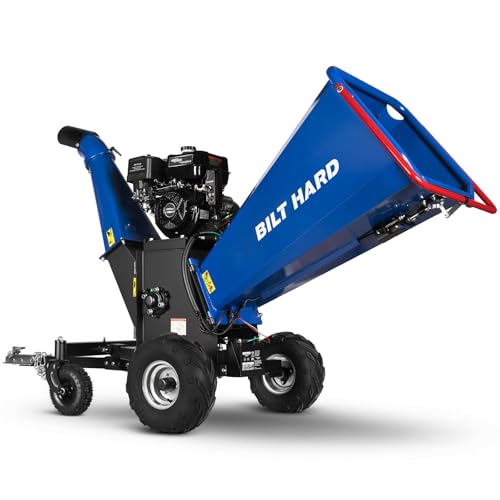
【Powerful 15HP Gas Engine】Powered by a 420cc 4-cycle OHV gasoline engine, this wood chipper delivers reliable power for heavy-duty outdoor cleanup. The electric start system offers quick and convenient ignition for effortless operation.
Disc vs Drum Chipper: Purchase Price, Operating Costs, and ROI
When you’ve decided a drum chipper is the workhorse for those big‑yard jobs, the next question is how the numbers stack up over time. Drum units command a higher purchase price—often several thousand dollars—while disc chippers can be snagged for under a thousand. But the good news is that drum chippers usually have lower operating costs: they need less horsepower per ton, and their blades wear evenly, letting you flip them for double lifespan. Disc blades wear unevenly, demanding frequent sharpening and costly rebalancing. In an ROI analysis, factor in lifecycle costs—fuel, maintenance, downtime. Drum models typically win on total cost of ownership, especially when you run them hard and need minimal downtime. Selecting the right hydraulic pump—such as a high‑pressure axial‑flow pump—can further enhance efficiency and reduce energy consumption. Reduced labor costs can also be significant when the chipper handles larger volumes efficiently. Using the proper hydraulic fluid viscosity ensures optimal performance and longevity.

High-pressure and high-efficiency wood chipping: Drum Mulcher suitable for ordinary skid steer loaders, doubling forest operation efficiency。3000 PSI Hydraulic Pressure(Requires a hydraulic flow of 14 - 20 gpm for seamless operation) + 60 Inch Working Width:This heavy duty drum mulcher is engineered for wooded terrain, easily cutting and mulching saplings, shrubs, and undergrowth. With a 60-inch (1.52m) working width, it boosts vegetation clearing efficiency by over 8x compared to manual tools, quickly turning dense foliage into fine mulch—no extra post-processing needed.

INDUSTRIAL-GRADE SHREDDER Our heavy-duty shredder is engineered to handle the toughest materials, including tires, wood, cardboard, and industrial waste. Built for durability and performance, it delivers consistent shredding power for recycling facilities, manufacturing plants, and waste management operations. With customizable blade configurations and motor outputs, this machine adapts to your specific material processing needs—from fine particle reduction for recycling to coarse shredding for volume reduction.
Matching the Right Chipper to Your Woodworking Needs
If you’re trying to decide whether a drum or a disc chipper fits your workshop, start by thinking about the kind of wood you’ll be tackling most often. For thick, dense limbs and a mix of brush, a drum chipper’s larger throat opening and natural suction pull material in quickly, giving you steady size selection with minimal jams. If you mainly chip larger‑diameter branches and prefer a compact machine, the disc’s 45‑degree feed angle and cupped fan blades handle those pieces efficiently, though you’ll see slightly lower capacity for dense logs. Consider maintenance frequency: drum models with four knives tend to need less frequent sharpening, while disc units with fewer blades may require more regular attention. Match the chipper’s strengths to your typical wood size and how often you’re willing to service it. Proper hydraulic hose maintenance is essential to keep the high‑pressure fluid flow reliable and prevent downtime. Always check hydraulic fluid before operation to ensure the system is properly lubricated and free of contaminants.
Common Pitfalls and Quick Fixes for Both Chipper Types
Even a small slip can turn a routine chip‑off into a nasty accident, so it’s worth spending a minute to spot the common pitfalls before you fire up the machine. First, follow safety protocols: keep loose clothing, jewelry, and pets away from the feed chute, and always disengage the chipper before clearing jams. Feeding oversized or wet wood, rocks, or nails will clog the knives and cause kick‑backs—rake away twigs and stick to dry, appropriately sized branches. Next, stick to a strict maintenance schedule: inspect knives daily, sharpen or replace dull edges, adjust the anvil for proper clearance, and tension belts regularly. Finally, set the chipper on level, firm ground, secure it, and verify that all guards are intact. These quick fixes keep you safe and your chipper humming. Gearbox damage can also cause unexpected shutdowns, so monitor for fire lint and bearing fragments during inspections.