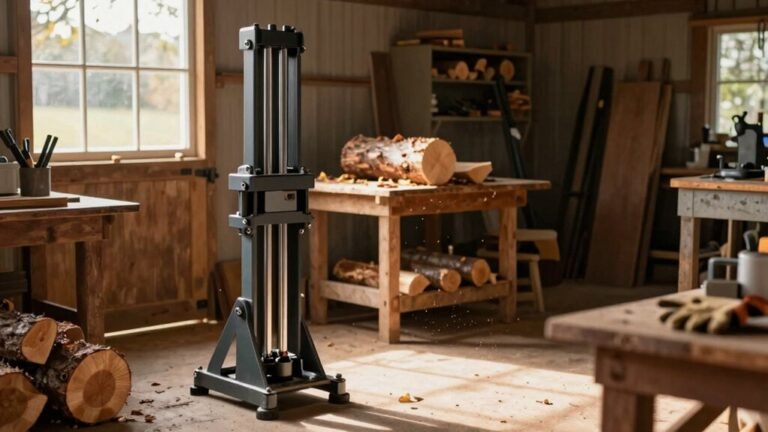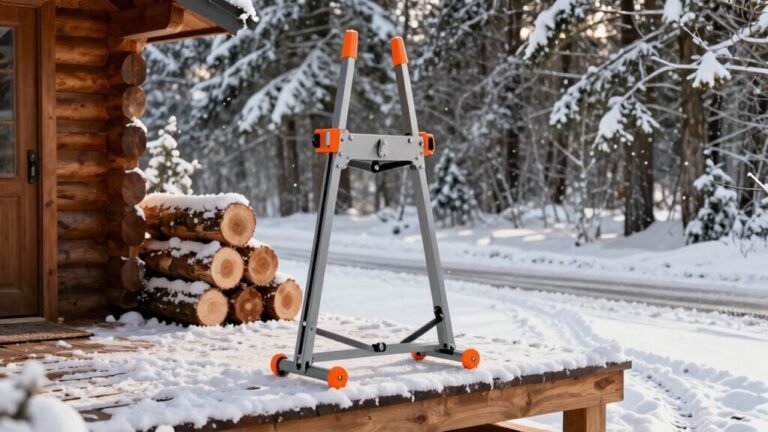
A log splitter is a sturdy machine that forces a wedge or rotating screw into a pre‑cut log, breaking it into firewood pieces without the back‑breaking effort of a sledgehammer. You’ll find hydraulic, kinetic, electric, or gas‑powered versions, each rated by tonnage to match log diameter and wood hardness. Horizontal units are portable and great for flat yards, while vertical models handle oversized hardwoods with less lifting. The good news is you can pick a size that covers 95 % of typical splits, and the right safety features keep you safe. Keep reading to uncover how to choose the perfect force rating and features for your setup.
What Exactly Is a Log Splitter and Do You Really Need One?
What exactly is a log splitter, and do you really need one? It’s a machine that takes a pre‑cut log and forces it through a wedge or rotating screw, turning a heavy, unwielded piece into manageable firewood. You’ll find hydraulic, kinetic, and manual versions, each rated by the tons of force they generate. The good news is you can match the splitter to your budget—log splitter economics matter because a gas‑powered unit gives you high tonnage for year‑round use, while an electric model is cheaper and quieter for occasional chores. Seasonal demand fluctuations mean you might splurge in winter when firewood is hot, then scale back in spring. What most people don’t realize is a simple attachment can keep split logs from falling, speeding up the whole process. Choosing the right size also depends on log diameter and the type of wood you’ll be splitting. Always wear protective gear to prevent injuries while operating the splitter. Before you begin, make sure the work area is level and free of debris to reduce the risk of kickback.
Why a Log Splitter Is Worth the Investment
If you’ve already seen how a log splitter turns a stubborn log into neat firewood in seconds, you’ll quickly see why the investment pays off. The good news is you slash hours of back‑breaking labor, freeing up time for family, hobbies, or a warm cup of cocoa while the machine does the heavy lifting. Seasonal demand for firewood spikes in winter, and a splitter lets you harvest and split on your own schedule, avoiding pricey deliveries and reducing overall cost. What most people don’t realize is that using locally sourced wood cuts down on the environmental impact of transporting pre‑cut bundles. Consistent splits also burn cleaner, meaning less smoke and a more efficient fire. All these benefits add up, making the upfront price a smart, long‑term payoff. You can recoup the $27,000 equipment cost after selling just 270 full‑size totes. Electric splitters also offer lower emissions compared to gas‑powered models, further reducing environmental impact. Selecting the right airflow capacity ensures efficient leaf removal in fall and quick snow clearing in winter. Understanding the return on investment helps you gauge how quickly the splitter pays for itself.

Powerful, 6.5 Ton RAM Force to get the job done fast

Powerful 16-Ton Splitting Force: Powered by a robust 2.5eHP 17.4Amp 1600W motor, this electric log splitter delivers reliable power to a 16-ton hydraulic splitting system. The high-performance two-stage hydraulic gear pump with quick auto-return efficiently splits logs up to 20.5 inches in length and 16 inches in diameter, making large firewood processing faster and easier

【POWERFUL HYDRAULIC FORCE】Handle tough firewood with confidence using a powerful 7-ton hydraulic system and 2900 PSI splitting pressure. The reinforced steel wedge concentrates force through logs for efficient splitting performance, helping you prepare firewood with less manual effort.
Horizontal vs. Vertical Configurations: Which Orientation Fits Your Logs?
When you’re deciding between a horizontal and a vertical log splitter, the first thing to evaluate is how you’ll actually be using the machine day‑to‑day. Horizontal units give you portable ergonomics—lightweight, wheeled, and easy to move around a yard, so you can hop from one pile to the next without breaking a sweat. They excel on flat terrain and handle 4‑20‑ton forces for 16‑20‑inch strokes, making them fast for 80‑100‑lb logs. Vertical models, on the other hand, shine when you need terrain adaptability for rough ground and heavier timber. They roll logs into place, cutting lifting strain, and push 30‑plus‑ton force with 24‑inch strokes—perfect for knotty, oversized hardwoods. Choose the orientation that matches your typical log size and work environment. For wood larger than 14 in, the vertical splitter tends to be faster. Understanding the key differences helps you select the most efficient tool for your specific needs. Hydraulic splitters provide consistent force for heavy‑duty applications. Drum chippers are known for their high throughput when processing large, tough wood.

🪵【7 TON HYDRAULIC POWER】 This 7 ton electric log splitter delivers strong hydraulic force, making it ideal for log splitters for firewood and hardwoods like oak and maple. A reliable firewood splitter for efficient home heating and daily use.

Powerful Splitting: Powered by a 209CC 7HP engine and a 20-ton hydraulic ram, this gas log splitter easily splits hardwood and knotty logs. Handles logs up to 20.5" long and 16" wide—ample capacity for most household and farm needs

【Specifications】:Equipped with a powerful 7HP gas engine, this log splitter operates with a 20-ton rated system, featuring the reliable 2-Stage Hydraulic Gear Pump. With Auto Return, it easily splits logs up to 20 inches in length and 16 inches in diameter.
Hydraulic vs. Kinetic Splitters: Power Source and Speed Trade‑offs
Even though both hydraulic and kinetic splitters get the job done, they do it in very different ways that affect how quickly you’ll move through a pile of firewood and what kind of power source you’ll need. With a hydraulic unit, you’ll hook up a gas engine, electric motor, or tractor hydraulic line, then watch oil build pressure before the ram pushes slowly but with relentless force. That means you must budget time for hydraulic fluid maintenance and keep an eye on pump health. A kinetic splitter, on the other hand, relies on fuel‑wheel dynamics: a motor spins a heavy flywheel, stores energy, and releases it in a 2‑3‑second burst. No hoses, no fluid checks—just a fast, high‑cycle rhythm that’s perfect for high‑volume chopping, though it may sip a bit more fuel than a comparable‑speed hydraulic. The good news is you can match a 15‑ton kinetic to a 20‑ton hydraulic in raw power, but the kinetic will out‑pace you on speed while the hydraulic stays steady on the toughest hardwoods. The Super Split HD’s cycle time of ~2–2.5 seconds per split is significantly faster than the Champion Pro 40‑Ton’s ~10–11 seconds. Proper viscosity selection ensures optimal performance across temperature ranges. A hydraulic ram pump can also be adapted to drive a wood chipper, using water‑driven pressure to generate the necessary pulsating surge. Choosing the right splitter often hinges on evaluating fuel efficiency for your specific usage pattern.

WOOD SPLITTING MADE EASY - The hefty 5 pound build of our splitting wedge makes splitting logs and firewood a breeze. Grab a hand sledge or maul to take on the logs that are difficult to split with an axe alone. Finish may vary and be blasted or painted.

BOX-shape Beam: Experience unparalleled strength and durability with our BOX beam Design Log Splitter. Engineered to outperform traditional I beam designs, our splitter ensures superior stability and power, providing you with the confidence to tackle even the toughest logs. Elevate your wood splitting game with the unmatched strength of our BOX beam design.

POWERFUL: The 12 ton hydraulic log splitter can split logs up to 17.7 in long and 7.9 in diameter (Depending on wood density)
Manual Splitters Explained: When Hand‑Powered Tools Make Sense
Hand‑powered splitters might look simple, but they pack a surprisingly effective punch for the right jobs. You’ll find foot‑operated models that turn your weight into a strong wedge thrust, screw‑type units that rotate a cone for gradual splits, and pump‑style tools that let you build pressure with a hand pump. The good news is they’re an eco‑friendly design—no emissions, no fuel, just your own effort. For occasional firewood, they’re cost‑effective and safe, keeping your hands away from the blade. What most people don’t realize is how portable they are; many fold down for easy transport and portable storage in a garage or shed. You can split 20‑40 logs per hour, handling pieces up to 18.5 inches long and 6.5 inches thick, all without a power outlet. This makes them perfect for remote campsites or small yards where space and budget matter. The tool’s 10‑ton hydraulic pressure lets you split larger logs with minimal effort. Understanding hydraulic flow rate helps you match the pump capacity to the splitter’s cylinder size for optimal performance. Adding a reinforced steel frame ensures durability and stability during repeated use.
How to Pick the Right Log Splitter Force Rating for Any Use
If you’re trying to figure out what force rating you actually need, start by looking at the size and hardness of the wood you’ll be splitting. For log sizing, match the diameter to the tonnage chart: a 6‑inch softwood needs 4‑6 tons, while a 24‑inch oak pushes you to 30 tons. Use the Janka hardness scale to gauge wood density—hickory at 1,820 lb force will demand a higher rating than aspen at 420 lb. The good news is most residential jobs fall under 15 tons; a 10‑ton unit covers 95 % of splits. The key to force selection is balancing log diameter, wood hardness, and your typical log length, ensuring you don’t over‑ or under‑spec your splitter. Chipper efficiency can also be affected by the uniformity of the wood chips produced. When comparing tools, consider that battery life often determines overall productivity for cordless models. Selecting the proper chipper size hinges on the volume of branches you intend to process.

【10-Ton Hydraulic Splitting Power】Log spilitter delivers up to 10 tons of controlled hydraulic force for splitting firewood and tough logs. The manual hydraulic system provides reliable power without requiring gas or electricity.

10-TON SPLITTING FORCE: This manual hydraulic log splitter delivers 10 tons of powerful splitting force, making quick work of even tough, knotty logs.

Exceptional Splitting Power: This manual hydraulic log splitter boasts an impressive 12 T of splitting force, effortlessly handling logs up to 18.7 in in length and 8 in in diameter. This powerful performance ensures efficient wood processing for heating or woodworking needs, making it a must-have for any home.
Log Splitter Features That Matter: Power Source, Safety & Portability
A good log splitter isn’t just about raw tonnage; the power source, safety features, and portability all play a huge role in how smoothly you’ll get the job done. If you choose an electric model, you’ll enjoy a compact efficient design, quiet operation, and low‑maintenance convenience—just plug it in and you’re set. Gas‑powered units give you the raw force for bigger logs, but they’re louder and need fuel. Safety matters, so look for hydraulic wedges, cone‑type pull‑over mechanisms, and ergonomic handles that keep your grip comfortable while reducing kickback risk. Portability varies: electric splitters are light enough to store in a garage; gas units often have wheels for easy tow, and tractor‑mounted options let you work right from your farm equipment. The good news is you can match power, safety, and mobility to your specific chopping needs. Proper maintenance, such as hydraulic cylinder rebuilding and regular seal inspection, extends the life of your splitter. Choosing the right pump type, such as a gear pump for robust, low‑cost operation, can further enhance system reliability.

【6.5-Ton Splitting Force】Delivers up to 6.5 tons of splitting force to break through logs with ease, helping tackle firewood and wood-cutting tasks with less manual effort.

【Sturdy and Durable】It is made of high-quality aluminum, PA6, and iron with a plastic spraying process and heat treatment, which is wear-resistant, rust-resistant, and not easily deformed, ensuring a long service life.

【POWERFUL MOTOR FOR EFFORTLESS CUTTING】 The PowerSmart electric hydraulic log splitter boasts a 15 Amp induction motor with 3450 rpm, ensuring stable performance. The 6.5-ton hydraulic system easily splits larger logs into firewood. Durable steel construction ensures reliable use for years to come.
Log Splitter Maintenance Tips for Longevity and Consistent Performance
A well‑kept log splitter will keep cutting through timber season after season without losing power or breaking down. Start each session with a walk‑around check for leaks, cracked hoses, and worn wedges; a quick visual can spot issues before they snowball. After every use, brush off chips, sap, and dirt, then wipe the beam and wedges with a mild cleaner and dry them thoroughly—rust hates moisture. Apply a high‑quality lubricant to all moving contacts, especially the beam‑wedge interface, to keep friction low. Check hydraulic fluid monthly, top off with the recommended AW‑32, and bleed air after each refill. Schedule deeper inspections every six months as part of your Seasonal upkeep, and remember that proper maintenance protects your Warranty and extends the machine’s life. Regularly test the fluid for discoloration to catch early signs of degradation.