Whether a wood chipper pays for itself hinges on your usage frequency. If you’re chipping weekly or offering cleanup services, you’ll recoup a $2,400 model fast through labor savings. But here’s the thing—most homeowners overestimate their actual use. Renting makes sense for annual projects, while regular users benefit from ownership’s lower long-term costs and continuous availability. New chippers hold value better than used ones, though they cost more upfront. The real question isn’t whether chippers are worth it—it’s how often you’ll actually use yours.
How Often Will You Use Your Wood Chipper?
Here’s the thing—before you drop a grand or more on a wood chipper, you’ve got to be honest with yourself about how often you’ll actually fire it up. Your usage frequency determines whether you’re making a smart investment or buying an expensive dust collector.
Seasonal users who chip brush a few times yearly don’t need industrial-grade equipment. Spring cleanups, fall leaf management, and post-storm debris clearance might hit you a handful of times annually. That’s perfectly fine—you don’t need heavy-duty maintenance schedules.
But if you’re running frequent sessions across multiple seasons, your seasonal demand shifts the equation entirely. Homesteads with ongoing yard waste require serious consideration. Heavy use means blade sharpening every 8-10 hours and routine inspections before each use. The more you chip, the harder that machine works—and the better your maintenance game needs to be. Understanding the different chipper types helps you match capacity to your workload. Proper log splitter selection can also reduce the load on your chipper by pre‑splitting larger logs. Always wear protective gear when operating heavy equipment to prevent injuries.
Total Cost: Buying vs. Renting Over 5 Years
When you’re staring down the decision between dropping serious cash on a wood chipper or renting one whenever you need it, the math matters—but it’s not as straightforward as comparing two price tags side by side. Here’s the thing: renting a few times yearly hits break-even in just one to two years against a modest residential chipper. But stretch that timeline to five years with regular use, and buying wins hands down. Your chip analysis reveals rentals accumulate without any resale value recovery. Ownership does saddle you with maintenance costs and storage headaches, yet you’re eliminating repeat rental fees. The depreciation impact on a used chipper is gentler than you’d think—especially compared to five years of rental receipts stacking up. Long-term projects recoup your investment faster than renting ever could. Always wear personal protective equipment to prevent injuries during operation. Selecting the right chipper size also depends on the branch volume you typically process. Properly checking hydraulic fluid levels before each use can prevent costly downtime.

POWERFUL PERFORMANCE: 15-AMP motor shreds branches up to 1.8-inches in thickness into garden mulch

This refurbished product is tested and certified to work properly. The product will have minor blemishes and/or light scratches. The refurbishing process includes functionality testing, basic cleaning, inspection, and repackaging. The product ships with all relevant accessories, and may arrive in a generic box.

Smooth Feeding: Driven by a 15A motor running at 4000RPM with high-temperature-resistant copper windings, this wood chipper delivers strong, steady pulling power that draws branches into the blades with minimal effort on your part. The dual-chute hopper lets you feed branches through separate openings based on their size, minimizing jams and kickback.
New or Used Wood Chipper: Which Saves Money?
You’ve figured out that buying beats renting over five years—but now comes the real head-scratcher: should you go new or used?
Here’s the thing: new chippers cost more upfront, but your ROI wins out through durability. Reliable models are 22% more cost-effective over time, with hardened chambers lasting 2.5x longer than used equipment. You’ll skip those constant maintenance term headaches that drain budgets.
Used models tempt you with lower prices—upper-end hydraulic feed chippers run around $8,000. The catch? Unknown maintenance history and zero warranty coverage mean surprise repair costs pile up fast. Models like the Woodland Mills WC-68 with hydraulic in-feed rollers command premium prices on the used market, reflecting their specialized design advantages.
What most people don’t realize: depreciation-analysis matters. New chippers hold value better, and financing-options often make monthly payments reasonable. You’re fundamentally buying reliability and peace of mind, not just a machine. Rod seals are critical for preventing fluid loss and extending service life. Proper storage of hydraulic fluid reduces fire risk, especially when using flammable fluid guidelines. Selecting the appropriate hydraulic viscosity ensures optimal performance across temperature ranges.

The WC68H PTO Hydraulic Wood Chipper is engineered for landowners, farmers, and property managers who need reliable, high-capacity wood processing. Designed to pair with tractors from 20–50 HP, this 6-inch chipper delivers powerful performance through its PTO drive system and hydraulic infeed, ensuring smooth, consistent feeding of branches, brush, and timber.
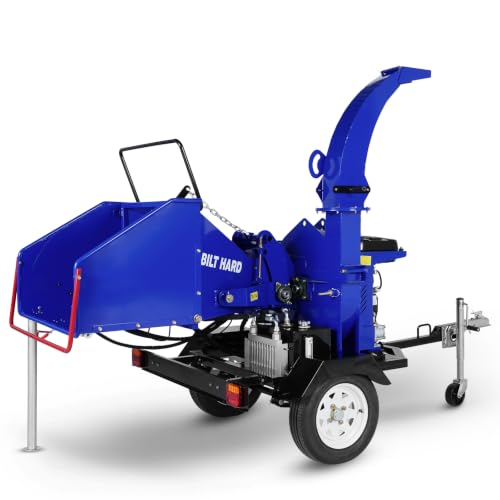
【Professional-Grade Power Performance】The BILT HARD 8'' chipper shredder is equipped with a high-performance 25HP 739cc air-cooled 4-stroke gas-powered OHV engine featuring an efficient electric start system. Supported by a reliable 12V 32Ah lead-acid battery, it ensures quick and effortless startups every time you are ready to work.

【Powerful】❶Adopts ZONSEN 750cc 25hp 45° V-twin design, horizontal shaft, air cooled, 4-stroke, OHV gasoline engine, and equipped with a 12V36Ah lead-acid battery. ❷Upgraded electric start, simple and fast startup. ❸Strong power, stable working, long time chipping. Suitable for enterprises, project managers, farmers, homeowners, contractors, and horticulturists.
Hidden Costs of Ownership You’ll Actually Face
Most wood chipper owners reveal the real expense isn’t the machine itself—it’s everything that comes after you bring it home. You’ll face maintenance logistics that demand your time and money—regular greasing, oil changes, filter replacements, and blade sharpening add up fast. Then there’s storage: you’re looking at a bulky machine requiring sheltered space year-round, which ties up your property or costs you rental fees.
Don’t forget fuel and operating expenses that accumulate with every run, plus insurance premiums that spike due to injury risks. Unexpected breakdowns hit hardest—repair shops charge labor fees, parts aren’t cheap, and downtime stalls your projects. Here’s the thing: these hidden costs directly impact your resale value too, making ownership pricier than many homeowners anticipate. Regular fluid testing can detect moisture contamination before it leads to costly repairs. Proper hydraulic fluid dehydration can extend the life of your chipper and prevent premature failure. Using the right corrosion‑resistant oil helps protect metal components from rust and extends service intervals.

Meets and exceeds all OEM specifications for power shift transmissions

Anti-Wear AW32 Hydraulic Oil for Log & Wood Splitters, Gear & Compressor Oil- Rust & Corrosion Protection

For Bobcat 6903118 Hydraulic/Hydrostatic Fluid. 5Gal
Does Your Investment Break Even?
Now that you understand what ownership really costs beyond that initial purchase price, it’s time to figure out whether a wood chipper actually pays for itself. Here’s the thing: your break-even analysis depends heavily on your investment horizon and how often you’ll actually use the machine.
If you’re chipping branches weekly, a $2,400 gas model pays for itself quickly through service income or labor savings. But if you’re chipping once yearly, renting makes more sense. Large property owners typically recoup investments faster than small-yard homeowners. The good news is frequent users hit break-even within one or two seasons. What most people don’t realize is that offering cleanup services to neighbors accelerates this timeline dramatically—sometimes recovering your full investment within a handful of jobs. Optimizing leaf blowing settings can also reduce overall cleanup time and improve efficiency. Properly rebuilding a hydraulic cylinder ensures the chipper operates reliably throughout its service life. Monitoring hydraulic fluid temperature helps prevent overheating and extends component lifespan.

TX1000 35HP gasoline engine wood chipper, electric start, equipped with a 12V 48Ah battery.

Advanced High-Output Engine:WOODKINGO Features a robust 7HP horizontal 4-stroke single-cylinder OHV engine with recoil starting, delivering up to 3600 RPM for efficient, reliable power. Designed for heavy-duty chipping, shredding, and mulching applications, its 15:1 reduction gearbox effortlessly processes branches up to 3 inches in diameter.

POWERFUL: 224cc Champion single-cylinder OHV engine with a .92-gallon fuel tank and .63-quart oil capacity provides the power for fast, heavy-duty and hassle-free chipping and shredding
When Your Landscaping Business Should Buy
When does ownership actually make financial sense for your landscaping crew? You’re ready to buy when you’re booking multiple jobs weekly with consistent seasonal demand. If you’re landing regular client contracts that require tree work and debris management, that season chipper pays for itself faster than you’d think. Equipment financing makes ownership accessible without draining cash reserves upfront. The real math works like this: you’re eliminating manual labor hours, skipping disposal fees, and potentially selling mulch as an additional revenue stream. Your team stays productive without waiting for rental availability, and you’re not bleeding money on weekly rental costs. When your workload justifies daily or near-daily equipment use, ownership transforms from expense into investment. A chipper’s ability to produce uniform wood chips can also enhance biomass feedstock quality for sustainable projects. Hydraulic ram pumps can provide a low‑energy, off‑grid power source to run the chipper in remote locations. Selecting the right splitting mechanism ensures efficient operation and reduces wear on the machine.

Ideal for turning branches and twigs into nutrient-rich garden mulch

Powerful Performance: Wood chippers, shredders, & mulchers are essential for maintaining a neat and tidy yard, and the Westinghouse 1.7in Shredder Chipper delivers high-performance with its 15A motor running at up to 4000 RPM, effortlessly shredding wood up to 1.8" thick

It is a first-class shredder. Thanks to its solid and stable construction, it is an especially robust device and is also suitable for commercial use.