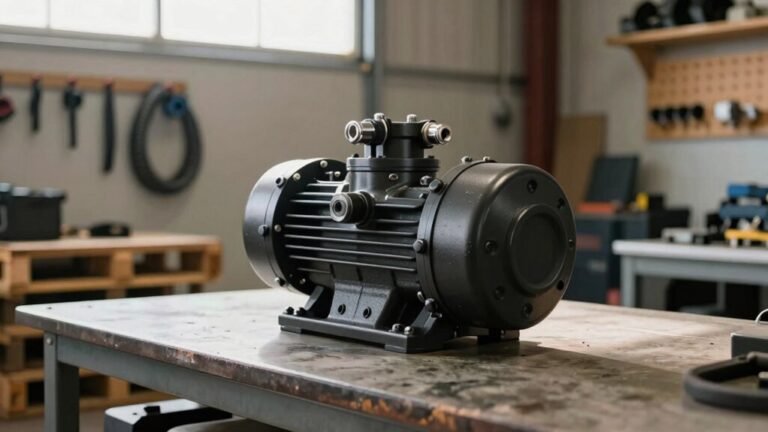
Pick a pump that matches your flow, pressure, and how dirty the fluid gets. Vane pumps run quiet and smooth but top out around 200 bar, so they’re fine for light‑duty chippers. Piston pumps hit 400 bar+ and give precise control, yet they need clean fluid and tighter maintenance. The sweet spot for most log splitters is a 2‑stage gear pump – it delivers a burst of high flow for fast strokes, then builds pressure for crushing, tolerates wood chips, and stays cheap to service. If you size the engine correctly and watch the bypass valve, you’ll get strong, reliable splits without a fuss. The next sections will show you exactly how to calculate horsepower, flow, and pressure for your setup.
Choose the Right Pump for Wood Chippers & Log Splitters
When you’re picking a pump for your wood chipper or log splitter, the first thing to remember is that the job’s demands dictate the design. You’ll want a pump that can handle the high flow rates needed for continuous chipping, and you’ll also need one that tolerates the dirt and wood chips that get into the system. Gear pumps are a solid choice because they’re cheap, simple, and forgiving of contamination, making pump maintenance a breeze. For splitters, a 2‑stage gear pump gives the rapid GPM you need for quick ram cycles while staying robust against debris. Always check fluid compatibility—low‑viscosity fluids with a bit of solids work well, but make sure the pump’s seals and bearings are rated for the fluid you plan to use. Matching displacement to cylinder size and ensuring the pump can handle intermittent pressure spikes will keep your equipment running smoothly. The 20 GPM pump on a 24 HP tractor cut cycle time in half, demonstrating the impact of higher flow on productivity. Proper hydraulic fluid selection is critical because viscosity stability ensures consistent power transmission across temperature variations. A hydraulic ram pump can also be integrated to provide a *pulsating surge* that drives the piston without external electricity. Understanding the principle of fluid power helps you design a system that maximizes efficiency and durability.
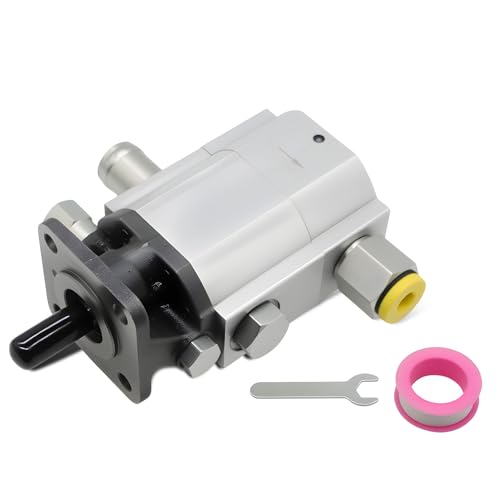
2-Stage High Efficiency Performance: This hydraulic log splitter pump features a 2-stage gear design, with a maximum working pressure of 3000 PSI and a top speed of 3600 RPM. It ensures faster cycle times and higher output pressure, enabling efficient wood splitting and significantly improving productivity

Exceptional Performance at Your Fingertips: With a remarkable maximum speed of 3600 RPM, a maximum operating pressure of 3000 PSI, and an 11 GPM high flow rate, our hydraulic wood log splitter pump is your ultimate solution for tackling all types of wood. This hydraulic gear pump excels in both speed and force, ensuring efficient wood splitting like never before, making it your go-to tool for any wood processing task.
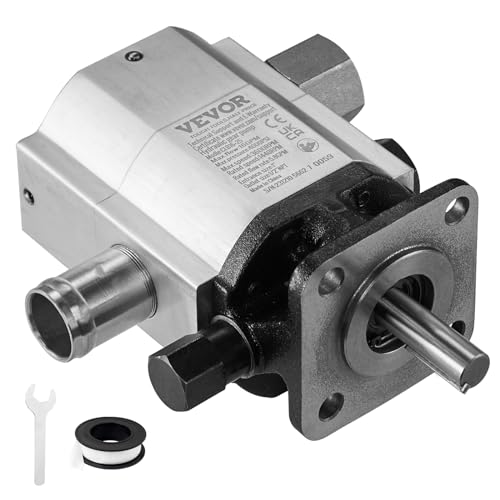
Exceptional Performance at Your Fingertips: With a remarkable maximum speed of 3600 RPM, a maximum operating pressure of 4000 PSI, and a 16 GPM high flow rate, our hydraulic wood log splitter pump is your ultimate solution for tackling all types of wood. This hydraulic gear pump excels in both speed and force, ensuring efficient wood splitting like never before, making it your go-to tool for any wood processing task.
Vane vs. Piston vs. 2‑Stage Gear Pumps: Key Differences
If you’re trying to decide between a vane pump, a piston pump, or a 2‑stage gear pump for your wood chipper or log splitter, the good news is that each type has a clear sweet spot, and you don’t need an engineering degree to figure out which one fits your needs. Vane pumps give you smooth, quiet flow up to about 200 bar and are easy on material compatibility, so they handle typical hydraulic oils without fuss. Their simple design means maintenance intervals are longer and parts swap quickly. Piston pumps push pressure past 400 bar, perfect for heavy‑duty chopping, but they demand stricter filtration and more frequent service checks. Their precision control shines when you need exact flow, yet the added complexity can shorten maintenance intervals if you rely on high‑quality fluid. The 2‑stage gear pump sits between, offering robust pressure and flow while tolerating a wide range of fluids, and its rugged gears keep maintenance intervals reasonable for most DIY setups. Using the correct fluid type fluid hydraulic fluid is essential to maintain pressure stability and prevent premature wear. Selecting a fluid with the proper viscosity rating helps ensure consistent performance across temperature swings. Regular fluid testing can detect moisture contamination before it leads to overheating and wear.

Fit 7/8" handle bar, Color: full Black

For Ho&nda TRX125 200 250 350 400 Dirt Bike HJ125 security: it can also be a good safety addition to against bumping into car mirrors or other road hazards,left right hand brake lever ,increase riding security,motorcycle bar protector
Why 2‑Stage Gear Pumps Dominate Log‑Splitter Applications
Because a log splitter has to sprint forward to meet the wood and then slam into it with crushing force, a 2‑stage gear pump hits the sweet spot that single‑speed pumps just can’t match. You get a high‑flow, low‑pressure stroke that rushes the cylinder toward the log, then an automatic bypass shifts to a high‑pressure mode for the crushing blow. The good news is this dual‑mode cuts cycle time and lets a modest 5 HP engine do the work, so you see real fuel consumption optimization. What most people don’t realize is the pump’s simple gear design means fewer moving parts, so maintenance pump maintenance is a breeze—just a quick check and you’re ready for the next log. Properly sized hydraulic fluid ensures consistent pressure and protects components from wear. Bleeding the system removes trapped air that can cause spongy operation and pressure loss. Always verify that the reservoir is completely filled to the recommended level before starting the pump. This prevents air entrainment that can lead to erratic pressure spikes.
How to Size Engine Horsepower for a Given Flow‑Pressure Pair
Even though the math looks a bit intimidating, figuring out the horsepower you need for a specific flow‑pressure combo is really just a matter of plugging a few numbers into a simple formula. Start with the core equation HP = (PSI × GPM) ÷ 1714, then adjust for pump efficiency—most positive‑displacement pumps run at about 85 % efficiency, so divide by an extra 0.85. Plug in your target pressure and flow, then check the resulting HP against the engine torque curve. The torque curve tells you how many foot‑pounds the engine can deliver at the RPM you’ll run the pump, usually around 3450 rpm. If the torque at that speed matches the calculated HP, you’re good; if not, step up to a higher‑torque engine or a more efficient pump. This quick sizing guarantees your wood chipper or splitter runs strong without over‑taxing the motor. Choosing the right power source can also affect noise level and environmental impact. Perform a leak check before finalizing the installation to ensure system integrity.
Calculate Flow Rate From Engine Horsepower for 2‑Stage Pumps
You’ve already figured out how much horsepower your engine needs for a given pressure‑flow combo, so now let’s flip the script and see how that horsepower tells you the flow you can expect from a 2‑stage pump. Start with the basic HP‑to‑GPM formula: GPM = (HP × 1714) ÷ PSI. Plug your engine’s brake HP into that equation, then adjust for pump efficiency—usually 60‑85 % for centrifugal stages. Remember, engine torque drives the shaft speed, and higher RPM doubles theoretical flow. But fluid viscosity and pipe friction will eat some of that, so expect a lower actual GPM. If you know the pump’s displacement per revolution, you can also use RPM × Displacement ÷ 231 to cross‑check your numbers. This quick calc gives you a realistic flow estimate for both low‑pressure high‑flow and high‑pressure low‑flow stages. Selecting the proper hydraulic fluid ensures the pump operates within its designed temperature stability range. Understanding directional control valves helps prevent unintended motion during operation. The high‑force, low‑speed movement generated by the cylinder is what drives the chipper’s cutting head or the splitter’s wedge efficiently.
Pressure Ratings and Their Effect on Splitting Force & Cycle Speed
When you crank up the pressure on a log splitter, you’re basically turning the hydraulic juice into raw splitting force, and that pressure rating tells you exactly how much “muscle” you’ll get out of each piston stroke. A 3,000 PSI rating on a 5‑sq‑in cylinder yields about 15,000 lb of force, so higher PSI means more tonnage. But you also need proper relief‑valve tuning; set it just above your normal operating pressure (2,650‑2,800 PSI for a 2,500 PSI system) to let the full force through without choking the pump. Cycle speed, on the other hand, hinges on flow‑rate optimization. Pump more gallons per minute, and the piston races faster, delivering quick splits while the pressure stays steady. Remember, a larger bore compensates for lower pressure, and friction will shave a few pounds off your theoretical force. Monitoring hydraulic fluid temperature helps prevent overheating and ensures consistent performance. Always inspect the hydraulic fluid for contamination signs before refilling to avoid pump damage. Proper flammable hydraulic fluid storage reduces fire risk when the equipment is idle.
Bypass Valve Functionality in 2‑Stage Gear Pumps: Automatic Pressure Control
Cranking up the pressure on your log splitter gave you that raw splitting force, but the real magic happens when the pump decides how to deliver it—thanks to the bypass valve in a 2‑stage gear pump. The valve opens automatically when fluid pressure exceeds a preset limit, rerouting excess flow back to the inlet or tank. That protects the low‑pressure gears and prevents spikes that could overheat the system. You’ll notice smooth changes from a fast‑stroke, high‑flow mode to a slow‑stroke, high‑pressure push without fiddling with levers. With automatic valve diagnostics built in, the pump can alert you if the bypass isn’t sealing properly. Pressure‑threshold tuning lets you fine‑tune that set point for your specific chipper or splitter, keeping performance consistent day after day. The low vacuum version lacks a nipple and its diaphragm is sized for lower pressure, making it easier to actuate under reduced engine vacuum. Because hydraulic fluid is essentially incompressible under normal operating conditions, the system can transmit force instantly and efficiently. Maintaining proper hydraulic fluid temperature is crucial to avoid viscosity loss and overheating.
Inlet/Outlet Sizes & OEM Connections (Speeco, Huskee, Champion)
If you’ve ever tried swapping a pump on a log splitter or wood chipper, the first thing you’ll notice is how the inlet and outlet sizes lock everything together—literally. All three major brands—Speeco, Huskee, and Champion—use a 1‑inch inlet and a ½‑inch NPT outlet, so your OEM hose compatibility stays intact no matter which pump you drop in. The 2.83‑inch bolt circle with four evenly spaced holes is a standard bolt pattern that fits most engine mounts, meaning you won’t need a new bracket. This uniformity lets you replace a worn pump with an aftermarket unit without re‑routing hoses or worrying about mismatched threads. The result? A quick, hassle‑free swap that keeps your splitter humming at 16 GPM and 3600 RPM. Properly selected hoses ensure high‑pressure fluid delivery, maintaining the power needed for efficient wood processing.

【Unmatched Performance】- Weonefit 2-stage gear pump. Experience exceptional efficiency with our hydraulic wood log splitter pump, featuring a maximum speed of 3600 RPM, a maximum operating pressure of 4000 PSI, and a high flow rate of 16 GPM. Tackle any wood processing task with ease and power. The 2-stage pump can provide faster cycle times and higher possible pressure.

Premium Double PTFE Diaphragms: Our air-operated double diaphragm pump adopts PTFE diaphragms, durable, corrosion-proof, and long-lasting. Max. Temperature: 150 ℉/66 ℃; Max. Pressure: 120 psi; Max. Flow Rate:39.6 GPM; Max Head Lift:275.6 ft/84 m.
Premium Double Nitrile Diaphragms: Our air-operated double diaphragm pump adopts nitrile diaphragms, durable, corrosion-proof, and long-lasting. Max. Temperature: 150 ℉/66 ℃; Max. Pressure: 100 psi; Max. Flow Rate: 22 GPM; Max Head Lift:275.6 ft/84 m.
Noise & Durability of 2‑Stage Gear Pumps in Residential vs. Commercial Use
Even though a 2‑stage gear pump sounds like a big, noisy beast, the reality is that its design can make a huge difference in how loud and long‑lasting it is for your wood chipper or log splitter. For residential use you’ll notice the good news is a 15 dB(A) Noise reduction when you pick a model with helical teeth and continuous‑contact gears; it stays around 60‑70 dB, especially if you mount vibration pads. Durability testing shows that the simpler mechanical layout resists wear during short, intermittent runs, and lower pressure cycles keep gears, bearings, and seals happier. In commercial settings the same pump faces higher pressures, faster switching, and abrasive loads, so fatigue and internal leakage creep up faster. You’ll want a cast‑iron, vibration‑dampened unit and keep speeds within spec to avoid cavitation spikes and premature wear.
Extending 2‑Stage Gear Pumps to Snowplow, Press, and Machine‑Tool Applications
You’ve probably noticed how a 2‑stage gear pump can be surprisingly quiet and long‑lasting in a residential log splitter, but the same design can do a lot more when you move beyond wood‑cutting chores. On a snowplow, the high‑flow first stage cranks the cylinder fast, giving you rapid snowplow blade speed without demanding full pressure. When the blade meets packed snow, the unloader valve flips to the low‑displacement stage, delivering the needed force while keeping fuel use low. In an industrial press, that same dual‑mode action sharpens press cycle timing: the first stage positions material quickly, then the second stage locks in maximum pressure for a clean compaction. Machine tools enjoy the same benefit—quick traverse followed by precise, high‑pressure positioning—all without swapping pumps.

Chief Two Stage Pump NBC-28 GP-CBN-280-P-C
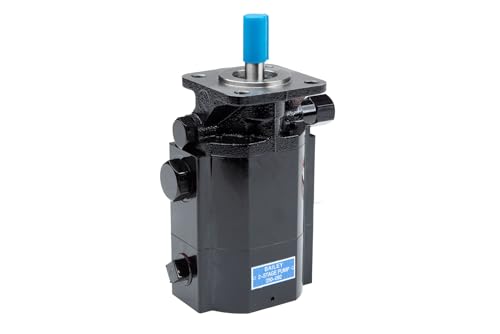
CHIEF Two Stage Pump: 4 Bolt Flange Mount