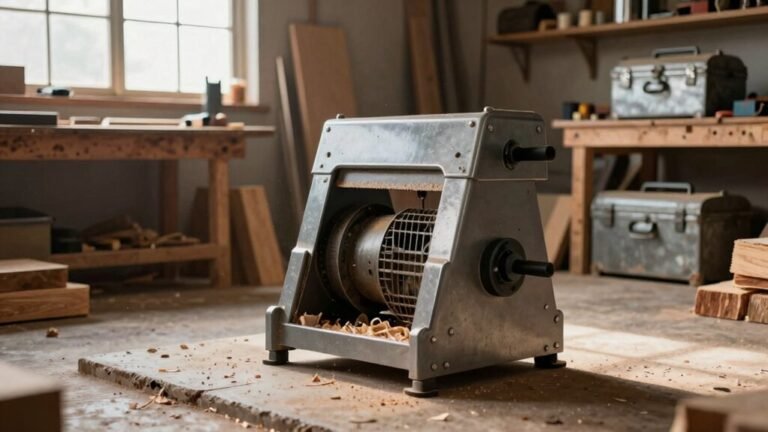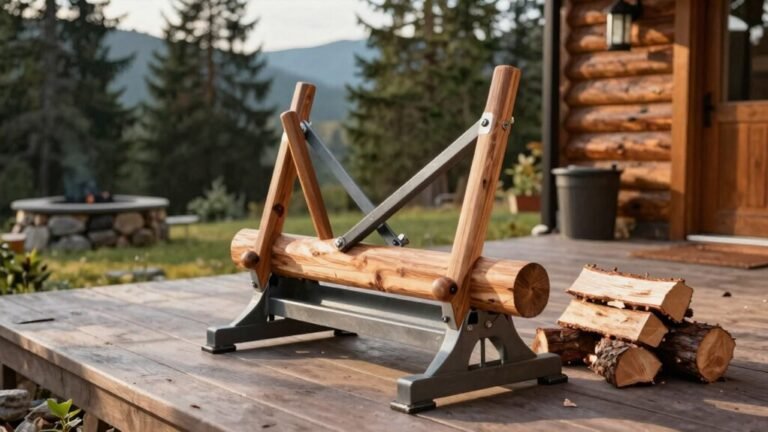
Kinetic splitters cycle in 2–3 seconds and cost roughly $0.90 per cord to operate, making them ideal if you’re processing smaller logs quickly. Hydraulics deliver 20–35 tons of force, handling dense hardwoods and logs over 60 centimeters—they’re your workhorse for tough wood, but expect higher maintenance and operating costs around $3.77+ per cord. Pick kinetic for speed and efficiency; choose hydraulic when raw power matters more than throughput.
Decision Framework: Speed, Power, Cost, and Your Logs
When you’re standing in front of a pile of logs wondering which splitter to buy, you’ve really got four big questions to answer: How fast do you need to work, how tough your wood is, what’s your budget, and how much splitting you’re actually going to do?
Kinetic splitters crush it on speed—2-3 second cycle times versus hydraulic’s 6-8 seconds. But here’s the thing: they’ll bog down on difficult wood like elm. Your maintenance selection matters too. Kinetic models demand less fuel, cutting your maintenance costs considerably over time. Hydraulic splitters offer affordable entry pricing but guzzle more gas. The Super Split HD costs roughly $2,000 more than comparable hydraulic models, which factors into your total investment calculation. Consider environmental impact and safety—kinetic’s efficiency wins there. Match your choice to your wood type and volume. That’s honestly the framework guiding everything else. Also, evaluate the log capacity to ensure the splitter can handle the size of logs you typically work with. Always verify that the machine is placed on a stable, level surface before operation. Remember to assess the power source compatibility with your workspace to avoid unexpected setup challenges.

2.0HP (1500W) electric motor generates 18Ton splitting force

The KT34 34-Ton Kinetic Log Splitter combines raw power, speed, and efficiency for serious wood-splitting performance.

30-Ton Capacity of Splitting - Powered by a robust 7.5 HP 223 cc single-cylinder OHV engine, this hydraulic log splitter generates an impressive 30 tons of splitting force to process hardwood logs rapidly and with minimal effort, ensuring quick completion of demanding splitting tasks.
How Kinetic and Hydraulic Splitters Work
To really understand which splitter’s right for your woodpile, you’ve got to know what’s actually happening under the hood—because kinetic and hydraulic systems are fundamentally different beasts that split wood in completely opposite ways.
With kinetic splitters, you’re harnessing wheel inertia. A motor spins two heavy flywheels at 325 RPM, building rotational energy through belt mechanics that store power like a coiled spring. When you pull the handle, a rack and pinion clutch engages, releasing that stored energy in one explosive burst that drives the wedge through your log in 2.3 seconds flat.
Hydraulic splitters work slower. They pump oil into a cylinder, gradually extending the ram with continuous pressure over 13-30 seconds. The difference? Kinetic delivers raw speed and raw power. Maintenance-wise, hydraulics demand more attention—fluid leaks and wiring issues plague them regularly. Because kinetic systems contain fewer moving parts, they require significantly less upkeep compared to their hydraulic counterparts. Proper blade angle settings are essential for maximizing cutting efficiency. Selecting the right log splitter size ensures optimal performance for your specific firewood needs. A hydraulic ram pump can also provide simple power to a wood chipper, using water flow and pressure differentials to generate a pulsating surge that drives a piston.
Speed: Where Kinetic Wins Big
The real-world difference between these two systems comes down to one thing: how fast you can actually get through a pile of wood. Kinetic splitters demolish logs in 2.5 to 3 seconds per cycle, while hydraulic models take 12 to 30 seconds. That’s roughly 6 times faster operation you’ll notice immediately.
Here’s the thing: those seconds compound fast. When you’re processing cords of wood, kinetic’s rapid efficiency means you’ll finish jobs in a fraction of the time. Your fatigue drops markedly too, thanks to shorter cycles and continuous splitting pace. For high-volume commercial operations, kinetic splitters prove particularly valuable since repeated hits on tougher logs with hydraulic systems can significantly slow production rates during demanding work.
The good news is this speed advantage also means less maintenance frequency. You’re running the machine less overall, so wear and tear decreases. That translates to more wood processed and fewer headaches down the road.
Because drum chippers handle larger, tougher wood with higher throughput, kinetic splitters share a similar high‑throughput advantage for demanding logging tasks. This mirrors the uniform chip benefit seen in chippers for consistent mulching results.
A 6‑inch wood chipper can efficiently process branches up to 12 inches in diameter.

Robust Power: The electric log splitter equipped with a brand new 110V 60Hz 2HP 16A copper-wire motor, this log splitter provides extended service life and offers a quick, reliable, and portable solution for log splitting needs.

Sturdy and Durable: Wood splitter blade is made of Cast Iron,One-piece molding, No welding,Not easy to break,Surface pattern design is more beautiful and attractive,Coated with environmentally friendly paint,Can effectively prevent rust,Which is more sturdy and durable,Blade is equipped with a rubber sleeve,Safer compared with exposed tools and also has enhanced anti-accidental touch performance.

Reliable 223cc FULL BOAR OHV engine delivers 33-ton force and cycles in just 14.3 seconds for a fast and easy splitting
Raw Power: How Hydraulic Handles Tough Wood
If you’ve ever watched a hydraulic splitter power through a gnarly oak log, you know it’s a completely different beast than a kinetic machine. Hydraulic splitters deliver 20 to 35 tons of raw power—that’s serious crushing force for tackling the toughest hardwoods like oak, maple, and pine over 60 cm diameter. What makes this raw power so effective? High-pressure hydraulics guarantee consistent force application, automatically adjusting to match wood hardness for complete splits every time. The hydraulic durability you get from premium‑grade cylinders and heavy‑duty steel construction means these machines handle demanding work without breaking down. With cycle times under 10 seconds, you’ll process high‑volume logs efficiently while those 4‑way or 6‑way wedges split logs into multiple pieces in one pass. Proper fluid selection ensures optimal pressure and flow for sustained performance. Using the right hydraulic fluid maintains viscosity and temperature stability, protecting the system from wear and leaks.
What You’ll Actually Spend: Kinetic vs. Hydraulic
Now that you understand how these two machines actually work, let’s talk about what’s gonna hit your wallet—because honestly, this is where a lot of folks make their decision.
Here’s the thing: hydraulic splitters start around $2,400–$2,600, while kinetic models run $2,500–$3,800+. Upfront, they’re pretty similar. But your maintenance cost and maintenance budget impact diverge markedly over time. Hydraulic splitters demand regular fluid checks, replacements, and hose inspections. Kinetic models? They skip the hydraulic system entirely, eliminating those recurring expenses.
Where kinetic really wins is operational efficiency. You’re processing wood faster—think 2.5-3 seconds versus 8-30 seconds per cycle. That speed advantage translates to roughly $0.90 per cord versus $3.77+ for hydraulics on multi-cord jobs. For serious production, kinetic pays for itself quickly. High-end hydraulic splitters can exceed $30,000–$40,000, making them a significant investment for those needing heavy-duty performance with large hardwood rounds. Understanding airflow volume helps you see why faster cycles matter. This is increasingly sound reduction is electric models, offering a quieter workspace. Proper frame rigidity ensures safety and longevity during high‑impact splits.
Which Splitter for Your Wood
What you actually need depends way more on your wood than on your budget—and that’s where most folks get it wrong. You’re splitting green oak? You’ll want 20–30 tons of force, not the bare minimum. Dry, uniform logs under 12 inches? Six tons handles it fine. Here’s the thing: knotty or dense hardwoods like locust demand serious power, and warranty claims often stem from undersized splitters struggling with wrong wood types. For log haulage and maintenance safety, consider your operation’s scale too. Electric models suit small jobs but won’t cut it commercially. Gas-powered splitters offer versatility across wood types. A hydraulic log lift dramatically reduces back strain when loading heavy rounds onto the splitting table. Before you decide, honestly assess your wood—species, moisture content, and volume. That clarity beats any price comparison. Your maintenance schedule and safety depend on matching splitter to task. Understanding the chip size of your wood can help you select the right splitter capacity. Always wear protective gear to prevent injuries while operating the splitter. Selecting the proper chipper capacity ensures efficient processing and reduces wear on the machine.