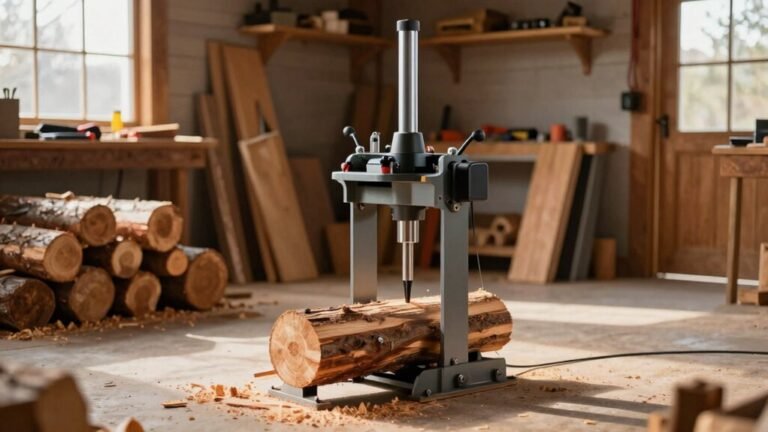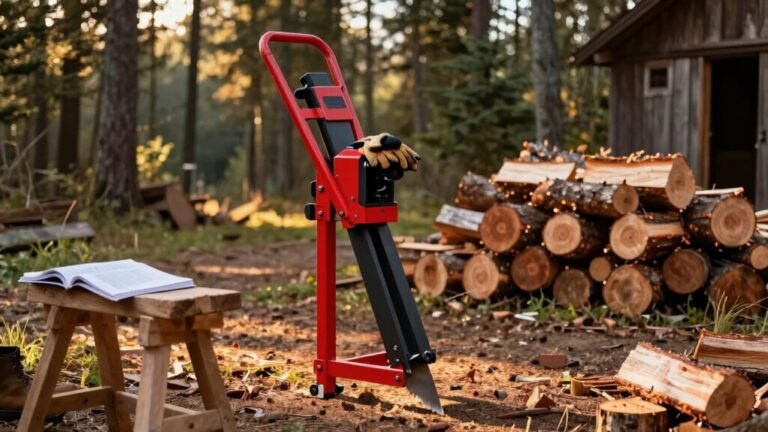
A log splitter works like a hydraulic battering ram—your engine drives a pump that pressurizes oil to around 3,000 PSI, forcing a hardened steel wedge through wood fiber. A two-stage pump handles the grunt work efficiently, shifting from rapid “approach” mode to maximum power when it hits resistance. You control everything with a directional valve that routes pressurized oil to extend or retract the cylinder. Pick 10 tons for most jobs, go vertical for heavy logs, and you’ll understand why this simple principle scales from homeowner models to professional 30-tonners once you understand what really happens under pressure.
How Hydraulic Pressure Splits Logs
If you’ve ever wondered what makes a log splitter actually *work*—why it can push through a stubborn oak round that’d take you twenty minutes with an axe—hydraulic pressure is your answer. Here’s the thing: your splitter’s engine drives a pump that pressurizes hydraulic oil to roughly 3,000 PSI. That pressurized fluid flows through a control valve into a cylinder, forcing the piston forward with tremendous force. A 4-inch bore cylinder generates nearly 38,000 pounds of pushing power at that pressure. When you engage the lever, you’re directing this high-pressure fluid against your log wedged in place. The pressure monitoring system keeps everything running safely, while hydraulic safety features prevent dangerous pressure spikes. The valve position determines whether fluid flows to the front or rear chamber of the cylinder, controlling the direction of the splitting action. That’s pure physics doing your heavy lifting—no sweat required. Choosing the right hydraulic fluid, with proper viscosity range, ensures consistent performance across temperature swings. Proper fluid filtration helps prevent contaminants from damaging the pump and valves. Understanding the circuit design of hydraulic systems can further improve reliability and efficiency.

[2-STAGE PUMP 16GPM] - RYFT two stage HI/LO gear pump.This hydraulic pump has a maximum rotational speed of 3600 RPM, a maximum working pressure of 3000 PSI.The 2-stage pump can provide faster cycle times and higher possible pressure.

[2-STAGE PUMP 16GPM] - RYFT two stage HI/LO gear pump.This hydraulic pump has a maximum rotational speed of 3600 RPM, a maximum working pressure of 3000 PSI.The 2-stage pump can provide faster cycle times and higher possible pressure.
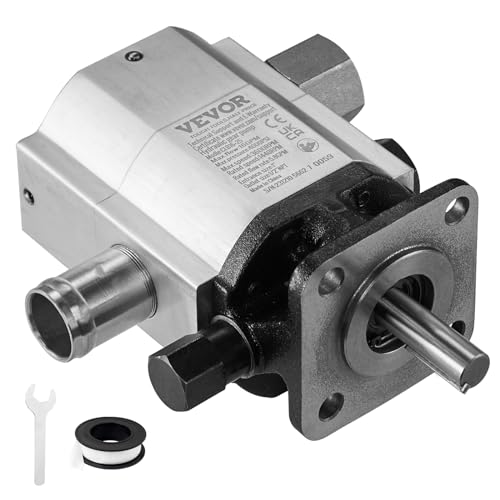
Exceptional Performance at Your Fingertips: With a remarkable maximum speed of 3600 RPM, a maximum operating pressure of 4000 PSI, and a 16 GPM high flow rate, our hydraulic wood log splitter pump is your ultimate solution for tackling all types of wood. This hydraulic gear pump excels in both speed and force, ensuring efficient wood splitting like never before, making it your go-to tool for any wood processing task.
Two-Stage Pumps: Maximum Power From Small Engines
Now that you understand how hydraulic pressure actually splits logs, you’re probably wondering how manufacturers cram all that power into compact splitters that don’t require a massive engine—and that’s where two-stage pumps come into play.
Here’s the thing: two-stage pumps combine high-flow and high-pressure modes in one unit. During the approach phase, you get rapid movement at lower pressure. When the wedge hits resistance, the pump automatically shifts to maximum pressure for the actual splitting work. This means a modest 10.5 hp motor handles what’d normally need much more grunt.
The good news is you get serious engine efficiency without constant fuel consumption, plus noise reduction from smaller impellers working smarter. In series mode, water passes through the first impeller and then the second, yielding higher pressure with reduced flow volume—exactly what’s needed when the wedge encounters maximum resistance. You’re getting peak performance without oversized equipment or fuel guzzling. This design also mirrors the high‑pressure advantage of hydraulic splitters, which excel at handling large‑diameter or frozen logs. Understanding the water hammer effect helps explain why the pump can generate such high pressure in a compact form. The hydraulic ram utilizes the same principle of water flow and pressure differentials to create a pulsating surge that can drive mechanical work.

【13GPM Hydraulic Pump 2 Stage】3600 RPM max rotating speed, 4000PSI max operating pressure along with a 13GPM high flow rate. Provides powerful performance, energy saving and high efficiency.

Exceptional Performance at Your Fingertips: With a remarkable maximum speed of 3600 RPM, a maximum operating pressure of 3000 PSI, and an 11 GPM high flow rate, our hydraulic wood log splitter pump is your ultimate solution for tackling all types of wood. This hydraulic gear pump excels in both speed and force, ensuring efficient wood splitting like never before, making it your go-to tool for any wood processing task.
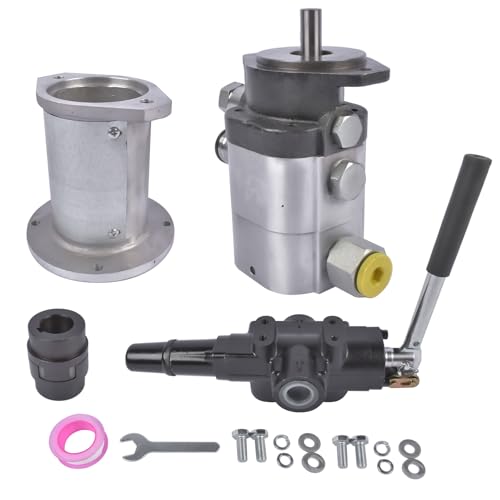
【Unmatched Performance】- Experience exceptional efficiency with our hydraulic wood log splitter pump, featuring a maximum speed of 3600 RPM, a maximum operating pressure of 4000 PSI, and a high flow rate of 22 GPM. Tackle any wood processing task with ease and power.
Control Valve Mechanics: Directing Oil and Movement
While two-stage pumps deliver the power, they’re just half the equation—you’ve also got to control where all that pressurized oil actually goes, and that’s where the control valve steps in. Your directional control valve is basically the traffic cop of your log splitter’s hydraulic system. When you shift the valve’s spool, you’re changing the flow path—directing pressurized oil to one side of your cylinder to extend the ram, then reversing it for retraction. The spool’s internal configuration determines whether the cylinder will hold, move freely, or return flow in the center position, affecting overall system behavior. Valve sizing and flow timing work together to guarantee smooth, controlled splitting action. Get these wrong, and you’ll face sluggish performance or jerky movements. The valve orchestrates exactly when oil flows where, transforming raw pump pressure into the precise, powerful motion that actually splits your wood. Proper pressure regulation ensures the system operates within safe limits while delivering the necessary force. Monitoring fluid discoloration can alert you to early signs of hydraulic fluid degradation. Selecting the correct viscosity grade helps maintain consistent performance across temperature variations.
Cylinder vs. Wedge: Where the Work Happens
The real magic in your log splitter happens where the pressure meets the wood—and that’s the showdown between your hydraulic cylinder (or kinetic ram) and the wedge. Your cylinder alignment directly affects how efficiently that force transfers. When properly aligned, the piston drives the log straight into the wedge for clean splits. The wedge durability determines how many seasons you’ll get reliable performance. Durable steel wedges withstand repeated impact without dulling or cracking. A two-stage pump directs high-volume fluid during the return stroke and switches to high-pressure flow when the wedge encounters resistance, optimizing both speed and splitting force. Here’s the thing: a fixed wedge stays put while the piston pushes, whereas foot-mounted wedges let splits fall away. Either way, it’s this partnership between your pushing force and the stationary cutting edge that actually splits your firewood. Proper directional control ensures the hydraulic fluid flows to the correct cylinder at the right time, enhancing safety and efficiency. Using a splitting wedge correctly can reduce the effort needed and minimize safety hazards. Selecting the right rod seal material can dramatically extend cylinder life in abrasive wood‑chip environments.

【Satisfactory 】If you have any questions or suggestions, please feel to us and we will provide you with friendly, easy-to-obtain support.

WOOD SPLITTING MADE EASY - The hefty 5 pound build of our splitting wedge makes splitting logs and firewood a breeze. Grab a hand sledge or maul to take on the logs that are difficult to split with an axe alone. Finish may vary and be blasted or painted.

【POWERFUL HYDRAULIC FORCE】Handle tough firewood with confidence using a powerful 7-ton hydraulic system and 2900 PSI splitting pressure. The reinforced steel wedge concentrates force through logs for efficient splitting performance, helping you prepare firewood with less manual effort.
Mechanism, Power, and Size: Choosing Your Splitter
You’ve got real choices here. Home models deliver around 10 tons of force—plenty for typical firewood. Professional hydraulic splitters crank out 30 tons or more, handling thicker rounds with ease. Electric motors work great if you want quiet operation and zero emissions, while gas engines tackle tougher jobs without hesitation.
Consider the log design you’ll typically split. A standard 4-inch bore cylinder balances speed and power perfectly for most homeowners. The good news is material durability on quality splitters lasts years with minimal maintenance. Think about your space too—vertical models handle standard logs, but horizontal designs let you feed oversized rounds without exhausting your back. Smart safety features like automatic retraction matter when you’re working solo. Hydraulic pressure enables consistent force throughout the splitting cycle. Always wear protective gloves to reduce the risk of cuts and abrasions.
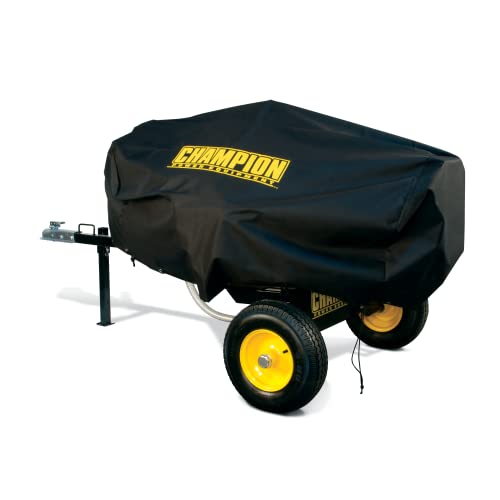
Weather Resistant – Protect your log splitter from sun damage, rain, snow and more with the tough polyester exterior

Seal Size: Bore (I.D.) 4.5" x rod (O.D) 1.75". Please check that the inside diameter(I.D.) and outside diameter(O.D.) are the same size as your hydraulic cylinder before purchase.
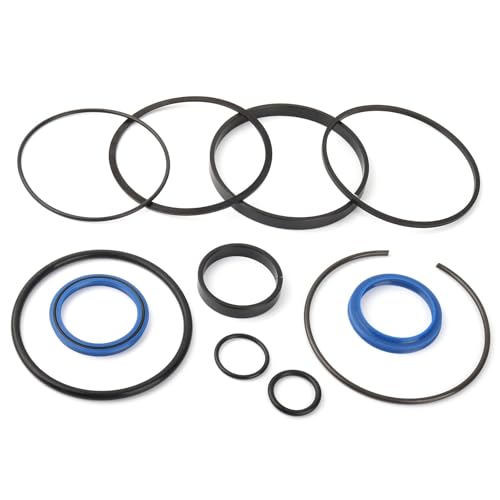
Cylinder Rebuild Seal Kit: Hydraulic Log Splitter Cylinder Rebuild Seal Kit for 4.0" Bore (I.D.) x 1.75" Rod (O.D.) Rod Cylinder. Please ensure that the inside diameter (I.D.) and outside diameter (O.D.) match the size of your hydraulic cylinder before making a purchase
Starting, Loading, and Splitting Safely
How do you actually stay safe when you’re standing next to a piece of equipment that can generate 10, 20, or even 30 tons of splitting force?
Start by gearing up with proper safety gear—eye protection, gloves, and sturdy work boots are non‑negotiable. Set up your splitter in an open outdoor area away from bystanders, especially kids. Position your chopping block at knee height on a flat surface.
For log placement, grip the sides firmly, never near the wedge. Stand the log end‑up and align it along natural cracks for easier splits. Keep your hands clear of moving parts, maintain a wide stance, and pull the safety lever toward your body. Power off immediately after each split. These habits keep you safe and efficient. Check the machine for any loose parts before each use. Regularly inspect the splitter for wear to prevent mechanical failure. Properly bleed the hydraulic cylinder before each session removes air pockets that can cause uneven force.
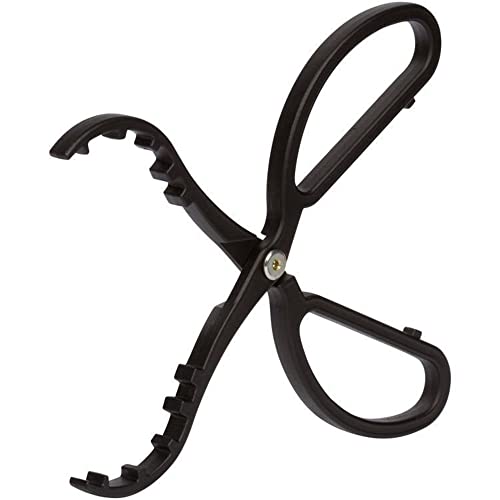
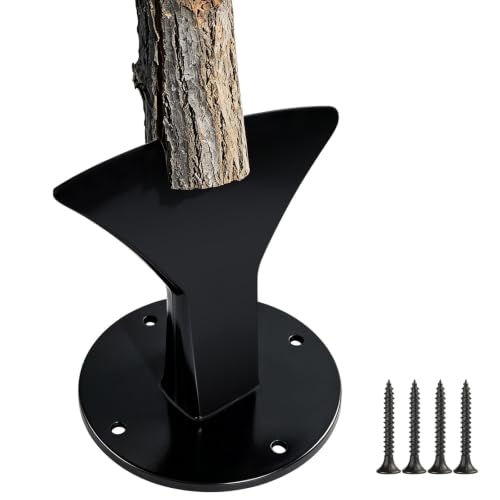
Heavy Duty Carbon Steel, Safe and Durable: This firewood kindling splitter is made of carbon steel, which is more sturdy and durable. The blade is equipped with a rubber sleeve, which increases safety

🛡️[Heavy-Duty Iron Build for Year-Round Reliability] This portable iron kindling splitter safety guard is crafted from high‑quality, powder‑coated iron, engineered to withstand heavy impacts, harsh weather, and regular firewood prep use. Its rust‑resistant finish keeps the log splitter frame strong and reliable for year‑round use, ideal for backyard wood splitting or camping firewood prep.
Positioning: Horizontal vs. Vertical Setup
Once you’ve nailed down the safety basics, here’s the thing—where you position your splitter matters just as much as how you operate it. Your setup ergonomics directly impact comfort and efficiency during long splitting sessions.
Horizontal positioning keeps logs at waist height, letting you feed smaller pieces without straining. You’ll breeze through lighter wood faster with minimal fatigue. However, vertical safety shines when tackling oversized rounds—you simply roll heavy logs into place rather than lifting them, saving your back serious effort.
The good news? Many splitters switch between both modes with simple pin adjustments. You’ll want horizontal for productivity with smaller logs, vertical for those massive blocks that exceed comfortable handling. Choose based on what you’re processing that day. Drum chippers excel at handling larger, tougher wood with higher throughput and durability. Understanding log splitter typology helps you match the machine to your specific wood and budget needs. Some municipalities have enacted noise‑level restrictions on gas‑powered equipment to reduce community disturbance.
Beyond Specs: Real Performance Limits
Now here’s where things get real—that fancy tonnage number on the box? It’s often a best-case scenario, not a guarantee. Manufacturers use different measurement methods, so you’re basically playing a guessing game comparing specs across brands. Here’s the thing: your owner’s manual gives you the honest picture of what your splitter actually delivers.
What most people don’t realize is that turbine efficiency and durability testing reveal real performance limits. A 10-ton splitter handles 95-98% of typical jobs. Going beyond 30 tons shows diminishing returns for most tasks. For medium logs with moderate hardness, you’ll find the sweet spot in the 10-20 ton range. Fresh oak rounds and other tough hardwood rounds often exceed average splitter capabilities, requiring you to either upgrade equipment or process wood in multiple passes. Don’t chase specs—chase what actually works for your wood.
Maintenance and Troubleshooting: Keeping Your Splitter Running
Want to know the real difference between a log splitter that lasts a decade and one that gives up after a season? Maintenance. It’s that simple.
Start with a safety inspection before each use—check hydraulic fittings, examine your wedge for damage, and walk around looking for wear points. After splitting, brush off wood chips and debris, then wipe surfaces clean. Here’s the thing: lubrication prevents rust and keeps everything moving smoothly. Apply engine oil to beam sides and coat your wedge with light oil. For hydraulic systems, drain and replace the filter every season to remove water condensation buildup that accumulates in the tank.
Monthly, check hydraulic fluid levels and top off with AW-32 as needed. Change it every two to three years. Keep logs documenting any performance changes, and address issues immediately. You’ll spend a few minutes now or hundreds replacing your splitter later.