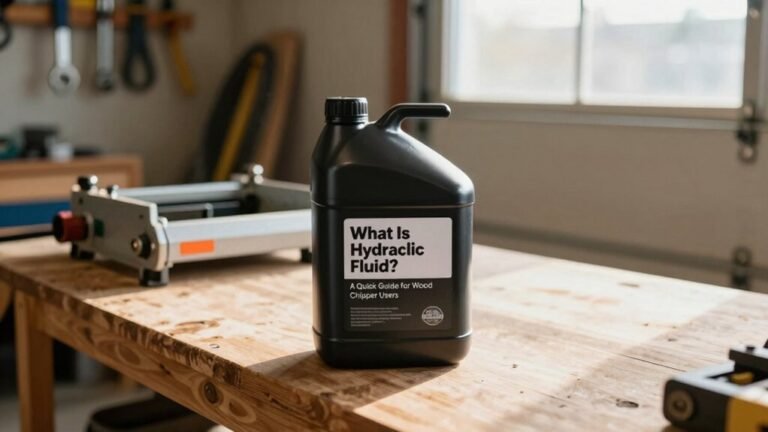
Hydraulic fluid can be toxic — it irritates skin and eyes, and some blends contain PCBs or organophosphate esters that can damage your liver if you get splashed. It also creates a fire risk when it overheats or sprays, especially with mineral‑oil fluids that have low flash points. To stay safe, wear a hard hat, high‑visibility vest, goggles, cut‑resistant gloves, and steel‑toed boots; keep the machine de‑pressurized and locked out before any service, and clean spills immediately with absorbent pads. Follow these basics and you’ll avoid the biggest hazards, plus you’ll pick up more detailed tips ahead.
Is Hydraulic Fluid Hazardous to Skin, Eyes, and the Environment?
When you’re swapping out the hydraulic line on your wood chipper, the first thing you wonder is whether the fluid itself is a hidden danger to your skin, eyes, or the backyard ecosystem. The good news is most hydraulic fluids won’t burn you, but some can cause skin irritation, especially mineral‑oil or polyalphaolefin blends that turn your skin red and swollen. Used fluid is riskier—metal fragments and waste build up, so a quick wash with soap and water is essential. What most people don’t realize is that fluids containing PCBs or organophosphate esters can irritate skin and even harm the liver. Environmental impact matters, too; spilled fluid can leach into soil, affecting plants and wildlife. Keep containers sealed, clean up spills promptly, and you’ll protect both yourself and the garden. Regular fluid testing can detect discoloration and foul odor before they become a safety hazard. If contamination occurs, immediately stop the flow and flush the area with plenty of clean water. Operators should also learn to identify the distinctive sweet, petroleum‑like scent with a faint metallic undertone, as a change in this characteristic odor often signals fluid degradation.
Hydraulic Fluid Burns, Fires, and Explosion Risks on a Wood Chipper
If you’re running a wood chipper, the biggest fire hazard isn’t the chips flying off—it’s the hydraulic fluid that powers the machine. Mineral‑oil fluids have flash points of 200‑250 °F, so hot vapors can ignite easily, and a burst hose sprays a fine mist up to 12 meters away. That atomized spray creates a huge surface area for fire ignition, and once a flame catches, flame spread can be rapid, especially near welding arcs or open sparks. The pressure in a chipper often exceeds 4,000 PSI, turning a tiny leak into a fire‑ball. To stay safe, inspect hoses, keep welding away, and consider fire‑resistant fluids with higher flash points. Regular checks and proper spacing dramatically cut burn and explosion risks. Using a high‑flash‑point fluid further reduces ignition likelihood. Proper disposal of used hydraulic fluid in sealed, labeled containers prevents environmental contamination. Moisture contamination can also lower the fluid’s flash point, increasing fire risk.
Hydraulic Fluid Pressure‑Related Injection Injuries and Prevention
The fire danger from hydraulic fluid is only half the story; the real hidden threat is the high‑pressure jet that can shoot straight through skin. Even a modest 7 bar (≈100 psi) pressure can cause an injection injury, and many wood‑chipper pumps run at 2,000–12,000 psi. When a hose bursts or a connector fails, the jet can puncture your hand with a pinhole‑sized mark, then travel along tissue pathways, damaging nerves and blood vessels. Within a few hours you may notice swelling, pain, or numbness, and compartment syndrome can set in fast. The good news is that immediate medical care—ideally within the first six hours—dramatically improves outcomes. What most people don’t realize is that the fluid’s toxicity compounds the tissue damage, so treat any puncture as an emergency, not a minor nick. Pressurized paint forced through a 0.4 mm hole blocked with Play‑Doh demonstrates how easily a high‑speed jet can penetrate protective padding. Properly checking the reservoir before operation can help prevent pressure spikes that lead to hose failures. Understanding the hydraulic ram pump principle can also guide safer system design. Using corrosion‑resistant seals further reduces the risk of leaks that could create dangerous high‑pressure jets.
What PPE Should Every Wood‑Chipper Operator Wear?
What’s the biggest mistake you can make on a wood‑chipper site? Skipping proper PPE. You need a hard hat, high‑visibility vest, and safety glasses or goggles before you even think about feeding material. Pair those with earplugs or earmuffs—chip‑noise tops 85 dBA, so dual protection saves your hearing. Choose short‑cuffed, cut‑resistant gloves that fit snugly; loose gloves can snag and pull you in. Steel‑toed boots with slip‑resistant soles keep your feet safe, and keep clothing tight and short‑sleeved. Remember, ergonomic fit matters—gear that moves with you reduces fatigue. Finally, hydraulic training and regular safety training reinforce why each piece of PPE is non‑negotiable. This combination protects you and lets you work confidently. Safety decals must be present, intact, and fully legible before operation. Properly maintaining hydraulic pressure ensures the system operates within safe limits and reduces the risk of sudden failures. Understanding log splitter fundamentals helps you select the right equipment for safe, efficient wood processing. Always verify that the machine’s stable surface is level and free of debris before starting.

A5 Hand Protection: Made with ANSI A5 cut-resistant material, these gloves help protect your fingers and hands during mandoline slicing, oyster shucking, meat cutting and everyday kitchen tasks. Usage Notice: cut resistant does not mean puncture proof; For a proper fit, please measure your fingers and palm before choosing and refer to the size chart carefully when selecting your size

Protect Your Hand - Throw away the normal gloves and try to use our THOMEN cut resistant gloves. It is made from level 5 cut resistant material, protect your hands from injury, stronger than normal gloves. Let you enjoy cooking time.

【High Level of Protection】The ProGuard ANSI A9 cut resistant work Gloves provide the top-tier protection, boasting the high cut resistance rating available. Each pair features state-of-the-art yarn technology, ensuring 360° reliable hand protection from extreme cutting hazards
De‑Pressurizing and Lock‑Out Steps Before Service
Before you even think about opening up the hydraulic system on your wood‑chipper, you’ve gotta make sure the pressure is completely gone and the machine is locked out. Start by parking the unit on level ground, lower the boom until the bucket sits flat, and fully retract the stick cylinder rod. Clear the area of any obstacles and secure any moving parts. Then engage the de‑pressurizing procedures: set the hydraulic activation lever to LOCKED, run the directional control valves, and move the left joystick back and forth with the auxiliary switch on until the actuators unload. Loosen the tank filler plug for at least 45 seconds, watch the gauge hit zero, and bleed any accumulators. Finally, follow lock‑out protocols—turn the engine off, disconnect power, apply LOTO tags, and verify all energy sources are isolated before you begin any service. Reservoir must be filled near the fill line before bleeding. Always wear proper safety gear, such as gloves and eye protection, when handling hydraulic fluids, and remember that hydraulic fluid can be toxic if inhaled or absorbed through the skin. Pressure relief valve helps prevent accidental over‑pressurization during maintenance.

LOCKOUT TAGOUT KIT: Lockout pouch is made of heavy duty nylon with metal belt loops for convenient tagging on the go, Compliant with OSHA's Lockout Standard

LOCKOUT TAGOUT KIT: Lockout pouch is made of heavy duty nylon with metal belt loops for convenient tagging on the go, Compliant with OSHA's Lockout Standard
![Steck Manufacturing - Big Easy Delux KIT Easy Wedge & Non-marring Wedge - Full Set Steck Big Easy Non-MARRING Wedge 55 inch Long Reach Tools [Size 4. 50 ft] Big Easy Tool](https://m.media-amazon.com/images/I/31qr0IAH10L._SL500_.jpg)
How to Identify, Contain, and Clean Up a Hydraulic Fluid Spill Safely
When a hydraulic fluid leak shows up on your wood‑chipper or log splitter, the first thing you need to do is recognize it before it turns into a bigger mess. Look for oily, amber‑to‑dark liquid and a petroleum smell; note any skin irritation or fumes. Immediately stop the machine, turn off ignition sources, and isolate the area. Use absorbent pads or spill kits to contain the flow, then document the spill—date, amount, fluid type, and location—so you can report it later. After containment, clean with soap and water, flush the surface, and dispose of used absorbents per local regulations. Finally, start environmental monitoring to guarantee no groundwater or soil contamination occurs. Gentle blotting helps prevent the stain from spreading further. Proper PPE is essential to protect workers from skin contact and inhalation hazards. Follow the bleeding procedure to purge trapped air from the system before re‑pressurizing.

COMPLETE FLUID SPILL CLEAN-UP KIT: The Aniasis Fluid Spill Clean-Up Kit includes essential PPE and cleanup tools to safely manage blood and bodily fluid in homes, offices, schools, and professional environments

Perfect for almost any market, PURELL Body Fluid Spill Kits simplify your response process and reduce outbreak risks

Portable Vehicle Spill Kit, Ready When You Are: Each Set of Yellow Duffle kit includes 15 universal absorbent pads, 2 sorbent socks, 2 5L Buckets of 100% Organic Coir, 1 pair nitrile gloves, disposal bag, bag tag, and instructions, everything needed for fast, compliant spill response on the go.
Common Hydraulic Leak Signs and Hose‑Inspection Checklist
If you’ve ever seen a dark amber puddle forming under your wood‑chipper or felt a sudden hiss from a hose, you’re probably looking at a hydraulic leak. For leak detection, start by scanning the area for wet spots, oily stains, or amber slicks near fittings and cylinders. A drop in pressure gauge readings, slower actuator movement, or hissing noises also flag a problem. Next, run a Hose‑inspection checklist: look for cracks, abrasions, or bulges on the hose wall, and check every fitting for wetness, stains, or loose clamps. Inspect seals and connection points for wear, and note any unexplained fluid‑level drops. Corrosion, pitting, or misaligned rods can compromise hose integrity, so address them before they turn a small leak into a costly failure. Properly contain and absorb the spilled hydraulic fluid using absorbent pads and follow disposal regulations to protect the environment. Always wear protective gloves when handling hydraulic fluid to prevent skin contact. Remember to purge air from the hydraulic system after repairing a leak to restore optimal performance.

Precise Reading Gauge: Five pressure gauges provides five measuring ranges: 0-10bar/150psi, 0-100bar/1500psi, 0-250bar/4000psi, 0-400bar/6000psi, 0-600bar/10000psi. The clear and precise scale ensures accurate pressure measurement, and there are two units on the scale, both efficient and convenient.

Complete Kit Offers Broad Compatibility: Hydraulic hose repair kit includes two premium reusable fittings. It broadly accommodates R2, R16, R17, and R19 hydraulic hoses, eliminating mismatch hassles and ensuring quick repair starts.

Universal Fit: Works with R2, R16, R17, R19 2-wire hydraulic hoses and 2SN/2SC type hoses for emergency repairs.
Hydraulic‑Fluid Safety Checklist for Wood‑Chipper Operation
Even a small splash of hydraulic fluid can turn a routine wood‑chipper job into a safety nightmare, so you’ve got to treat every fluid‑related task like a mini‑hazard drill. First, grab gloves that match the fluid’s chemistry, temperature, and pressure rating, and wear goggles or a face shield when you’re pressurizing the system. Depressurize before any inspection, then use cardboard to spot pinhole leaks—never touch a live line. Keep a spill kit handy, absorb the mess, and wash any skin contact right away. Monitor fluid temperature constantly; let the system cool from 120‑180 °F before servicing. Finally, set up a simple hydraulic fluid recycling loop, capture used oil, and store it in a sealed container for proper disposal. This checklist keeps you safe and your wood‑chipper running smoothly.

Double dipped men's gloves with foam lined, rubberized safety cuff and act fresh


Industrial gloves feature TPR impact protection on top of hand and full length of fingers, making them ideal for the manufacturing, oil and gas industries