you’ll waste money picking the wrong machine. Chippers crush branches up to 3 inches thick—fast mulch production, storm debris, logs. Shredders handle leaves, grass, and green waste, creating fine compost-ready material. Chippers need sharper blades and frequent maintenance; shredders are more forgiving. Your debris type decides everything. Got mostly branches? Chipper wins. Leaves and clippings? Shredder’s your tool. Get it wrong, and you’re storing dead weight in your shed while the real work piles up outside.
Material Type: Your First Decision
When you’re standing in your yard looking at a pile of branches, construction debris, or storm cleanup, the first thing you need to ask yourself isn’t “chipper or shredder?”—it’s “what am I actually trying to process?” Here’s the thing: these two machines handle completely different materials in completely different ways, and picking the wrong tool for your job will either leave you frustrated or, worse, damage your equipment.
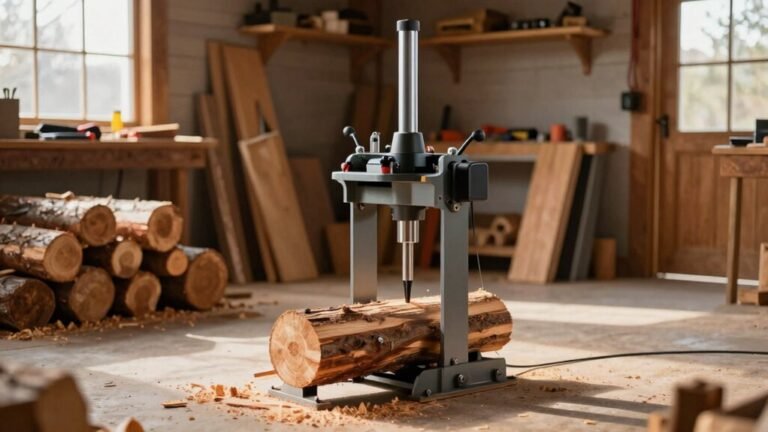
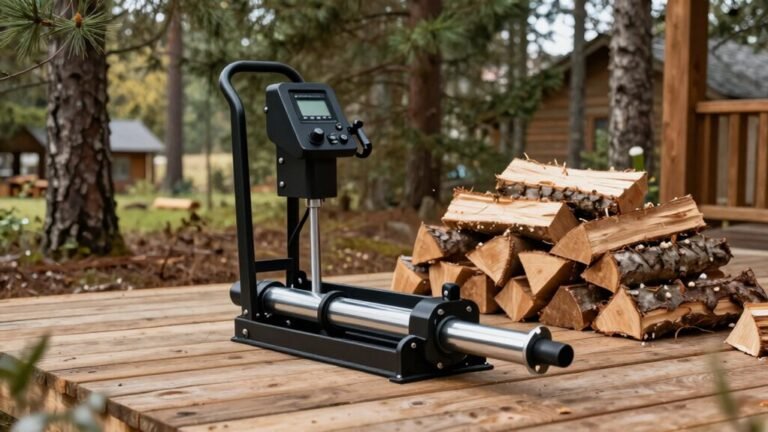
Chippers excel with woody branches and larger diameter material—they’re built for the heavy stuff. Shredders, meanwhile, prefer leaves, twigs, and smaller debris. Your material grading determines everything. Chippers produce consistent chip size ideal for mulch or composting, while shredders create finer output. Before you rent or buy, honestly assess what’s actually in that pile. Are those branches thick or thin? Green or seasoned? That answer changes everything about which machine you’ll actually need. For optimal performance, consider the hydraulic pressure requirements of a DIY log splitter when choosing your equipment. Understanding the chip size helps you match the output to your garden’s mulching needs. Drum chippers are known for their high throughput when processing tougher wood.
When to Use a Chipper: Branches, Logs, and Storm Debris
Now that you’ve figured out what’s actually sitting in your yard, it’s time to talk about the machine that’ll handle the heavy lifting—and that’s where a chipper shines. You’ll want a chipper when you’re tackling branches up to 2-3 inches thick, storm debris, or larger logs that a shredder just can’t handle. Here’s the thing: chippers excel at volume reduction, turning piles of storm safety hazards into manageable mulch quickly. The good news is that with a solid maintenance schedule—sharpening blades every 10-20 hours—you’ll keep everything running smoothly and prevent jams. Drum chippers work especially well for mixed debris, handling both large branches and smaller material efficiently, making them ideal for post-storm cleanup when you need serious processing power. Always check the hydraulic fluid level before operation to avoid system overheating and ensure optimal performance. Selecting the right pump type, such as a gear pump for reliable low‑pressure flow, can further enhance durability and efficiency.

The WC68H PTO Hydraulic Wood Chipper is engineered for landowners, farmers, and property managers who need reliable, high-capacity wood processing. Designed to pair with tractors from 20–50 HP, this 6-inch chipper delivers powerful performance through its PTO drive system and hydraulic infeed, ensuring smooth, consistent feeding of branches, brush, and timber.

High-pressure and high-efficiency wood chipping: Drum Mulcher suitable for ordinary skid steer loaders, doubling forest operation efficiency。3000 PSI Hydraulic Pressure(Requires a hydraulic flow of 14 - 20 gpm for seamless operation) + 60 Inch Working Width:This heavy duty drum mulcher is engineered for wooded terrain, easily cutting and mulching saplings, shrubs, and undergrowth. With a 60-inch (1.52m) working width, it boosts vegetation clearing efficiency by over 8x compared to manual tools, quickly turning dense foliage into fine mulch—no extra post-processing needed.

INDUSTRIAL-GRADE SHREDDER Our heavy-duty shredder is engineered to handle the toughest materials, including tires, wood, cardboard, and industrial waste. Built for durability and performance, it delivers consistent shredding power for recycling facilities, manufacturing plants, and waste management operations. With customizable blade configurations and motor outputs, this machine adapts to your specific material processing needs—from fine particle reduction for recycling to coarse shredding for volume reduction.
When to Use a Shredder: Leaves, Clippings, and Green Waste
If you’ve got piles of leaves clogging your yard come fall or mountains of grass clippings and garden trimmings stacking up throughout the season, a shredder’s going to be your best friend. Here’s the thing: shredders excel at processing soft green waste like lawn clippings, hedge trimmings, and wilted flowers—material that’d just clog a chipper.
The key to success? Watch your leaf moisture. Dry leaves shred efficiently, but wet leaves cause jams and tank performance. Green leaves may need multiple passes, so let them dry first if you can.
What most people don’t realize is how dramatically shredders reduce volume. Your yard debris becomes compact mulch or compost in minutes. That shredded material supports hot composting timing—you’re looking at finished compost in under four months. It’s an eco-friendly way to transform waste into garden gold. Wet leaves increase the risk of blade slippage and can make the machine harder to control. Using a lawn mower to shred dry leaves can speed up the process and reduce the need for multiple passes. The leaf blower can quickly clear loose debris before shredding, improving overall efficiency.
Chipper vs. Shredder: How the Blades Actually Differ
Behind every chip and shred you’re creating, there’s a completely different mechanical philosophy at work—and understanding the blade difference is honestly the fastest way to figure out which machine you actually need.
Chippers use a single steel knife mounted to a spinning flywheel. It works like a meat cleaver, chopping straight across your material. You’re getting uniform chips, typically 1-3 inches, from rigid woody debris.
Shredders take the opposite approach. They’ve got multiple flails and hammers attacking material from various angles simultaneously. This pulverizes soft leaves and clippings into fine mulch. The 20 serrated blades with varied angles rotate and eject material through a funnel, creating the high surface area that accelerates compost breakdown when applied directly to your heap.
Here’s the thing: blade safety and your maintenance schedule differ dramatically. Chipper blades require sharper edges and more frequent upkeep, especially after hitting soil or stones. Shredder flails? They’re more forgiving with debris and need less specialized care.
Choosing the right machine also depends on the log splitting capacity you need for efficient wood processing. Always inspect the machine before use to ensure all components are secure and functional. Regularly check blade sharpness levels to maintain optimal performance.
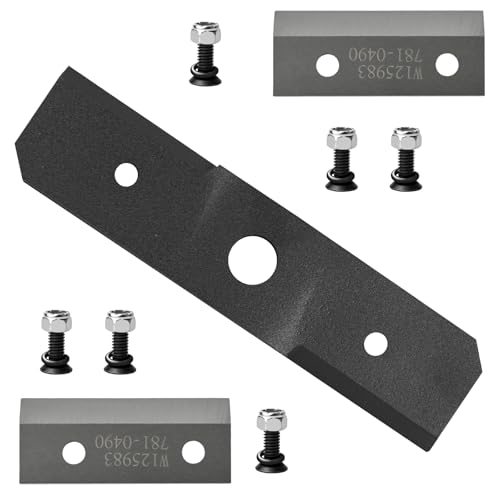
781-0490 742-0571 Chipper Shredder Blade Replace Part Numbers: 981-0490, 781-0490, 942-0571, 742-0571,942-0544, 742-0544, 942-0544A, 742-0544A, 942-0544B, 742-0544B

Durable Construction: 4pcs wood chipper replaceable blades, 8pcs screws with L-Shaped Hex Key Wrench.

Blade/Knife 1901825 for Troy-Bilt Chipper/Shredders New
What You’ll Get: Chip Size and Mulch Quality Explained
The moment you flip the switch on either machine, you’re setting yourself up for completely different end products—and that’s actually the real decision you need to make before you ever buy one. A chipper gives you uniform, chunky wood chips perfect for landscaping—they’ve got serious chip durability and mulch longevity that’ll last seasons. Those consistent pieces work great as ground cover because they look professional and break down slowly.
A shredder? That’s your finely fragmented stuff. It’s messier-looking but honestly better for composting. The crushing action opens material up, so it decomposes fast. The blunt flail blades in shredders crush soft organic materials differently than the cutting blades found in chippers. Here’s the thing: if you’re after that polished, long-lasting mulch look for flower beds, grab a chipper. But if you’re composting garden waste, the shredder’s your workhorse.
Power and Portability: Engine Requirements for Each Type
Once you’ve decided what end product you actually want, here’s where the rubber meets the road—you’ve got to pick an engine that’ll deliver the power without becoming a headache to own and operate.
PTO chippers harness your tractor’s 30–70 HP, handling branches up to 8 inches with serious torque requirements. Gas models pack 5–20 HP engines but manage just 2–4 inches—what most people don’t realize is you’ll need about four times the horsepower for comparable jobs due to material resistance. Stihl BG 86 can be used as a reference for proper fuel‑oil mixing when preparing small gasoline engines.
Here’s the thing: portability matters. Gas chippers go anywhere without cords, though they’re loud and produce fumes. Electric models need outlets. PTO units tie you to your tractor but deliver unmatched fuel efficiency and power. Choose based on your property size and access to electricity. A hydraulic ram pump can provide a self‑sustaining power source for off‑grid chippers. Additionally, electric leaf blowers are known for their quiet operation and zero emissions, making them a more environmentally friendly option for small‑scale wood processing.

POWERFUL: 224cc Champion single-cylinder OHV engine with a .92-gallon fuel tank and .63-quart oil capacity provides the power for fast, heavy-duty and hassle-free chipping and shredding

High-Torque Motor & Reversible Blade: Powered by a steady 15 Amp,4500 RPM motor,this electric wood chipper shredder processes branches up to 1.8 in thick.Functioning as a practical mini wood chipper,its reversible double-sided blade extends service life and reduces downtime.As a consistent branch shredder for daily backyard pruning,it delivers steady output for homeowner gardeners processing dense vegetation without frequent halts or power loss

This refurbished product is tested and certified to work properly. The product will have minor blemishes and/or light scratches. The refurbishing process includes functionality testing, basic cleaning, inspection, and repackaging. The product ships with all relevant accessories, and may arrive in a generic box.
Hybrids: The Compromise Machine for Mixed Jobs
If you’re tired of choosing between raw power and versatility, hybrid wood processing equipment might be exactly what you’ve been looking for. Here’s the thing: hybrid efficiency combines diesel engines with energy‑efficient supercapacitors, giving you serious cutting power without constantly maxing out fuel consumption. Models like the TW 280HB process over seven tonnes per hour, handling demanding jobs you’d normally need separate machines to tackle.
What most people don’t realize is that capacity flexibility lets you scale operations based on your actual needs. You’re not locked into one‑trick performance. Whether you’re chipping heavy brush or processing varied materials, hybrids adapt without requiring multiple purchases. The diesel‑hybrid powertrain achieves up to 62 horsepower while meeting Euro Stage 5 emissions standards without requiring additional after‑treatment systems. You get the compromise machine that actually delivers—powerful enough for serious work, efficient enough for your wallet. Proper hydraulic system design is crucial to maintain consistent pressure and flow, ensuring reliable operation under varying loads. Selecting the right hydraulic fluid viscosity, such as 32–46 cSt for light‑duty operation, helps protect the system under different load conditions. Using the appropriate viscosity grade ensures optimal performance across temperature variations.
Cost vs. Output: Is a Dedicated Machine Worth It?
Now here’s where you’ve got to do some honest math with yourself. A dedicated chipper or shredder costs more upfront than a hybrid, but here’s the thing—if you’re regularly processing wood, that output capacity difference pays dividends. You’ll move through material faster, which means fewer hours grinding away in your yard.
The good news is maintenance efficiency skews toward dedicated machines too. They’re built for one job, so you’re not wearing out multiple mechanisms. What most people don’t realize is that a hybrid running constantly starts nickeling-and-diming you with repairs. A dedicated machine, though pricier initially, often proves cheaper long-term if your workload justifies it. Higher efficiency reduces overall fuel input for the same output, which compounds your savings over time. Run the numbers based on your actual usage patterns. Hydraulic splitters offer consistent force for heavy-duty wood, making them a reliable choice for high-volume processing. Understanding the total cost of ownership helps you decide if the investment aligns with your specific needs. Proper seal inspection ensures the rebuilt cylinder maintains pressure and prevents leaks.

POWERFUL - This Wood Chipper Shredder Mulcher has an all powerful recoil starting AlphaWorks 7HP Horizontal 4-stroke Single Cylinder OHV Gas Powered Engine producing 3600RPMs & a rowdy 10.7 ft lbs of torque, handling up to 3" diameter wood without a problem

CERTIFIED 212CC ENGINE: Driven by a 7.0HP 4-stroke OHV gas engine, this wood chipper hits 3600 RPM. A 15:1 reduction ratio and 0.95-gal tank (87+ unleaded gas) ensure you clear yard waste fast and cleanly.

HIGH-PERFORMANCE ENGINE: Equipped with a powerful recoil starting 7HP Horizontal 4-stroke Single Cylinder OHV Engine, achieving 3600 RPM MAX speed for efficient and reliable performance. Ideal for high-volume chipping, shredding, and mulching with a 15:1 reduction ratio, handling up to 3" diameter branches with ease.
The Debris-Type Checklist: Pick Your Machine
The type of debris you’re processing is honestly the biggest deciding factor in whether you’re buying a chipper, shredder, or hybrid—and it’s worth taking a hard look at what’s actually sitting in your yard before you drop money on equipment.
If you’re dealing with branches thicker than 3 inches and stubborn woody material, grab a dedicated chipper with 7.5 HP or more. You’ll get uniform chips perfect for pathways without maintenance headaches.
Processing mostly leaves, grass clippings, and thin twigs? A shredder’s your answer—quieter, lighter on your maintenance budget, and faster on green waste.
Mixed debris throughout the year? A hybrid machine saves time and maintenance safety concerns by eliminating the need for separate units.